Can Our Moods Feed Excessive Behaviors and Overindulgence?
Excess as a mirror: Learn what the things we reach for reveal about the feelings we are trying to outrun
Can Our Moods Feed Excessive Behaviors and Overindulgence?
Excess as a mirror: Learn what the things we reach for reveal about the feelings we are trying to outrun
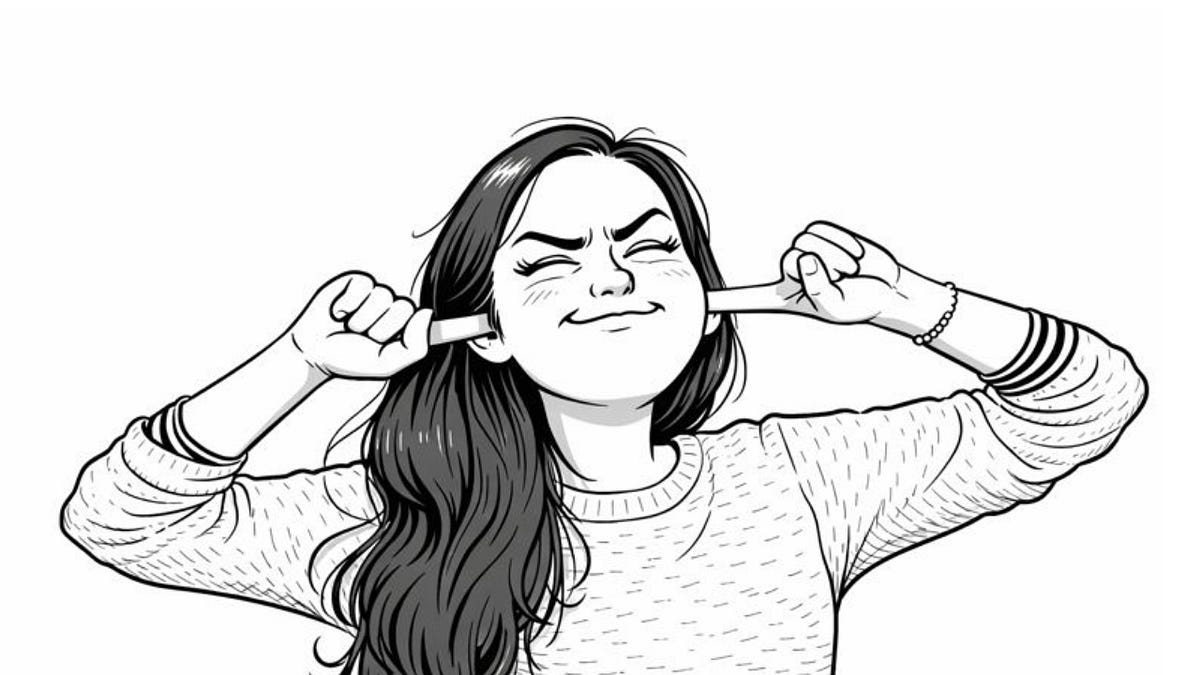
Photo by Benjamin Wedemeyer on Unsplash
What else do we call excess? Some of us call it exuberance and link it to the idea that life should be lived to the fullest, in a maximalist style. More is more! We also associate it with superabundance and a carefree life. Who wakes up in the morning wanting to tackle a mountain of problems? No one. We want to know that our days will be lighter, with no pressure weighing down our shoulders. We prefer to focus on the lavish side that excess offers, rather than on the vast amount of resources and time wasted. All for a moment when we live under the illusion that we are a little closer to heaven.
In his book “Human, All Too Human: A Book for Free Spirits,” published in April 1878, the controversial philosopher Friedrich Nietzsche asserts that “The mother of excess is not joy but joylessness.” He viewed excess as a solution that humanity has found to compensate for the emptiness we feel within ourselves and for the sense of mental and spiritual numbness that we inevitably come to face at some point in our lives. His perspective still remains relevant. Even now, nearly 150 years later. On the surface, our lives seem to be in a state of full functionality. Inside, however, there is a lot of struggle, and when we feel like we can't cope anymore, we prefer numbness. It seems to us that it hurts less.
The Brain That Never Says Enough
Our brain follows a simple rule that influences most of our decisions: self-preservation. Its primary rule is to avoid danger and pain, whether physical or psychological. Safety and comfort are top priorities for our brain, and pleasure acts here as a sign that they are truly present in our lives. The program our brain runs is simple: seek pleasure, avoid pain, repeat.
The happiness chemical, dopamine, plays the main role in the program. Recently, dopamine has earned yet another name: the “anticipation molecule,” referring to the fact that our brains light up more intensely when we expect to receive a reward, not only when we actually receive the desired object.
Through his research, Robert Sapolsky, a renowned professor of biology and neurology at Stanford University, show that “maybe” is an key-factor for dopamine driven behaviors. A 50% chance of receiving a reward actually triggers a higher dopamine spike than a 100% guarantee, which explains why things like gambling or waiting for a reward is so exciting.
Once our brain associates a certain type of behavior with pleasure and high levels of dopamine, the door is opened to addiction. We repeat the behavior. There is no logical reasoning involved here. It starts again simply because we crave the sensation of pleasure and the adrenaline rush. What makes this especially important in the context of excess is that the brain does not discriminate between vices. Dopamine is released when eating fat and sugar, when drinking alcohol, or even when observing new things to buy. The object of desire is almost incidental. What the brain registers is the pattern: cue, craving, release, relief. The form can change. The mechanism stays the same.
We often crave what we lack. Dopamine is no exception. When we feel sadness, emptiness, and depression takes hold of us, we seek pleasure more. Even from questionable sources. We unwillingly become caught in a vicious cycle that is harmful to our health: we feel hollow, we reach for stimulation, we get a brief reprieve, only to return to that hollow sensation again. The trap is always alluring: every craving can be satisfied in seconds and every mood has a product designed specifically to exploit it.
When Emptiness Drives the Wheel
Nietzsche’s perspective is correct. The absence of joy creates a void that sooner or later demands to be filled with something. Psychological distress has been identified as a key determinant of overindulgent behavior. Within affect-regulation frameworks, excess is viewed as a coping strategy used to alleviate negative emotional experiences. We resort to excessive indulgence, driven by unspeakable (and unprocessed) pain. We are not talking about greed here. Perhaps just an inner thirst for connection, first and foremost with ourselves, and then with others.
Anxiety, stress, and depression form the most common triad of triggers. They all have one thing in common: uncertainty. Under its influence, we have to distinguish between genuine need and emotional states masquerading as need. And we often fail. We don’t know if we are tired, lonely, frustrated, or afraid, so we indulge only to regret a day later.
Of course, we also need to talk about the epidemic of loneliness we are currently facing. The excessive use of digital technologies became a coping strategy to alleviate dysfunctional moods or to distract attention from real-life problems. The digital world promised more connection, but very often it actually deepens the isolation it was meant to cure. A study from 2021, titled “*Loneliness, Escapism, and Identification With Media Characters: An Exploration of the Psychological Factors Underlying Binge-Watching Tendency” *attests that there is a positive association between binge-watching and loneliness, with extreme binge-watching linked to countless sleepless nights, followed by exhaustion, neglect of tasks, and reduced social relationships.
Each episode of overindulgence leaves behind a residue of shame. The pleasure goes away quickly, but the evidence left behind by excess shows up a crystal-clear truth: We did make a mistake. Again. We start to feel guilty and unable to control our lives. This triggers depression again. From here, the next mistake is just a step or a choice away.
What if feeling good is just as dangerous?
It is a question that cuts against our instincts. We tend to think of positive mood as a kind of protection, a state in which we make clearer decisions and exercise better judgment. And in some limited sense, that is true. But the research tells a more complicated story.
Studies show that a positive mood leads to impulsive behaviors such as compulsive buying, risk-taking, gambling, and drinking. The mechanism is different from the one that drives excess in low moods, but it is equally reliable because when we feel good, we become expansive. The future looks generous. As a result, consequences feel smaller and more manageable, and our usual boundaries are modified to make space for more fun. Why not? We are happy. We deserve this.
During episodes of positive mood, choices are biased towards better-rewarded but more costly options, irrespective of the cost type (financial, physical, or social). For example, retail therapy has always been associated with sadness (the cliché of the bad breakup and the shopping bag), but the data suggests that joy is quite a prolific spender too. The results of a series of surveys published in September 2023 show that:
Among emotional spenders, 50% say stress is the top mood that influences them to spend — the most common response. That’s followed by:
Excitement (44%), Happiness (38%), Boredom (37%), Sadness (32%), Anxiousness (25%), Loneliness (20%), Romance (13%), Anger (9%), Fear (7%), Jealousy (6%)
Celebration itself is a particularly fertile ground for excess. We feel the holiday euphoria. There is also the collective high of a special occasion. Both facilitate the social permission that comes with a room full of people all doing the same thing. We must keep in mind that celebrations are moments we most want to preserve. There is no real need to push past the point of pleasure into excess.
In 2009, researchers at the University of Chicago showed that the solution to maintaining our composure in the face of mood swings is disarmingly simple:
If you are feeling happy, focus on reasons why those feelings will last; if you are feeling unhappy, focus on reasons why those feelings will pass.
Excess, in both directions, is fueled by the same underlying anxiety: what we feel right now is fragile, that we must either extend the good or escape the bad before it gets worse. Perhaps it would be a good idea to train our minds to simply inhabit a feeling without immediately trying to amplify it or numb it.
We are aware that today it is easier than ever for our vulnerabilities to be exploited, but that does not absolve us of the responsibility we have toward ourselves. That of living well. We turn to indulgence to feel better, more alive, and more connected. We shouldn’t burden our desires with shame and guilt, but rather celebrate them through healthy choices that truly serve us.
If joylessness is the mother of excess, we should address it directly. What actually caused the emptiness that the excess is trying to answer? This answer may come at a high cost, requiring a dose of courage, a few blocks of honesty, and a generous supply of patience, but the investment will certainly yield more than expected.
Tempering Excess: What Actually Works
The question of how to temper excessive tendencies is, at its core, a question about the relationship between feeling and acting. Can we insert any meaningful space between the moment a mood arises and the moment we reach for something to calm it down? The answer, based on what research currently tells us, is yes. The strategies involve less willpower than we think. What we actually need is well-targeted attention.
Most of our strategies for dealing with urges involve either white-knuckling through the craving or capitulation. Neither is optimal, and there is a third option that most of us have never been taught.
Research shows that cravings and impulses typically last no longer than 20 to 30 minutes if left unmet. Impulses can be compared to waves: they build, they peak, and they recede, with or without our participation. Urge surfing, a technique developed by psychologist Alan Marlatt and now used across addiction recovery, DBT, and ACT frameworks, is built on exactly this insight. Using heightened awareness of physical sensations, we can discern between genuine physiological needs and those fueled by emotional or psychological factors, and simply observe the urge moving through them rather than immediately acting on it. The first waves are some of the most difficult to ride, but in time they do become a lot easier.
Mastering our personal emotional vocabulary can help us change our strategy of using overconsumption as a coping mechanism and turn to alternatives that are better suited to our actual needs. The tools we need to manage our emotional state can be found even in places we least expect. For example, maybe we should include lessons in financial management in our daily routine so that we can manage our resources properly and avoid crisis situations.
Excess can point out if our emotional regulation repertoire needs a swift update. There is a wide range of responses to difficult internal states that do not involve consuming something: exercise, genuine social connection, creative work or time in nature. These may look like platitudes, but they are actually well-documented, neurologically distinct alternatives that activate the same reward circuitry without the same costs or diminishing returns.
We crave stillness. We want to trade our exhaustion for a good dose of deep rest. Time spent in nature, for example, has been prescribed as a remedy for physical and mental recovery since the late nineteenth century. So the practice is not new. Davos, a city now famous for hosting the World Economic Forum, was once such a center, with 40 institutions where those suffering from tuberculosis could recuperate.
Today, Sweden encourages both its citizens and tourists to take advantage of the “Allemansrätten,” or “The Law of Public Access” that gives everyone the freedom to roam and explore the natural Swedish beauty. The only payment required is to pay respect to the environment and all its living creatures.
The most important inner work is identifying which moods most reliably send us reaching for excess. The person whose excess is triggered by anxiety needs different tools than the person whose excess is triggered by celebration, or boredom, or loneliness.
Once we’ve identified our triggers, there’s one more important step to take: adjusting our environment to support a healthy lifestyle. It is futile to believe that we can avoid excess by relying solely on willpower and concentration. Consciously limiting our personal access to the things that predispose us to overindulgence must also be part of our long-term strategy. Simple steps, such as deliberately leaving our phone in another room or swapping frequent trips to the ultra-processed food aisles for a visit to the fresh produce market, can be effective too.
None of these methods offer a permanent or complete solution. The more prosperous our lives become, the more hedonic adaptation will continue to diminish our enjoyment. Our brain will continue to mistake emotional hunger for physical appetite from time to time. And, of course, the temptation to ease our discomfort with a quick fix will always be lurking nearby. If temptations are like false friends who stubbornly cling to us, sapping our vitality, we must counterbalance this with the following reminder: the problems that put us in a bad mood always have a solution. Here is the starting point for our inner work.
“Today I escaped anxiety. Or no, I discarded it, because it was within me, in my own perceptions — not outside.” — Marcus Aurelius**
Marcus Aurelius shows us in his personal work, “Meditations,” that the most difficult task a person must undertake is governing their own mind. If we fail to do so, the consequences will be felt in every small realm where we leave our mark: at home, at work, and within our families and friends.
We are not mere pawns in the ever-changing whims of our appetite for excessive sweetness; rather, we are the key players, and we must realize that we always have the power to turn the outcome in our favor: I know what this is. I know where it comes from. And I know that it is mine to decide what happens next. That is the only story we need.
메타데이터
- post_id
- 22a8a332ba2e
- slug
- can-our-moods-feed-excessive-behaviors-and-overindulgence-22a8a332ba2e
- url
- https://medium.com/black-bear-recovery/can-our-moods-feed-excessive-behaviors-and-overindulgence-22a8a332ba2e
- canonical_url
- https://medium.com/black-bear-recovery/can-our-moods-feed-excessive-behaviors-and-overindulgence-22a8a332ba2e
- author_url
- https://medium.com/@deka10
- status
- ok
- fetched_at
- 2026-06-21 09:28:28