How Anxiety Trains You to Fear the Future?
Anxiety does not just create worry. It changes the way the mind predicts danger, interprets uncertainty, and turns small doubts into…
How Anxiety Trains You to Fear the Future?
Anxiety does not just create worry. It changes the way the mind predicts danger, interprets uncertainty, and turns small doubts into full-blown worst-case scenarios.
Why Anxiety Makes You Imagine the Worst?
You have one unread message and you only wish the relationship was over. Your chest tightens, and before you know it, you feel it’s something serious. A little bit of a fuck up at work becomes a mental film of losing all respect, opportunity and control.
Anxiety plays like this. It doesn’t fret you out. It is likely to get you to think negatively and feels like the negative thinking is the most likely scenario.
To those who are plagued by anxiety, the future looks not like an open horizon but like a threat map. The brain scans for dangers, adds fear, and imagines scenarios that have never happened that are all just horrible. Catastrophic thinking is thinking in these ways and it is usually rational at the time, but it’s unfortunate in the long run (Cox, 1996).

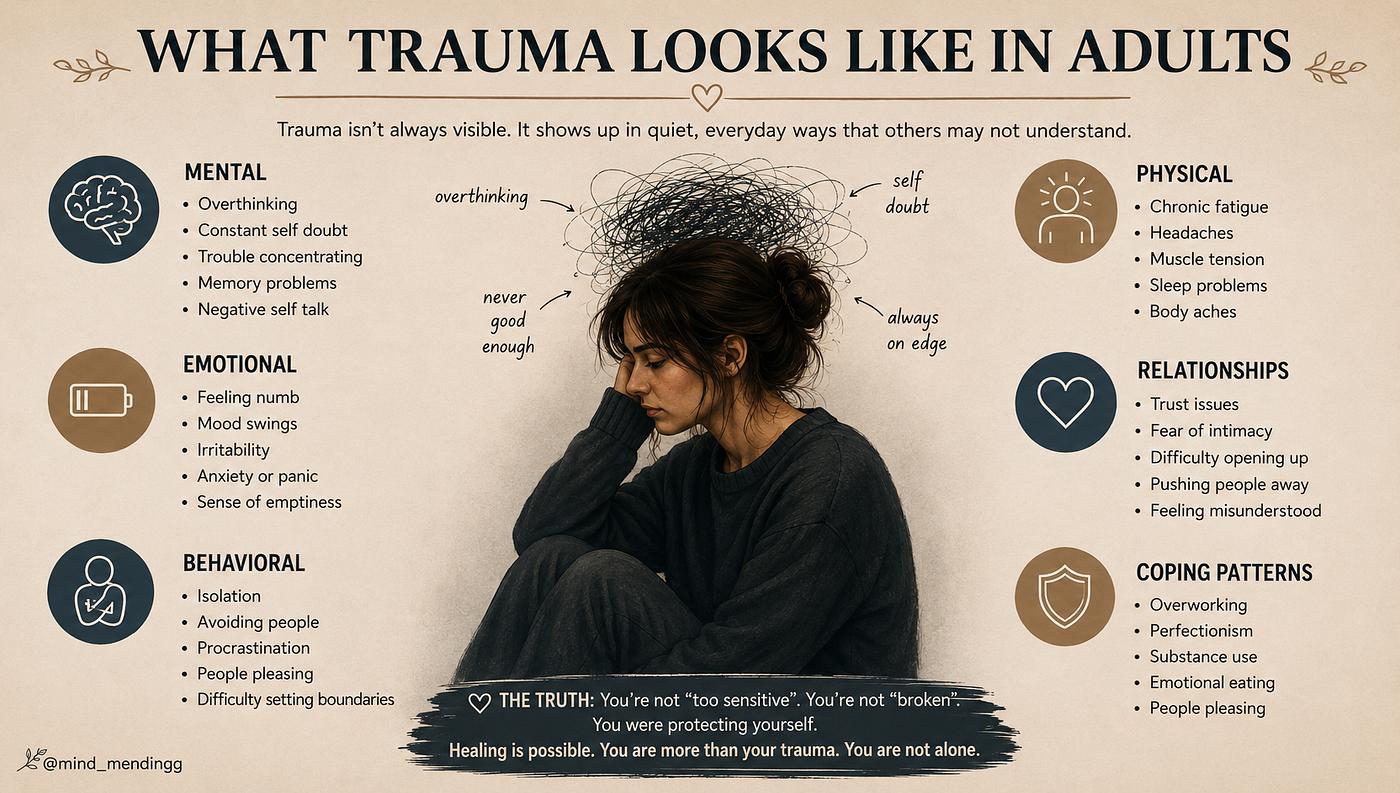
Image created using AI
Why the Mind Goes There?
At the very root of anxiety is a system of survival. It’s there to sense danger and get you ready to react. This system is typically too sensitive, however. It will rather give a false alarm than miss something dangerous, so sometimes neutral situations can sound alarming.
Anxiety makes the mind focus on the negative possibilities. It asks, “What could go wrong?” instead of “What else could happen?” It could be considered good planning, but anxiety can extend beyond preparation and prediction. Danger doesn’t just appear in the brain, it starts to expect it. It’s one way anxiety can seem so convincing. The thought has become not just a thought any longer. This is attached to tension, urgency and certainty. When the body gets into the fear the mind gets into the fear and thinks, “This must be happening.When the body gets into the fear, the mind gets into the fear and says, “This must be happening (Stein & Nesse, 2011).
The Role of Uncertainty
A considerable amount of worry is a problem of lack of certainty. We are creatures of habit, and often life doesn’t give us that. Anxious minds fill in the blanks by predicting the future, and when things aren’t going to happen, they’re going to go badly.
Not getting a response back can make your brain think that they are upset. Treatment of headache can trigger your mind to think about being sick. The fear of making a mistake can lead to anxiety and a feeling that everything is falling apart.
This is due to the fact that uncertainty can be unbearable. Worst case thinking makes it feel like you have control. If you can picture the danger beforehand at least you will not be taken aback. This is, however, a phony control. It exposes you to additional stress, not safety (Gentes & Ruscio, 2011).
What Catastrophic Thinking Looks Like?
Not every time you think catastrophically is a dramatic moment. It can be silent and unconscious. It shows up as a succession of “what if” inquiries that get increasingly more problematic.
· What do I do if they are angry with me?
· What if I fail?
· What if this pain is serious?
· What if I select the incorrect answer?
· What if it is the one moment that spoils all?
The pattern is not about the event itself, but it’s the way that the mind amplifies the event. A small problem turns into a threat. There is the potential for it to become reality. A discomfort is a disaster.

Image created using AI
This becomes a bad habit over time, leading to a decrease in confidence, avoidance, and fatigue. The body is stiff. The mind is always occupied. Life begins to become very expensive emotionally (Barlow et al., 2010).
Why it Feels so Real
Anxiety is one of the most difficult aspects of anxiety to comprehend because it’s not imaginary. It is felt, tangible and realistic. Your heart races. Your stomach tightens. Your breathing changes. The feelings may make the fear feel like proof.
Often, though, anxiety functions in reverse; the body responds first then the mind tells a frightening story to justify the response. The story is believable because the body is already frightened. That’s why you can get anxiety stuck in your head. They are not simply thoughts but are accompanied by actual feelings of distress (Ohst & Tuschen-Caffier, 2018).
When people have anxiety, they will sometimes say, “I know it sounds crazy, but it feels real.” It’s not mutually exclusive. It’s a key symptom of anxiety. The feeling can be based on an exaggerated interpretation, yet the bodily experience is real.
The Hidden Cost
It can be tempting to think the worst to be protective, but there’s a price to this. If you go over and over in your mind what the disaster will look like, your body experiences it as if it were really happening. This translates to more stress, more tension, more avoidance, and less trust in self to handle it.
It can also make it difficult to make decisions. When all options appear to be risky, individuals can procrastinate, overthink, and even not make a decision. The avoidance temporarily relieves the fear, but the brain learns that the feared situation is really threatening. Anxiety is self-taught.

Image created using AI
The other expense is emotional wear and tear. You need energy to think about losing, rejection, failure and embarrassment every single day. The reason for feeling exhausted is that people with anxiety may spend hours worrying about a scenario in their mind rather than something that actually occurred (Mkrtchian et al., 2017).
The Myths People Believe
One of the primary misconceptions about anxiety is that it is just negative or overdramatic. Actually, anxiety isn’t about being a bad person. It’s an overactive form of threat detection. People are not deliberately causing harm to themselves; they are trying to ward it off.
Another myth is that thinking about the worst case scenario prepares you for it. While a little planning is helpful, it is not preparation. It is over consumption of fear. The longer you practice disaster, the more comfortable you become with it.
A third myth is that if you’re rational enough, anxiety will go away. Logic is helpful, but sometimes anxiety doesn’t respond to logic alone. Better arguments are not enough to re-learn a new safe emotional brain. That’s why the process of soothing the body is just as important as it is to challenge the thought (Norton & Price, 2007).
What Research Suggests
Summaries of research and clinical writing always mention catastrophic thinking as a common feature of anxiety disorders. Anxiety causes a narrowing of focus, heightens threat sensitivity, and increases the tendency to take a negative view of ambiguous situations. It’s because a late response, a bizarre remark, or even a physical reaction may seem more significant than it is (Gellatly & Beck, 2016).
Also in current discussions about anxiety, the focus falls on the fact that the mind has a tendency of paying more attention to danger than to neutrality. Looks for evidence to reinforce fear and fails to look for evidence to soothe fear. This is one possible reason for the short-term effectiveness of reassurance. Once the mind has been conditioned to worry, it will have a new reason to worry very soon (Valadez et al., 2022).
Another helpful fact is anxious thoughts tend to be based more on prediction than observation. Even though the evidence is scant, the mind says, “This will go badly.” The ending is believable because anxiety isn’t really about how accurate, it is about being ready (Rozenman et al., 2017).
How to Interrupt the Spiral
The first step is to be aware of the transition from possibility to prediction. Ask yourself, am I describing what is happening or am I predicting some disaster? By asking that question, there is a gap between you and the thought.
Next, separate facts from fear. For example:
- Fact: They have not replied for two hours.
- Fear: They are angry and ending the relationship.
That distinction may seem simple, but it is powerful. Anxiety often works by blending fact with assumption until the mind cannot tell the difference.
It’s also a useful way to calm the body down from being on alert. Breathing slowly, grounding, moving around or focusing on physical sensations can help decrease the magnitude of the fear response. When the body begins to calm down a little, the mind begins to doubt that it is an emergency right now.
Lastly, learn to make more varied requests. Anxiety is about whatever one dreads out there, and all too often there are alternatives. There will be bad, neutral, and good or better than expected some. The more you make the picture larger, the less the worst-case script will affect you.
A Healthier Way to Think
The goal is not to stop all worrying. The goal is to stop treating every fear as a forecast. A healthy mind can say, “This could go wrong,” without immediately adding, “and therefore it will.”
That change is significant because it gives people more options. You may watch dread rather than let it drag you. You may challenge every frightening thought rather than accepting it. You can go back to the real moment in front of you rather than live inside a disaster movie.

Image created using AI
Imagination is not prophesy, even if anxiety is always eager to envision the worst. The mind can only give one potential story. You can learn to tell a more complete one with practice.
Closing Thought
Because anxiety is attempting to protect you in its own warped way, it causes you to imagine the worse. It searches for danger, exaggerates risk, and transforms ambiguity into a threat. However, what holds you stuck is frequently what feels protecting. Fortunately, catastrophic thinking is a pattern, and patterns are subject to alter. The mind becomes less of an alarm system and more of a guide if you learn to recognize the fear, disentangle it from reality, and broaden your perspective of what is possible.
References
Barlow, D. H., Ellard, K. K., & Fairholme, C. P. (2010). Unified Protocol for Transdiagnostic Treatment of Emotional Disorders. Oxford University Press.
Cox, B. J. (1996). The nature and assessment of catastrophic thoughts in panic disorder. Behaviour Research and Therapy, 34(4), 363–374. https://doi.org/10.1016/0005-7967(95)00075-5
Gellatly, R., & Beck, A. T. (2016). Catastrophic Thinking: A Transdiagnostic Process Across Psychiatric Disorders. Cognitive Therapy and Research, 40(4), 441–452. https://doi.org/10.1007/s10608-016-9763-3
Gentes, E. L., & Ruscio, A. M. (2011). A meta-analysis of the relation of intolerance of uncertainty to symptoms of generalized anxiety disorder, major depressive disorder, and obsessive–compulsive disorder. Clinical Psychology Review, 31(6), 923–933. https://doi.org/10.1016/j.cpr.2011.05.001
Mkrtchian, A., Aylward, J., Dayan, P., Roiser, J. P., & Robinson, O. J. (2017). Modeling Avoidance in Mood and Anxiety Disorders Using Reinforcement Learning. Biological Psychiatry, 82(7), 532–539. https://doi.org/10.1016/j.biopsych.2017.01.017
Norton, P., & Price, E. (2007). A meta-analytic review of adult cognitive-behavioral treatment outcome across the anxiety disorders. The Journal of Nervous and Mental Disease, 195(6). https://doi.org/10.1097/01.nmd.0000253843.70149.9a
Ohst, B., & Tuschen-Caffier, B. (2018). Catastrophic misinterpretation of bodily sensations and external events in panic disorder, other anxiety disorders, and healthy subjects: A systematic review and meta-analysis. PLOS ONE, 13(3), e0194493. https://doi.org/10.1371/journal.pone.0194493
Rozenman, M., Vreeland, A., & Piacentini, J. (2017). Thinking anxious, feeling anxious, or both? Cognitive bias moderates the relationship between anxiety disorder status and sympathetic arousal in youth [Review of Thinking anxious, feeling anxious, or both? Cognitive bias moderates the relationship between anxiety disorder status and sympathetic arousal in youth]. Journal of Anxiety Disorders, 45, 34–42. https://doi.org/10.1016/j.janxdis.2016.11.004
Stein, D. J., & Nesse, R. M. (2011). Threat detection, precautionary responses, and anxiety disorders. Neuroscience & Biobehavioral Reviews, 35(4), 1075–1079. https://doi.org/10.1016/j.neubiorev.2010.11.012
Valadez, E. A., Pine, D. S., Fox, N. A., & Bar-Haim, Y. (2022). Attentional biases in human anxiety [Review of Attentional biases in human anxiety]. Neuroscience & Biobehavioral Reviews, 142, 104917. https://doi.org/10.1016/j.neubiorev.2022.104917
why anxiety makes you imagine the worst | catastrophic thinking | anxiety and worst-case scenarios | overthinking and anxiety | anxious thoughts | anxiety distortions | how anxiety affects thinking | cognitive distortions in anxiety
psychology #anxiety #catastrophicthinking #overthinking #cognitive distortions #anxious thoughts #psychologistthoughts #anxiety distortions
About the Author:
Fatima Maqsood is a psychologist passionate about making psychology accessible through evidence-based, practical, and easy-to-understand writing. She explores mental health, human behavior, emotional well-being, and personal growth through the instagram handler @mind_mendingg platform.
Disclaimer:
This article is for educational purposes only and should not be considered a substitute for professional psychological assessment, diagnosis, or therapy.
메타데이터
- post_id
- 3a03f5f7bdcd
- slug
- how-anxiety-trains-you-to-fear-the-future-3a03f5f7bdcd
- url
- https://medium.com/illumination/how-anxiety-trains-you-to-fear-the-future-3a03f5f7bdcd
- canonical_url
- https://medium.com/illumination/how-anxiety-trains-you-to-fear-the-future-3a03f5f7bdcd
- author_url
- https://medium.com/@mind_mendingg
- status
- ok
- fetched_at
- 2026-08-23 23:14:00