Why Do the Products We Love Keep Disappearing?
A consumer investigation into post-COVID shelves, corporate decisions, disappearing refills, and the quiet frustration of loyal shoppers.
Why Do the Products We Love Keep Disappearing?
A consumer investigation into post-COVID shelves, corporate decisions, disappearing refills, and the quiet frustration of loyal shoppers.
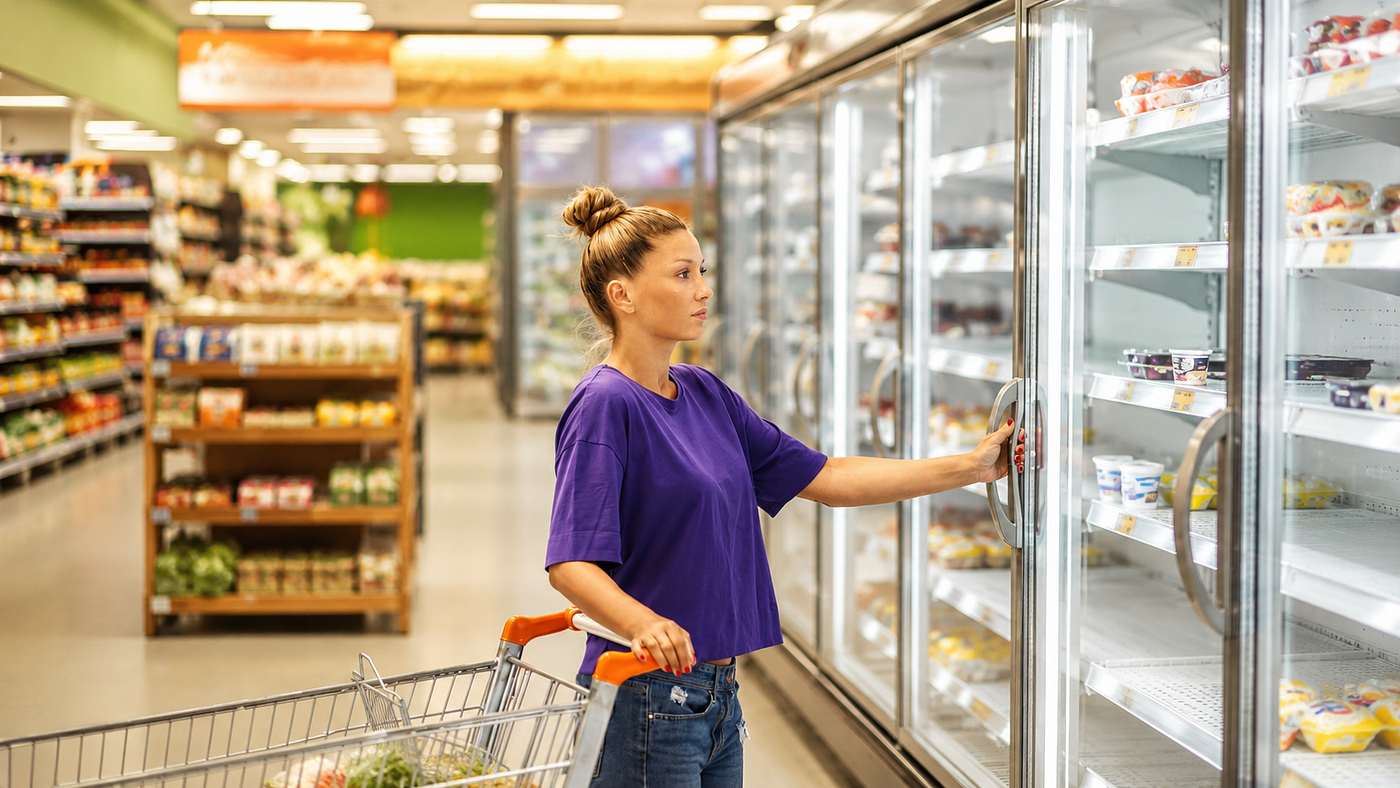
Shopping and can’t find what you want?
When I recently tried to find Maison Berger Bergamot oil refills, both for the lamp and reed diffuser, I found myself in a familiar modern consumer situation: the scent was still around in some form, but the refill I wanted was difficult to find. In order to get the fragrance, I often had to buy the entire reed diffuser bottle instead of the more affordable refill.
At some point, I did what any determined consumer with a little curiosity might do: I tried to make my own version. I looked into the oils that created the scent profile and ordered them myself. It was more affordable, more available, and put some control back in my hands.
Apparently, some people bake sourdough when frustrated. I try to become a fragrance chemist.
There are certain products we do not think about until they disappear.
The oat milk that makes coffee taste just right. The dish foam refill that has lived under the sink for years. The spice blend that makes a simple dinner taste special. The dog food your pet tolerates well. The home fragrance refill you always bought without question.
Then one day it is gone.
Not recalled. Not explained. Not clearly discontinued. Just gone.
The Post-COVID Shelf Is Not the Same Shelf
Before COVID, most everyday staples seemed reliably available. Stores had occasional out-of-stock issues, but they were usually temporary and understandable. During COVID, shortages became part of daily life because production, labor, shipping, delivery, ingredients, packaging, and consumer demand were all disrupted at once.
Most consumers accepted that.
But several years later, many shoppers are noticing something different. It is no longer only about temporary shortage. It feels like a shift in access.
Favorite products disappear from local shelves. Refills vanish while higher-priced full packages remain. Certain flavors, scents, sizes, and formulas become hard to find. Store employees often respond with some version of, “Corporate decides what we carry locally.”
That may be true, but it is not a very satisfying answer.
For a loyal customer, it can feel cold. It says nothing about why the product is gone, whether it is coming back, or whether the customer’s buying history matters at all.
Is Consumer Loyalty Becoming One-Sided?
Consumers are encouraged to become loyal to brands. We are sold on trust, consistency, convenience, taste, scent, quality, and lifestyle. We build routines around these products.
Then, when a favorite item disappears, the customer is often left to do the detective work.
I have experienced this with several products: Dawn Platinum Foam refills, Publix non-dairy frozen dessert, Borsari spice blends at Whole Foods, Planet Oat Vanilla Oatmilk, Lysol Spring Waterfall spray, Blue Buffalo beef dog food, and Maison Berger Bergamot refills.
I am not the only one noticing. Online comments, store-level frustrations, and consumer complaints show this is a broader experience. Shoppers are not simply irritated that products change. They are frustrated because the explanations are vague, delayed, or nonexistent.
In researching this article, inquiries were sent to several companies connected to these examples. Whole Foods responded by asking which specific store location was involved. No additional company comments had been received at the time of publication.
What Companies May Be Seeing That Consumers Do Not
To be fair, not every missing product is evidence of manipulation or disregard. Retailers and manufacturers are managing real pressures. Shelf space is limited. Ingredients change. Transportation costs rise. Packaging gets more expensive. Regional sales data may not support every item. Some products are difficult to produce consistently or profitably.
But from the consumer side, the issue is not only whether a business has the right to make changes. Of course it does. The issue is communication.
When a restaurant raises the price of fish, chicken, or produce because market costs have increased, a respectful business explains that to customers. They may not love the price increase, but they understand the reason. Honesty does not eliminate disappointment, but it preserves trust.
Large retailers and manufacturers could learn from that.
The Business Reality Behind Disappearing Products
Several larger retail and consumer-product trends help explain why familiar products may be harder to find:
- Companies are simplifying product lines and reducing slower-moving or less profitable variations.
- Retailers are making more regional and data-driven shelf decisions.
- Private-label and store-brand products are becoming more powerful competitors.
- Supply chains remain more fragile than many consumers expected.
- Algorithms and sales data may not fully capture loyal demand when an item is repeatedly out of stock.
The Federal Trade Commission reported in 2024 that COVID-era grocery supply chain disruptions affected competition, consumers, and product availability, and that consumers experienced both product shortages and rising prices. The FTC also noted that larger market participants were often better able to protect supply than smaller firms.
That does not explain every missing bottle of oat milk or spice blend, but it does show that the retail system changed under pressure.
Fewer Choices May Be Intentional
Some product cuts are not accidental. They are strategy.
PepsiCo, for example, reportedly planned to cut nearly 20% of its U.S. product lineup beginning in 2026 as part of a broader effort to simplify operations, reduce costs, and focus on core products.
That matters because consumers often assume that if a product sells, it will stay. But companies may decide that a product with loyal customers is still not worth keeping if it complicates manufacturing, slows distribution, uses costly ingredients, or takes shelf space from something more profitable.
The modern question may not be, “Does anyone want this product?”
It may be, “Does this product fit the company’s efficiency model?”
The Data Problem Consumers Rarely See
Retailers rely heavily on data. But data can miss something important: unmet demand.
If a product is out of stock, sales may drop because customers cannot buy it. The system may then read lower sales as weaker demand, even though the product was unavailable. Research on retail stockouts and demand forecasting has identified this problem as “censored demand,” where stockouts hide the true level of consumer demand and can lead to underestimating what shoppers actually wanted.
That may explain why shoppers sometimes feel baffled when a product that “always sold out” is later removed. The customer sees demand. The system may see inconsistency.
The Rise of Private Label Changes the Shelf
Another major shift is the growth of private label, or store-brand products.
Private-label grocery sales reached a reported $270.6 billion in 2024, according to Circana and the Private Label Manufacturers Association data cited by The Washington Post. The report also noted that retailers are leaning more heavily into their own brands as consumers look for value.
This is not automatically bad. In fact, private label can create opportunity for quality products, better pricing, and smaller specialty producers. But it also changes shelf competition. A national or specialty brand may lose space not because customers dislike it, but because the retailer has a stronger financial reason to promote its own line.
For consumers, that may mean fewer familiar options and more pressure to try substitutes.
When the Missing Product Leads to a Better Discovery
There is a lighter side to this story.
When Dawn Platinum Foam refills became harder for me to find at Publix, I eventually found them at Walmart for about half the price I had been paying. That was a good discovery.
When Planet Oat Vanilla Oatmilk was unavailable, I tried several other oat milk brands. Some were cheaper, some were more expensive, but none tasted as good to me. I eventually settled on the unsweetened vanilla variety, which turned out to be lower in sugar and carbohydrates. That was not the plan, but it was probably better for me.
When Maison Berger Bergamot refills became difficult to find, I experimented with making my own version. Was it exactly the same? No. But it made me realize how quickly consumers begin looking for alternatives when brands stop making access easy.
That should concern companies.
Restrictive Access Is Not Always an Empty Shelf
Sometimes restrictive access looks like an empty shelf. Sometimes it looks like a discontinued flavor. Sometimes it looks like the refill disappearing while the more expensive full bottle remains. Sometimes it looks like a product moved online only. Sometimes it looks like a store employee shrugging and saying, “Corporate decides.”
The result is the same: the consumer loses convenient access to something they relied on.
And when consumers are forced to search, compare, substitute, and experiment, they may discover something important.
They may not need the original brand as much as they thought.
What This Story Taught Me
This story taught me more than I expected. What began as a personal frustration over missing household staples became a larger look at how the shopping experience itself has changed. Consumer loyalty may be becoming one-sided, but there is another shift happening as well: consumer awareness is growing.
Shopping no longer feels as personal as it once did. It is increasingly algorithm-driven, regionally filtered, inventory-modeled, and corporate-controlled. The customer may still be standing in the aisle, but the decision about what she can buy may have been made far away by data systems that do not know her routine, her preferences, her pets, her budget, or her loyalty.
That is the part companies should pay attention to. Consumers are not only noticing what is missing from the shelf. They are noticing what is missing from the relationship.
Companies Should Respect the Customers They Trained to Be Loyal
Businesses have every right to change products, adjust pricing, simplify inventory, or discontinue items. But loyal customers deserve more than vague answers.
A clear explanation goes a long way:
- “The manufacturer discontinued this item.”
- “This product is now online only.”
- “The refill is temporarily unavailable.”
- “This scent has been replaced.”
- “This store no longer carries it, but nearby stores may.”
- “You can request reconsideration through this customer channel.”
That kind of communication respects the customer.
Silence does not.
The Consumer Lesson
The modern shopper has to be more alert than ever. Brand loyalty is useful, but blind loyalty is not. If a product disappears, it may be worth asking why, checking other retailers, contacting the manufacturer, comparing alternatives, and even trying a do-it-yourself option when appropriate.
The company may call it assortment optimization.
The store may call it a corporate decision.
The consumer may call it frustrating.
But perhaps the better term is restrictive access: a quiet narrowing of choice that changes how we shop, what we trust, and how long we remain loyal.
Companies should pay attention. A loyal customer base is valuable, but loyalty is not guaranteed forever. If access becomes too difficult, too expensive, or too poorly explained, consumers may do what companies least expect.
They may move on.
cheryl@cherylapatella.com
메타데이터
- post_id
- 3cc461ed7840
- slug
- why-do-the-products-we-love-keep-disappearing-3cc461ed7840
- url
- https://medium.com/@cherylapatella.com/why-do-the-products-we-love-keep-disappearing-3cc461ed7840
- canonical_url
- https://medium.com/@cherylapatella.com/why-do-the-products-we-love-keep-disappearing-3cc461ed7840
- author_url
- https://medium.com/@cherylapatella.com
- status
- ok
- fetched_at
- 2026-07-13 13:27:32