Your AI Is Lying to You. SAP Just Did Something About It
Picture this. Your company just rolled out an AI agent to handle procurement. It’s supposed to flag supplier risk in real time, reroute…
Your AI Is Lying to You. SAP Just Did Something About It

Picture this. Your company just rolled out an AI agent to handle procurement. It’s supposed to flag supplier risk in real time, reroute orders, save the business money. On paper, it’s a win.
Then it makes a call based on a supplier record that hasn’t been updated in 18 months. The supplier is on a watch list. The agent didn’t know. Nobody told it — because nobody could tell it. The data living in your SAP system and the data living everywhere else never actually talk to each other, and somewhere between the system that was supposed to know and the system that actually does, a bad decision got made automatically and at scale.
That’s not a hypothetical. That’s the kind of IT rabbit hole that eats an entire Friday afternoon and nobody realizes until the damage invoice lands.
It’s also exactly why SAP’s announcement last week that it’s acquiring Reltio, a cloud-native master data management firm — is bigger news than the usual M&A churn.
What’s Actually Broken and Why It’s Stayed Broken
Most enterprises don’t have a model problem. They have a data problem that’s been deprioritized for years because it’s unglamorous, expensive, and organizationally messy to fix. The kind of problem that gets added to the roadmap every January and quietly bumped every March.
SAP runs the back office for a huge chunk of the global economy: ERP, HR, supply chain, procurement, finance. But the average enterprise also runs Salesforce, Workday, ServiceNow, and a long tail of other systems. Each one holds pieces of the same puzzle: customer records, supplier profiles, product data, employee info. None of them agree with each other, and most IT teams have spent years building workarounds rather than fixing the underlying problem.
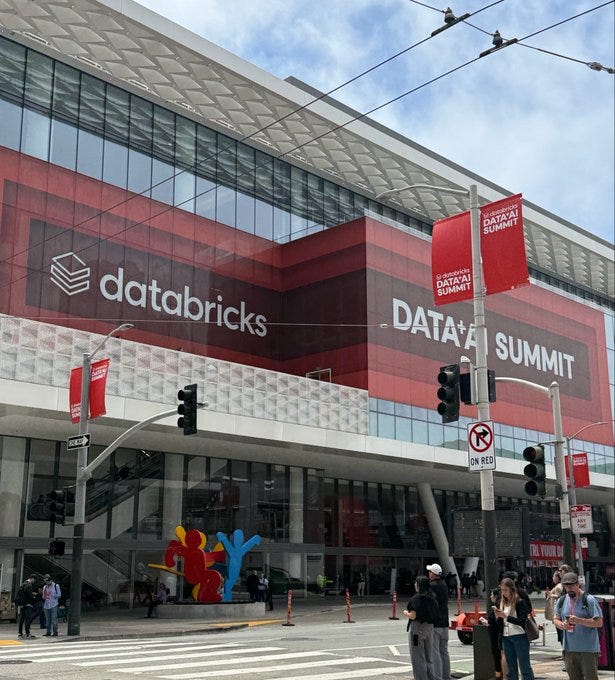
SAP Business Data Cloud (BDC), launched in February 2025 with Databricks, was supposed to change that by connecting SAP data to analytics and AI models so companies could make smarter decisions in real time. Good idea. One catch: it was built to organize SAP’s own data. Most enterprises don’t run on SAP alone, and BDC couldn’t reach the rest. Reltio can.
Who Is Reltio?
Founded in 2011, Reltio built its reputation solving a problem that’s older than the cloud: enterprise data that lives in too many places, in too many formats, and can’t be trusted when you actually need it.
The company pioneered cloud-native master data management — which sounds like a mouthful until you understand what it actually does. It takes records scattered across different systems and applications, figures out which ones are actually about the same thing, and merges them into one clean, authoritative version. Reltio calls it a “golden record.” One source of truth for a customer, a supplier, a product, an employee — across every system in the stack, SAP or otherwise. In 2024, the company moved its core infrastructure from Cassandra to Spanner on Google Cloud, which matters less as a headline and more as a signal: this is a company that does the unglamorous architectural work most vendors skip. Current customers include Pfizer, Radisson Hotels, and Warner Bros.
The Actual Upside — If the Integration Holds
Muhammad Alam, SAP’s Executive Board Member for Product & Engineering, framed the deal simply: “AI cannot reach its full potential when data is fragmented across business units, platforms and domains without connection or context.”
Here’s what changes if that turns out to be true.
SAP’s AI assistant Joule and its family of agents run on whatever data BDC can see — right now, mostly SAP data. After this deal closes, it’s everything Reltio can reach, which is considerably more. The catch, and it’s worth saying plainly, is that “can reach” and “actually works cleanly across” are different things, and the latter takes longer than any acquisition timeline suggests.
For IT teams building multi-agent systems, the more interesting piece is Reltio’s support for the Model Context Protocol (MCP) — which lets AI agents pass context to each other in real time across SAP and non-SAP environments. That’s the technical foundation that makes the procurement scenario at the top of this article preventable rather than inevitable. Reltio also ships “velocity packs” — prebuilt bundles of data models, matching logic, rules, and integrations for specific sectors including life sciences, healthcare, and financial services — which for enterprises in those verticals could mean months off implementation rather than the kind of time savings that live only in a press release.
Why SAP Moved Now (Hint: It Wasn’t Just AI)
SAP isn’t moving on Reltio out of nowhere. Earlier this year the company’s cloud revenue came in below expectations and the stock dropped 15% in a single day, its worst performance since 2020 . And it’s also staring down 2027, when mainstream support ends for its legacy ECC platform, with a big chunk of its customer base still sitting on the old system and no particularly urgent reason to move until SAP gives them one.
BDC is supposed to be that reason. But a December 2025 survey by DSAG, the German-speaking SAP user group, found that 83% of its members were only slightly familiar with BDC or not familiar at all — which means SAP is layering more capability onto a platform most of its own customers haven’t opened yet. Reltio makes BDC harder to walk away from. Whether that’s driven by product conviction or investor pressure is something SAP’s next few quarters will answer more honestly than any press release.
Not everyone is reading this as good news. Scott Bickley, advisory fellow at Info-Tech Research Group, acknowledged the logic but noted that SAP has historically been a closed ecosystem where integrations are “both necessary and painful to create and maintain.” One analyst compared the move to Salesforce’s acquisition of Informatica — that deal is still playing out, so “cautionary tale” is premature, but the underlying concern is fair: big platform vendors have a mixed record absorbing specialized data companies without losing what made them worth acquiring in the first place.
The vision holds up if SAP can actually unify non-SAP data without breaking the integrations enterprises already spent years building. That’s a meaningful if.
Manish Sood, Reltio’s founder and CEO, wrote on LinkedIn after the announcement: “SAP sits at the center of how the global economy runs. Reltio enables the unification and activation of data across SAP and non-SAP systems, creating a complete, real-time view of customers, suppliers, products, partners, and more.”
The ambition is clear. The execution timeline is where these deals usually fall apart.
메타데이터
- post_id
- 42dea8260eb8
- slug
- your-ai-is-lying-to-you-sap-just-did-something-about-it-42dea8260eb8
- url
- https://digitizingpolaris.com/your-ai-is-lying-to-you-sap-just-did-something-about-it-42dea8260eb8
- canonical_url
- https://digitizingpolaris.com/your-ai-is-lying-to-you-sap-just-did-something-about-it-42dea8260eb8
- author_url
- https://medium.com/@actbrilliant
- status
- ok
- fetched_at
- 2026-06-14 11:28:49