The New Era of Unified Measurement: What changes in Google’s data and media architecture
The evolution of digital marketing and business maturity increasingly demands precision and depth in decision-making. The market has…
The New Era of Unified Measurement: What changes in Google’s data and media architecture
The evolution of digital marketing and business maturity increasingly demands precision and depth in decision-making. The market has finally moved past theoretical discussions about the loss of identifiers to focus on what truly generates end-to-end efficiency: the definitive union between Marketing Mix Modeling (MMM) and advanced attribution.
This architectural shift became evident with the main announcements presented at **Google Marketing Live 2026**. The event consolidated the end of fragmented measurement, redefining the strategic role of data science and the use of first-party data in the MarTech ecosystem. Below, we analyze the most relevant updates and the practical impacts they bring to your media and data operations.
1. Google Analytics with Native Integration of the Meridian Framework (MMM)
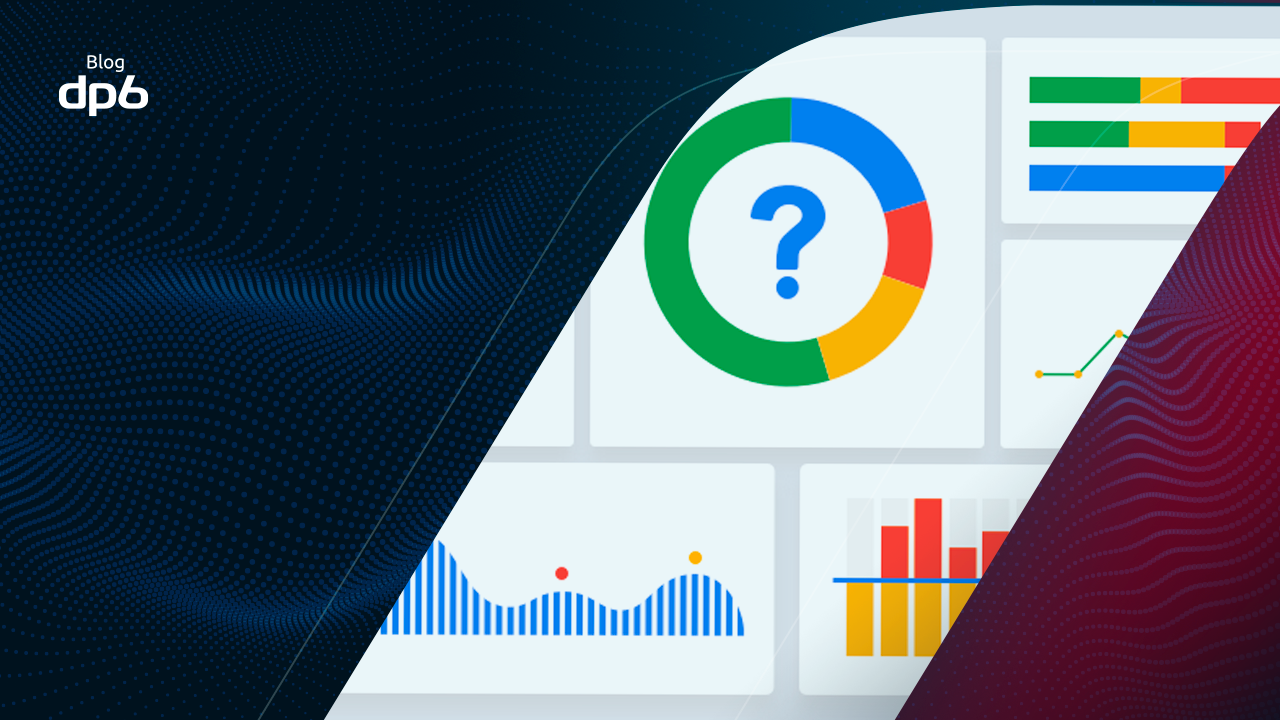
One of the main changes announced is the native integration of the Marketing Mix Modeling (MMM) framework, Meridian, directly within the **Google Analytics** platform. This announcement signals the transformation of GA into a predictive planning hub, consolidating data flows and causal signals into a single interface. In practice, teams stop looking only at traditional navigation to gain a macro, cross-channel view.
The primary strategic benefit of this unification is access to the Meridian Scenario Planner. The feature works as a dynamic future simulator, allowing teams to project different combinations of investments and evaluate the direct impact on sales and ROI before launching campaigns.
To support the model with agility, the new MMM Data Platform API works in tandem, delivering granular data with greater speed and frequency to reduce time spent on cleaning and structuring variables.
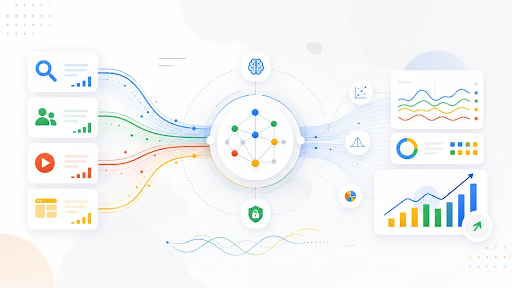
(Image source: Generated by AI)
2. Client Management: Leads in Google Analytics
Another standout feature focused on data centralization is Leads in Google Ads. The announcement brings a lightweight CRM structure integrated directly into the Google Analytics interface, changing the tool’s role in tracking the conversion funnel.
This functionality was designed to keep pace with sales velocity and mitigate lead loss. With this update, teams can manage lead statuses and feed the conversion database with greater precision and direct control within the analytics platform, improving the signals that qualify bidding algorithms.
3. Evolution in Attribution: Data-Driven Attribution (DDA) in Google Analytics
Complementing the changes in macro modeling, the attribution ecosystem within Google Analytics will also receive updates. The Data-Driven Attribution (DDA) model will expand to include impression data more comprehensively within its integrated campaign environment.
This evolution allows marketing and data teams to better understand the real impact of media at the initial touchpoints of the consumer journey. Additionally, the change will provide easier access to fundamental metrics for the top and middle of the funnel, such as View-Through Conversions (VTCs).
4. First-Party Data Activation: The Role of Google Data Manager
For AI algorithms and measurement models to function precisely, they require high-quality first-party data. This is where Google Data Manager comes into play, expanding its global connections to include partners such as BigQuery, HubSpot, Oracle, Salesforce, Shopify, Zoho, and Google Sheets.
This unified hub helps brands improve campaign performance using insights directly from their websites, apps, CRMs, and physical stores, offering a clear diagnosis of data quality and pointing out improvements. The feature is already available globally in Google Ads and will arrive in Search Ads 360 and Campaign Manager 360 later this year. For media managers, the big news is the launch of the Data Manager API, which will allow connecting this proprietary data directly to Google advertising products on a global scale.
5. Measurement Infrastructure: The Upgrade to Google Tag Gateway
Since data solidity and technical measurement are essential foundations for growth with Artificial Intelligence, Google brought a direct call to action for corporate infrastructure. The central announcement on this front is the recommendation to upgrade to **Google Tag Gateway**.
This update focuses on giving brands greater control over their signal capture and building a stronger foundation of first-party data. The recommendation to migrate to this new structure serves to mitigate tracking losses and transform technical measurement into a real engine for business decision-making and growth.
How to Transform These Innovations into Real Results?
Looking at this new MarTech architecture, it is evident that the challenge for brands has shifted. Google has delivered the engines, but the calibration and fuel depend entirely on the analytical maturity of each company. For these innovations to generate value, three pillars are indispensable:
- **Data Governance and Quality (Garbage In, Garbage Out):** Meridian is a robust open-source model, but it relies on perfectly clean and standardized input data. Without efficient data engineering to organize these inputs, Scenario Planner simulations lose reliability.
- **Privacy Infrastructure:** For the new Google Analytics engine to capture signals accurately and in full compliance with data privacy regulations (such as LGPD/GDPR), technical implementation must be meticulous. Server-Side Tagging structures and the correct configuration of Consent Mode are the foundations sustaining browsing metrics.
- Real Omnichannel Vision: Google facilitates access to data within its own ecosystem through the new API. However, for macro business decision-making, it is necessary to cross this information with data from open TV, competing media vehicles, CRM, and offline sales. True media intelligence is born from this integration of proprietary first-party data.
Conclusion
The evolution of measurement tools and the consolidation of artificial intelligence are transforming the structure of digital marketing. More than adopting isolated features, the current challenge lies in the intelligent orchestration of technologies to generate real business value.
At DP6, we combine expertise in marketing analytics, data science, and data engineering to not only implement advanced solutions like Meridian and the new capabilities of Google Analytics but also to scale them in a personalized way for the reality of each operation.
Is your company ready to lead the next era of measurement? Speak with our specialists and design a high-performance data strategy. To check the announcements and additional technical details, you can also access the official coverage of Google Marketing Live 2026.

Profile of the Author: Beatriz Lima | Data Master at DP6, with over 6 years of experience in Marketing. Holds an MBA in Communication and Marketing, a postgraduate degree in Social Media, and is currently pursuing another postgraduate degree in Strategic Marketing at Mackenzie. She is passionate about art, music, movies, and series.
Originally published at www.dp6.com.br
메타데이터
- post_id
- 6466273dcb68
- slug
- the-new-era-of-unified-measurement-what-changes-in-googles-data-and-media-architecture-6466273dcb68
- url
- https://medium.com/dp6-us-blog/the-new-era-of-unified-measurement-what-changes-in-googles-data-and-media-architecture-6466273dcb68
- canonical_url
- https://medium.com/dp6-us-blog/the-new-era-of-unified-measurement-what-changes-in-googles-data-and-media-architecture-6466273dcb68
- author_url
- https://medium.com/@dp6blog
- status
- ok
- fetched_at
- 2026-06-22 19:40:15