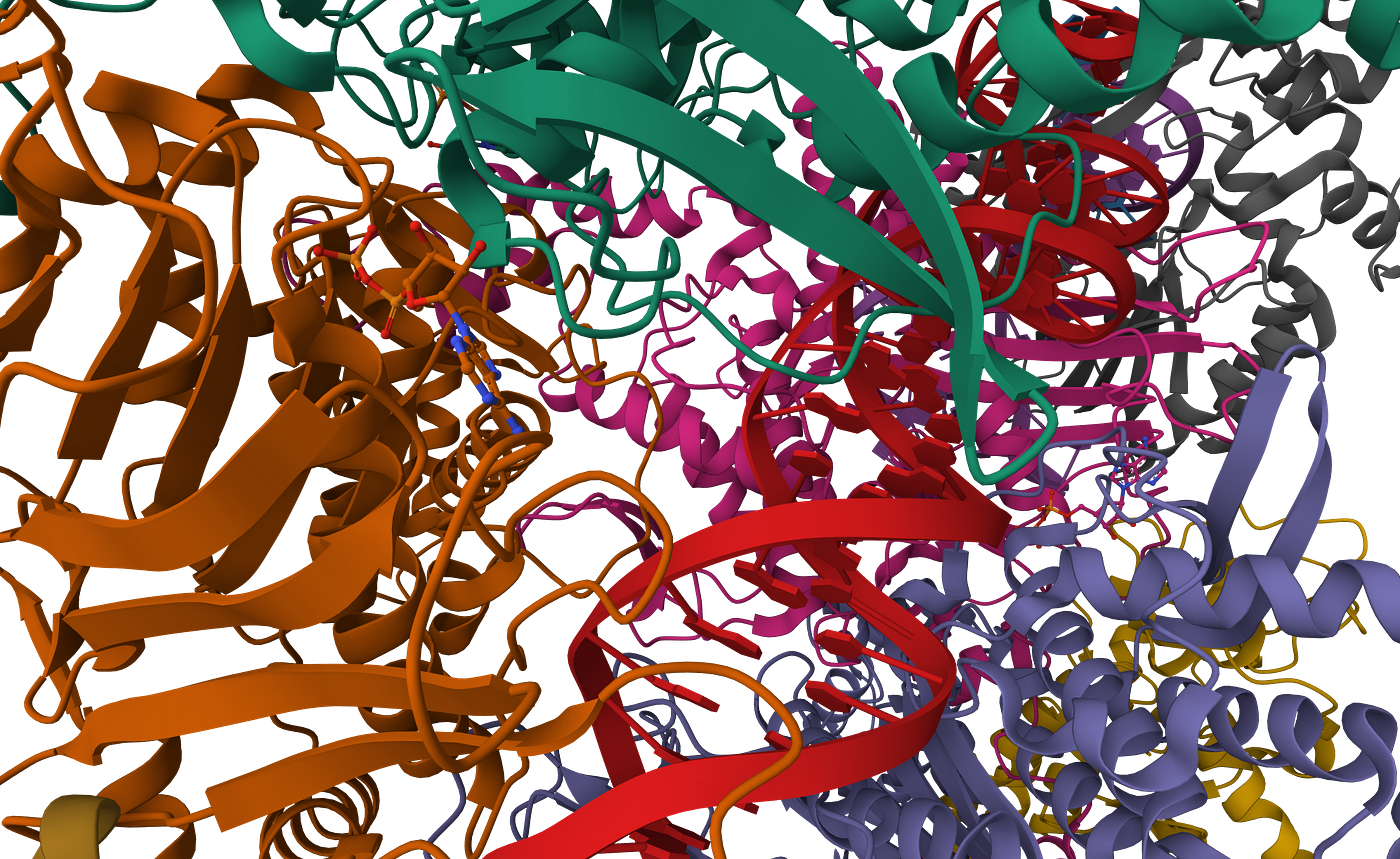
Epitranscriptomics: Exploring and Analyzing RNA Modifications
Epitranscriptomics is an emerging field within RNA biology that focuses on the study of chemical modifications of RNA molecules, known as…
Epitranscriptomics: Exploring and Analyzing RNA Modifications
Epitranscriptomics is an emerging field within RNA biology that focuses on the study of chemical modifications of RNA molecules, known as RNA modifications. These modifications, which include RNA methylation and RNA editing, play crucial roles in regulating gene expression and RNA function. Understanding the epitranscriptome — the complete set of RNA modifications within a transcriptome — provides insights into cellular processes, disease mechanisms, and potential therapeutic targets. This article delves into the techniques, tools, and applications of epitranscriptomics, highlighting its significance in modern molecular biology.
Understanding Epitranscriptomics
Epitranscriptomics is the study of chemical modifications on RNA molecules and their impact on gene expression and cellular function. These modifications, which include methylation and editing, play crucial roles in regulating RNA stability, translation, and splicing. Understanding the epitranscriptome — the complete set of RNA modifications — provides insights into cellular processes and disease mechanisms, highlighting the dynamic regulation of the transcriptome.
What is Epitranscriptomics?
Epitranscriptomics refers to the study of chemical modifications on RNA molecules and their effects on gene expression and cellular function. These modifications can occur on various types of RNA, including mRNA, tRNA, rRNA, and non-coding RNAs. The most common types of RNA modifications include methylation, pseudouridylation, and editing, each contributing to the regulation of RNA stability, translation, and splicing.
Importance of Epitranscriptomics
Epitranscriptomics is critical for understanding the dynamic regulation of the transcriptome. RNA modifications influence RNA processing, localization, and translation, thereby affecting protein synthesis and cell function. Aberrations in RNA modifications have been linked to various diseases, including cancer, neurological disorders, and metabolic diseases. Studying the epitranscriptome can reveal novel biomarkers and therapeutic targets, advancing personalized medicine and disease treatment strategies.
Key Techniques in Epitranscriptomics
Key techniques in epitranscriptomics involve detecting and mapping RNA modifications across the transcriptome. These include RNA sequencing (RNA-Seq) methods like MeRIP-Seq and CLIP-Seq, mass spectrometry for precise identification and quantification, and chemical mapping techniques like DMS-Seq. Each technique offers unique advantages in uncovering the diversity and dynamics of RNA modifications.
RNA Sequencing (RNA-Seq) for RNA Modifications
RNA sequencing (RNA-Seq) is widely used to detect and quantify RNA modifications. Specialized RNA-Seq techniques have been developed to map specific RNA modifications across the transcriptome.
- MeRIP-Seq (methylated RNA immunoprecipitation sequencing): Used to detect N6-methyladenosine (m6A) modifications. Learn more about MeRIP-Seq.
- m6A-Seq: Another technique specifically for mapping m6A modifications. Explore m6A-Seq.
- CLIP-Seq (crosslinking immunoprecipitation sequencing): Used to study protein-RNA interactions and modifications. Discover more about CLIP-Seq.
Mass Spectrometry
Mass spectrometry is a powerful tool for identifying and quantifying RNA modifications with high sensitivity and specificity.
- LC-MS/MS (liquid chromatography-tandem mass spectrometry): Used to profile and quantify various RNA modifications. Learn more about LC-MS/MS.
Chemical Mapping
Chemical mapping techniques involve treating RNA with specific chemicals that react with modified nucleotides, followed by sequencing to identify the modification sites.
- DMS-Seq (dimethyl sulfate sequencing): Used to map methylation sites on RNA. Explore DMS-Seq.
- SHAPE-Seq (selective 2'-hydroxyl acylation analyzed by primer extension sequencing): Maps structural modifications and interactions. Discover SHAPE-Seq.
Epitranscriptomics Tools
Epitranscriptomics relies on a variety of bioinformatics tools to analyze RNA modifications from sequencing data. Tools like m6AViewer, RADAR, and RMBase provide comprehensive solutions for identifying, quantifying, and visualizing RNA modifications. These tools enable researchers to manage and interpret complex epitranscriptomic data, facilitating deeper insights into RNA biology.
Bioinformatics Tools for RNA Modifications Analysis
Several bioinformatics tools have been developed to analyze RNA modifications from sequencing data, providing comprehensive solutions for identifying, quantifying, and visualizing RNA modifications.
- m6AViewer: A tool for visualizing m6A modifications across the transcriptome. Access m6AViewer.
- RADAR: A computational pipeline for RNA editing analysis. Explore RADAR.
- RMBase: A database of RNA modifications. Discover RMBase.
Tools for RNA Methylation Analysis
RNA methylation is one of the most studied modifications in epitranscriptomics. Specific tools are designed to analyze methylation patterns.
- m6A-Atlas: A comprehensive database of m6A modifications. Learn more about m6A-Atlas.
- m6AViewer: Allows visualization of m6A sites. Access m6AViewer.
Tools for RNA Editing Analysis
RNA editing involves the post-transcriptional alteration of RNA sequences, and several tools facilitate the study of these modifications.
- REDItools: A suite of tools for RNA editing analysis. Explore REDItools.
- SAVoR: A web-based tool for RNA editing visualization. Discover SAVoR.
Applications of Epitranscriptomics
Epitranscriptomics has broad applications across various fields of biology and medicine. In cancer research, it reveals how RNA modifications influence tumor progression and drug resistance. In neurology, it helps understand the role of RNA modifications in brain development and neurodegenerative diseases. Additionally, epitranscriptomics is crucial for studying immune responses and developmental processes, offering new avenues for therapeutic interventions.
Cancer Research
Epitranscriptomics plays a significant role in cancer research by revealing how RNA modifications influence tumor progression, metastasis, and drug resistance.
- Oncogenic RNA Modifications: Studying how modifications like m6A affect oncogene expression. Learn more about RNA modifications in cancer.
- Therapeutic Targets: Identifying RNA modification enzymes as potential drug targets. Explore therapeutic targets in RNA modifications.
Neurological Disorders
RNA modifications are implicated in various neurological disorders, influencing neuronal development and function.
- Neurodevelopmental Disorders: Investigating the role of RNA modifications in brain development. Discover more about RNA modifications in neurodevelopment.
- Neurodegenerative Diseases: Studying how RNA editing affects neuronal survival and function. Learn about RNA editing in neurodegeneration.
Immune Response
RNA modifications regulate the immune response by modulating the stability and translation of immune-related mRNAs.
- Immune Regulation: Understanding how modifications like m6A control cytokine production. Explore RNA modifications in immune response.
- Viral Infections: Studying how viruses exploit host RNA modification machinery. Learn about RNA modifications in viral infections.
Developmental Biology
Epitranscriptomics provides insights into how RNA modifications regulate developmental processes.
- Embryonic Development: Analyzing RNA modifications during early development stages. Discover more about RNA modifications in development.
- Cell Differentiation: Investigating the role of RNA modifications in cell fate decisions. Learn about RNA modifications in cell differentiation.
Advanced Tools for Epitranscriptomics
Advanced tools and platforms are essential for epitranscriptomics research, providing integrated solutions for data processing and analysis. Platforms like DiPhyx offer cloud-native environments that integrate multiple bioinformatics tools, enhancing the efficiency of epitranscriptomics studies. Visualization tools like IGV and the UCSC Genome Browser aid in interpreting complex data, making them indispensable for modern RNA biology research.
Integrated Platforms
Integrated platforms combine multiple tools and databases to provide comprehensive solutions for epitranscriptomics research.
- DiPhyx: A transformative scientific computing platform that integrates various epitranscriptomics tools into a unified, cloud-native environment. DiPhyx facilitates efficient data management, computation, and analysis. Discover DiPhyx.
- Galaxy: An open-source platform for bioinformatics analysis. Access Galaxy.
Visualization Tools
Visualization tools are essential for interpreting complex epitranscriptomics data, providing insights into RNA modifications and their functional implications.
- IGV (Integrative Genomics Viewer): A tool for visualizing RNA-Seq data and modifications. Learn more about IGV.
- UCSC Genome Browser: A comprehensive tool for visualizing genomic data, including RNA modifications. Explore UCSC Genome Browser.
Challenges in Epitranscriptomics
Despite its potential, epitranscriptomics faces several challenges, including data complexity, detection sensitivity, and functional interpretation. Managing and analyzing diverse RNA modifications require advanced computational tools and techniques. Additionally, detecting low-abundance modifications with high specificity and understanding their functional implications remain significant hurdles in the field.
Data Complexity
Epitranscriptomics data is inherently complex due to the diversity and dynamics of RNA modifications. Managing and analyzing such data requires advanced computational tools and techniques.
- Data Integration: Combining data from different epitranscriptomic studies to gain a comprehensive view. Learn about data integration challenges.
Detection Sensitivity
Detecting low-abundance RNA modifications with high sensitivity and specificity is challenging, necessitating the development of more robust and accurate methods.
- Methodological Improvements: Developing new techniques to enhance detection sensitivity. Explore improvements in RNA modification detection.
Functional Interpretation
Understanding the functional implications of RNA modifications is complex, requiring extensive experimental validation and functional assays.
- Functional Validation: Conducting experiments to validate the roles of RNA modifications. Learn about functional validation of RNA modifications.
Future Directions in Epitranscriptomics
The future of epitranscriptomics lies in the integration of multi-omics data, advancements in single-cell technologies, and the application of machine learning and AI. Integrating epitranscriptomics with other omics layers will provide a comprehensive view of cellular regulation. Single-cell epitranscriptomics will reveal cellular heterogeneity, while AI will offer new ways to analyze and interpret complex data, driving further discoveries in RNA biology.
Multi-Omics Integration
Integrating epitranscriptomics with other omics layers, such as genomics, proteomics, and metabolomics, will provide a more comprehensive understanding of cellular regulation and function.
- Multi-Omics Approaches: Combining different omics data to uncover complex regulatory networks. Learn about multi-omics integration.
Single-Cell Epitranscriptomics
Advancements in single-cell technologies will enable high-resolution analysis of RNA modifications at the single-cell level, revealing cellular heterogeneity and dynamic regulatory mechanisms.
- Single-Cell Technologies: Developing new methods for single-cell epitranscriptomics. Explore single-cell RNA modifications.
Machine Learning and AI
Machine learning and AI are increasingly being applied to epitranscriptomics, offering new ways to analyze and interpret complex data.
- AI in Epitranscriptomics: Leveraging AI to predict RNA modifications and their functional effects. Discover AI applications in epitranscriptomics.
Epitranscriptomics is a rapidly evolving field that provides crucial insights into the regulation of gene expression and RNA function. By leveraging advanced sequencing technologies, bioinformatics tools, and computational resources, researchers can explore the dynamic world of RNA modifications and their roles in health and disease. Despite challenges in data complexity and detection sensitivity, ongoing advancements in multi-omics integration, single-cell technologies, and AI hold great promise for the future of epitranscriptomics, driving new discoveries and innovations in RNA biology.
For further reading and resources, explore the following links:
- MeRIP-Seq for m6A detection
- m6A-Seq
- CLIP-Seq for protein-RNA interactions
- LC-MS/MS for RNA modifications
- DMS-Seq for methylation mapping
- SHAPE-Seq for RNA structure
- m6AViewer
- RADAR for RNA editing analysis
- RMBase for RNA modifications
- m6A-Atlas
- REDItools for RNA editing
- SAVoR for RNA editing visualization
- RNA modifications in cancer
- RNA modifications in neurodevelopment
- RNA modifications in immune response
- RNA modifications in development
- RNA modifications in cell differentiation
- DiPhyx for epitranscriptomics research
- Galaxy for bioinformatics analysis
- IGV for RNA-Seq visualization
- UCSC Genome Browser
- Improvements in RNA modification detection
- Functional validation of RNA modifications
메타데이터
- post_id
- 6c94528b9e98
- slug
- epitranscriptomics-exploring-and-analyzing-rna-modifications-6c94528b9e98
- url
- https://medium.com/bioinformatic/epitranscriptomics-exploring-and-analyzing-rna-modifications-6c94528b9e98
- canonical_url
- https://medium.com/bioinformatic/epitranscriptomics-exploring-and-analyzing-rna-modifications-6c94528b9e98
- author_url
- https://medium.com/@minooscitech
- status
- ok
- fetched_at
- 2026-06-12 07:40:50