Everything I Know About Management, I Learned at Kilometer 35
Three marathons, four half marathons, ten-plus 10Ks, fifteen triathlons, and one quiet lesson: the road was running my one-on-ones
Everything I Know About Management, I
Learned at Kilometer 35
Three marathons, four half marathons, ten-plus 10Ks, fifteen triathlons, and one quiet lesson: the road was running my one-on-ones
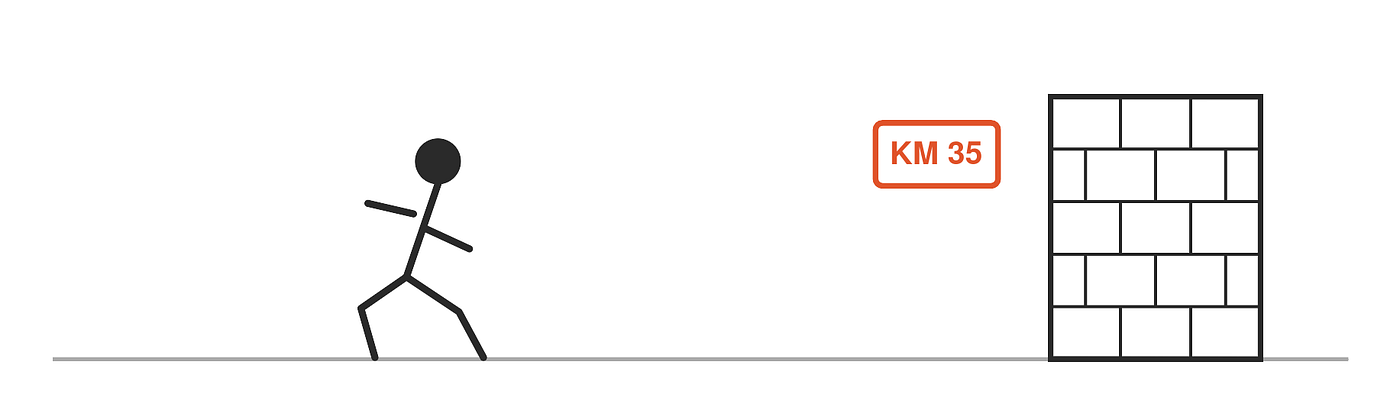
Kilometer 35. Marathoners call this place the wall, the moment your body burns through the last of its stored glycogen and simply stops cooperating. My legs are gone, my pace is falling apart, and a single quiet thought is keeping me upright: I’ve been here before. Not in a race, but in a project sliding out of control, in a quarter that asked for more than I had. That was the morning I understood that running had been teaching me to manage all along.
I didn’t start running to get better at my job. I’ve run since I was a kid: my first 10K was the race itself, and somehow I made it to the finish. From there I kept adding distance and speed, the same way my management career would grow later, one uncomfortable stretch at a time. These days I run mostly to clear my head and stay in shape. But somewhere along the way, the road started handing me lessons I’d carry straight into leading and managing my engineering groups.
Here are the five lessons that had the most impact on my management career:
1. Set Goals, Real Ones

Every runner knows the difference between “I want to run more” and “I’m running the Paris Marathon in April, so this week I need three runs totaling 40 kilometers, including six 800-meter intervals on Tuesday.”
The first is a wish. The second is a plan.
When I started training seriously, I learned that a big goal only works once you break it into small, boring, weekly steps. The marathon isn’t the goal. It’s the result. The goal is Tuesday’s interval session, and whether I actually showed up for it.
I brought this back to my team. We had been writing goals like “improve product quality,” the engineering version of “run more.” So we changed the question. Not “where do we want to be in six months,” but “what does this week look like if we’re on track?” What’s our Tuesday interval session? The ambition didn’t shrink. It finally got legs under it.
A goal without a weekly plan is just a finish line you’re not running toward.
2. Avoid Injuries: Burnout Is a Stress Fracture

Ask any experienced runner what stops their training, and they won’t say lost motivation. They’ll say injury, and almost every injury tells the same story: too much, too fast, ignoring the warning signs. That’s why runners respect the 10% rule: don’t grow your weekly load faster than your body can handle. The pain you push through on Tuesday becomes six weeks on the couch in March.
Teams break the same way. Burnout isn’t a bad day; it’s a stress fracture, built quietly over weeks of overload, and by the time you can see it on someone’s face, you’re not looking at a hard week, you’re looking at losing them for months. So I watch my team’s load the way I watch my own. When I see someone start to limp, slow to respond, quiet in meetings, a passive-aggressive edge creeping into their messages, I don’t wait for the break. We cut the load that week. Recovery isn’t wasted time; it’s what makes the next hard block possible.
Burnout is the slow injury. The fast one is the escalation: the production-down emergency from an important customer that lands at kilometer 25 of the quarter, while you’re deep in something else, and doesn’t ask permission. You drop everything, pull your best people off their work, and within a day, the whole company is circling one customer, and naturally, a second one shows up to the party with their own ticket. An injury doesn’t just hurt; it stops your training and pushes every planned thing into next month.
And you can’t recover your way to being strong. The work that prevents injury happens long before, on the boring days in the gym building the muscles that quietly take the load. In software, that gym is your quality work: challenging the product early enough, deep design, automated tests, an aggressive gating process, monitoring, all the invisible work that only gets noticed when it’s gone. It isn’t exciting. It’s strength training, and you build it when nothing is on fire, exactly so that less catches fire. (Bonus: a strong core is also what lets you sit hunched over a laptop for ten hours without your own back filing a critical bug. 🙂)
3. Be Patient

There is no fast way to get fit. Every time I tried to squeeze three months of base training into three weeks of trying hard, my body sent the bill: a strained calf, a flat race, a heart rate that wouldn’t come down. Fitness isn’t built during the hard workout; it’s built in the quiet days after, while your body adjusts to a stress you put on it weeks ago. You can’t cram a marathon, and wanting it more doesn’t make your body move any faster.
Patience also means trusting the plan you already made. Runners hurt themselves by tossing a good plan the moment one workout goes badly or a friend swears by some new method. The same trap waits at work: the first hard week tempts you to throw out the roadmap and chase a shiny new direction. Don’t. If the assumptions under the plan still hold, keep shipping it one step at a time. Constant re-planning feels like progress, but it’s really just standing still at speed. Change direction when the facts change, not when you’re simply tired of the plan.
And there will be voices. Plenty of people will tell you it won’t work: you’re too slow, the plan is wrong, the market won’t care. You can’t out-argue them, so don’t try. What carries a runner past the doubt isn’t a clever answer, it’s the habits that quietly build belief: the routine, the partner, the small run of sessions you didn’t skip. Keep your head down, keep taking the next step, and let the results speak. Do that long enough and the voices change: the people who said it couldn’t be done start asking how you did it.
Patience is contagious, and so is panic. When you stop trusting the plan, the people around you feel it before you say a word. They are looking to you for steadiness, and instead they see their leader running in circles. That is exactly the moment to slow down, look back at the plan you made when your head was clear, and embrace it out loud. The calm has to start with you.
4. Know Your Limits

The surest way to ruin a race is to run the first 10 kilometers feeling great. You build a lead, your legs feel free, the pace is easy, and then at kilometer 35 you hit the wall, the bill comes due all at once, and you’re walking. Every experienced runner has fallen apart this way, and it taught us not to trust how good we feel at the start.
So we learn to pace ourselves. We learn the difference between the good pain of effort and the bad pain of damage. We learn that the negative split, starting slower than feels right and finishing strong, beats the fast start almost every time. And we learn the hardest skill of all: reading your own body honestly, in the moment, instead of the reading you wish you had.
Managers fall apart the same way, and so do their teams. The exciting start of a project, “we can absolutely ship all of this by Q3,” is the kilometer-10 feeling that wrecks the second half. Knowing your limits means planning to the pace you can really hold for the whole distance, not the burst you can manage on adrenaline. It means saying no, or not yet, or not all of it, while you still can, which is a quieter kind of courage than saying yes to everything. And it means reading your team’s real energy, not the optimistic one everyone shows at the kickoff.
Anyone can start fast. The skill is choosing a pace you won’t have to apologize for at the wall.
5. Enjoy the Journey

At my first marathon, I stared at my watch for all 42 kilometers. I hit my target time. I remember almost nothing else about the race.
At my third, I made one decision before the start: I would actually be there. I noticed the crowd. I traded a few words with the runner matching my pace at kilometer 18. I watched the city turn gold at sunrise. I finished four minutes slower than my best, and it’s still my favorite race I’ve ever run.
Here’s what long distances teach you about long games: if the only good moment is the finish line, you’ve signed up for months of pain in exchange for one good hour. Nobody sustains that. The people still running at sixty are the ones who learned to love the ordinary Tuesday run, not just the medal.
And teams are running a race with no finish line at all. There’s always another quarter, another launch, another target that moves away the moment you reach it. If you only let your team celebrate at the top, you’re asking them to spend a whole career in the valley. So celebrate the training. Say the small wins out loud, by name. Make the everyday work, the Tuesday-interval work where 99% of the time actually lives, into something a person can enjoy while they’re in it.
The Long Run
Running never handed me a management framework. It gave me something better: a weekly, physical, slightly painful reminder that progress is slow, that bodies and teams both break when you overload them, that growth takes the time it takes and can’t be rushed, that the runner who paces honestly beats the one who starts like a hero, and that the journey is not the price of the finish. It is the thing.
The road doesn’t care about your title. It only ever asks two questions: did you show up today, and will you be able to show up again tomorrow?
That, it turns out, is most of management.
메타데이터
- post_id
- 702593b53bd2
- slug
- everything-i-know-about-management-i-learned-at-kilometer-35-702593b53bd2
- url
- https://medium.com/@shlomishor/everything-i-know-about-management-i-learned-at-kilometer-35-702593b53bd2
- canonical_url
- https://medium.com/@shlomishor/everything-i-know-about-management-i-learned-at-kilometer-35-702593b53bd2
- author_url
- https://medium.com/@shlomishor
- status
- ok
- fetched_at
- 2026-06-15 20:49:13



