Training the Nervous System: Yana Nakhimova on the Body as the Interface
Most conversations about neurotechnology start with hardware. Yana Nakhimova starts with the body.
Training the Nervous System: Yana Nakhimova on the Body as the Interface
Most conversations about neurotechnology start with hardware. Yana Nakhimova starts with the body.
The problem she is trying to solve is deceptively simple: Most people know what they should do differently, and do not do it. Not because they lack information or motivation, but because the nervous system operates on patterns that thinking alone cannot update.
With a background in behavioral science and a PhD focused on why people often fail to change their behavior even when they want to, Nakhimova has spent years exploring a question the field rarely asks out loud: What if the most reliable way to influence the nervous system is not through a device, but through movement?
Her method, Body Mind Method, uses short structured protocols designed to train the nervous system directly, improving how people regulate attention, manage cognitive load, and recover from stress. It is not fitness. It is not meditation. And it may be one of the more quietly compelling ideas sitting at the edge of what neurotechnology could become.
In this conversation, she talks about why behaviour change happens faster through action than through thinking, how her work sits within the broader neurotech ecosystem, and why she believes the field needs to ask harder questions about what all that brain data is actually for.
Interview by Chay Carter, founder of Carter Sciences and Reccy Neuro.

Yana Nakhimova is the creator of Body Mind Method
“When the body encounters new conditions and has to adapt in real time, the nervous system updates its patterns far more effectively than through explanation alone.”
You came into this field through behavioural science rather than through devices or implants. What was the gap you saw that pulled you in this direction?
My background is in behavioural science and how behaviour changes. During my doctoral research on behavior change, I became increasingly interested in something the field often overlooks: Why knowing what to do is rarely enough to actually change behavior — and what role the body plays in that gap.
We understand a great deal about cognition. How people think, how they form mindsets, how they make decisions. But the body tends to get left out of that picture. So I started exploring how movement, sensory feedback, and motor learning drive neuroplasticity and help people genuinely change their behaviour.
One idea became central to everything I do: Behaviour often changes faster through action than through thinking. When the body encounters new conditions and has to adapt in real time, in a real environment, the nervous system updates its patterns far more effectively and far more quickly than it does through explanation, mindset work, or anything that stays purely in the head.
Over time, that evolved into developing structured protocols. Short sequences of sensorimotor tasks designed to train the nervous system and improve how people regulate attention and cognitive load under changing conditions.
The underlying question is the same one much of neurotechnology is trying to answer: How can we influence neural systems in a reliable way, and translate those changes into real world behaviour?
Body Mind Method involves movement, but it is clearly not exercise. How do you explain what it actually is and what makes it distinct?
People ask this all the time, and I understand the confusion. You can see something that looks like movement, so people assume it must be fitness, or yoga, or mindful movement of some kind. The goal is completely different.
The core of the method is structured sensorimotor learning. Each protocol consists of short tasks that challenge your coordination, your balance, your spatial awareness, your adaptability. The conditions of the task change throughout the session. That constant need to adapt is what forces the brain to update its predictions in real time.
That is the basic mechanism behind neuroplastic change. If you continue adapting to new and changing conditions, you drive change in how your nervous system operates. And because the sensorimotor system is linked directly to attention and regulation, people often notice the effects quickly. Clearer thinking, more stable attention, faster recovery from stress, less background tension in the body.

Body Mind Method is a manifestation of structured sensorimotor learning
It is not about building fitness. It is about training the system that governs how you function.
One element that tends to surprise people is the role of play. Sessions are deliberately designed to feel game-like rather than effortful. That is not an aesthetic choice — it is mechanistic. Playful states can support dopamine-mediated learning and make the nervous system more receptive to updating patterns. In practice, this is often visible immediately — people who came in tense and guarded begin to experiment, take risks, laugh at their own mistakes. That combination — structured challenge within a playful state — is something most movement practices do not deliberately engineer.
Neurotech tends to be described as either implantable or wearable. Where does your work sit in that landscape?
I think the definition of what counts as neurotechnology is genuinely expanding, and that is a good thing.
What I see right now is a field that has become very good at measurement. We can gather a great deal of data about the brain. The harder question, and the one I think about constantly, is what you do with that data once you have it. What does it change? How do you help someone actually use it in their life?
That is where I see the clearest overlap with what I do. If you know that a device is giving you scores about your focus or your stress levels, you need to know what to do next. That gap between measurement and behavior change is exactly where Body Mind Method can sit. We can create a closed loop. Device provides data, the method provides a structured way to act on it.
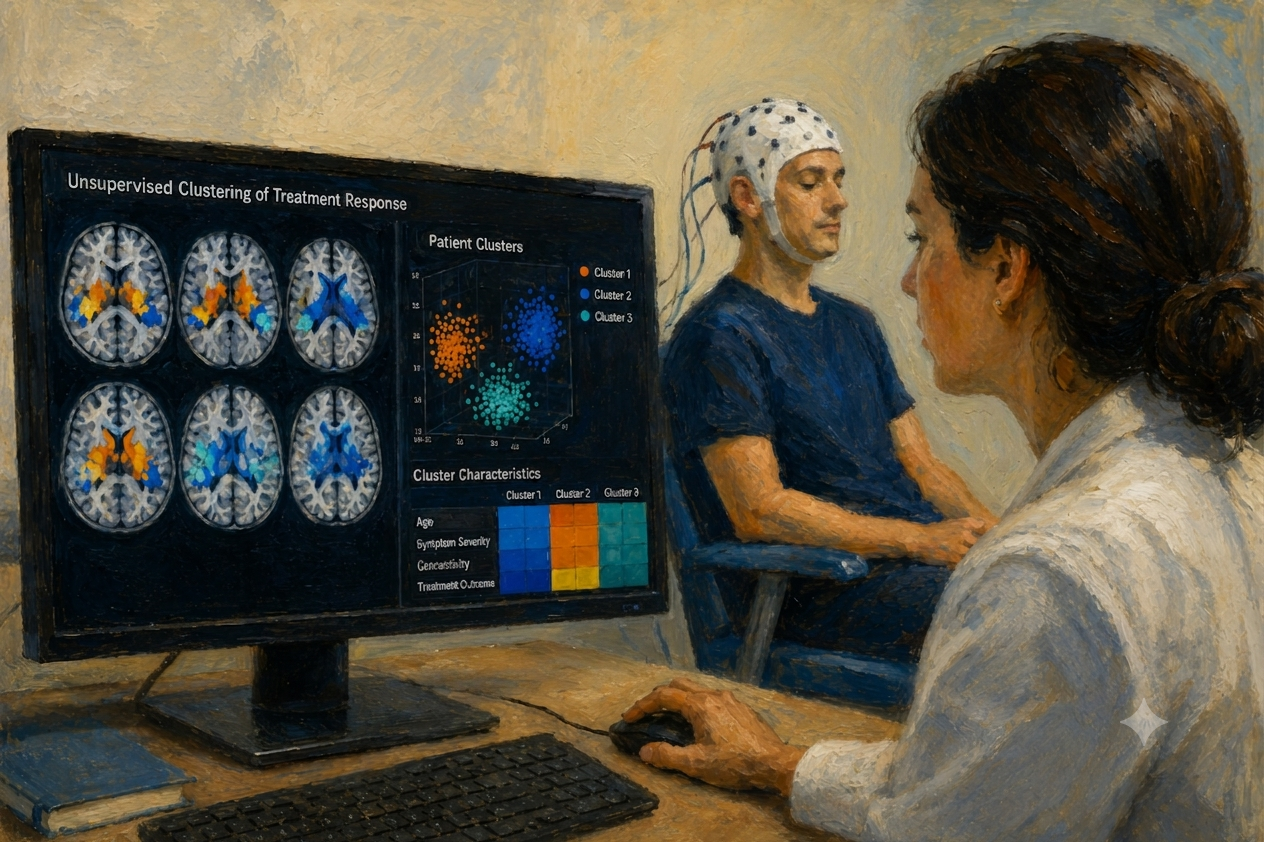
I’m currently collaborating with Northeastern University on an IRB-submitted feasibility study using movement sensors to examine behavioral and sensor-based markers of cognitive state regulation under load. We’re also exploring EEG as a possible measurement layer. I see strong long-term potential for integration with neurotechnology, but the practical work does not depend on waiting for new devices — structured movement can already help people reduce overload and regain cognitive readiness through the body.
“Neurotechnology should be for people, not the other way around. But right now, too many startups are treating the behavioural layer as something they will think about later.”
You described the 15-minute protocol to me. Walk me through what is actually happening mechanically, and what people tend to notice afterwards.
Most protocols target three layers at the same time: physiology, attention, and sensorimotor integration.
When the brain is under sustained cognitive load or stress, the body shifts into automatic patterns. You experience more rigidity. Muscle tension increases. Movement variability decreases. You are putting effort into things where you could be far more relaxed. These states make thinking harder and reduce cognitive flexibility.
The protocol introduces controlled novelty. Every session includes different movements, and the conditions change throughout. This creates prediction errors. The nervous system learns through error and correction, updating its internal models of movement and regulation in real time.
Structurally, sessions move through three phases. The first builds focused alertness — preparing the nervous system to learn. The second introduces progressively complex movement challenges under changing conditions. The third closes with slow, deliberate somatic practice that trains the system to down-regulate consciously. That full cycle — activation, adaptation, deliberate recovery — is itself the training. The cycle is what makes the change durable.
Because motor flexibility and cognitive flexibility are closely linked, people who train with well-designed protocols often experience a noticeable shift — though the degree of transfer depends on how the practice is structured. That shift typically includes clearer thinking, more stable attention, faster recovery from stress, and less of the low-level background tension that most people carry without realising it.
Right now we measure outcomes through pre/post self-report measures, looking at behavioral changes in how people feel and function. The Northeastern study will let us add sensor and potentially EEG data to that, which will give us a much richer picture.
There is an interesting tension in what you are describing between using technology to understand the nervous system and training people to regulate it themselves. How do you hold those two things together?
I think they complement each other. The goal for me has never been to replace technology. It is to make sure people are not just passive recipients of it.
Right now, the conversation about brain-computer interfaces and wearables often frames the user as someone who is measured, monitored, and then adjusted. The device does the work. I think that misses something important about human agency, and about what we actually know about behaviour change.
[embed]Yana Nakhimova demonstrating the Body Mind Method at the BrainMind Summit, 2023
There is a version of the future where someone uses a device to understand their current brain state and then uses structured movement protocols to shift it. That is a very different relationship with technology than one where you just wear a device and hope it fixes you.
People should have agency over their own nervous system. The more we can teach people to recognise early signals, overload, rigidity, loss of attention, the earlier they can intervene and the more effectively they can regulate. That is not anti-technology. It is technology serving its actual purpose.
Where do you see the space around nervous system regulation heading, and what is missing from that conversation right now?
Nervous system regulation is becoming a buzzword, which is both encouraging and a little frustrating. One side of the market is moving toward meditation, yoga, and wellness practices. There is real science behind a lot of that, and the trend will continue.
What I would love to see more of is nervous system regulation taken seriously within the longevity space as a rigorous scientific framework. When you are at conferences talking about biotech and healthspan, nervous system health rarely gets the same treatment as other biological markers. That feels like a significant gap to me. The nervous system governs almost everything, and it is still treated as a side note.
The other thing I keep thinking about is the sequence that drives how startups prioritise. A company raises its first round, and it focuses on the device. The behavioural layer, the part that determines whether the technology actually changes anyone’s life — that gets pushed to later. I understand why. The hardware has to work first. But I think it sets the field back, because it means we keep building tools without asking clearly enough what we want people to be able to do with them.
Neurotechnology should be for people, not the other way around.
Interview by **Chay Carter for [NeuroTechX](https://neurotechx.com/)’s Content Laboratory**.
Chay Carter has 20 years of recruitment experience across London, New York, and Los Angeles. Since 2020, he has specialised in life sciences recruitment, with a growing focus on neurotechnology. In 2025, he founded Carter Sciences to support early-stage companies in neurotech and related fields with flexible, cost-conscious hiring strategies.
메타데이터
- post_id
- 77eb281b6094
- slug
- training-the-nervous-system-yana-nakhimova-on-the-body-as-the-interface-77eb281b6094
- url
- https://medium.com/neurotechx/training-the-nervous-system-yana-nakhimova-on-the-body-as-the-interface-77eb281b6094
- canonical_url
- https://medium.com/neurotechx/training-the-nervous-system-yana-nakhimova-on-the-body-as-the-interface-77eb281b6094
- author_url
- https://medium.com/@neurotechx
- status
- ok
- fetched_at
- 2026-06-10 22:22:12