The Cost of Holding On
The ceramic cat was a mistake.
The Cost of Holding On
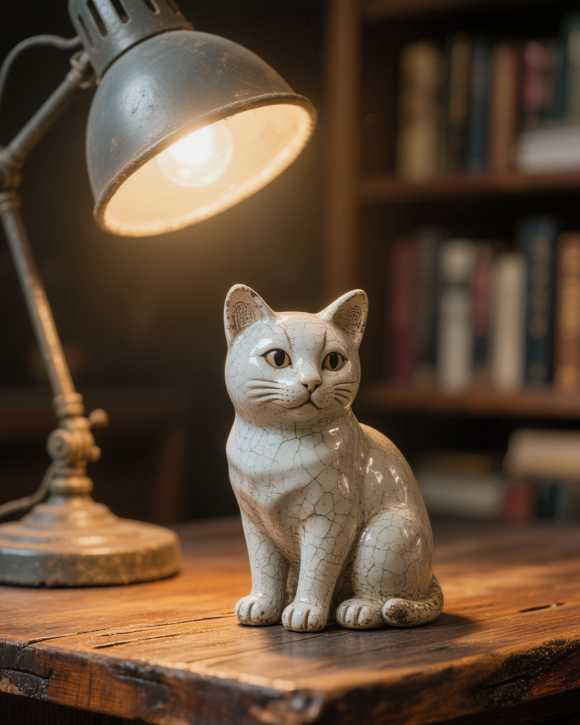
The ceramic cat was a mistake.
Not because it was ugly. It was beautiful, in that lopsided way only hand-thrown pottery can be. The mistake was the inscription on its ear: “Don’t drop.”
It turned the object into a contract. A fragile one. And like most contracts signed under the influence of sentimentality, it eventually broke.
We tend to think of love as an act of possession. The more you have of someone — their time, their secrets, their body — the more you love them. This is a lie sold to us by dopamine dealers and greeting card companies.
Look at the data from the self-expansion model in social psychology. Researchers tracked hundreds of couples. In the beginning, people do exactly what you’d expect. They absorb their partner’s tastes. If he likes jazz, she starts listening to jazz. If she hates cilantro, he stops ordering it.
It’s a high. Literally. Brain scans show the same neural pathways lighting up as they do for substance addicts. You feel like you own the person because your identity has swallowed theirs.
But here’s where the math gets brutal. Follow those same couples for five years, and the ones who fused the most completely have a forty-three percent higher chance of splitting up.
Why? Because you can’t actually own a human being without breaking them.
There’s a botanical phenomenon called the strangler fig. The seed lands in the canopy of a host tree. It sends roots down, wraps around the trunk, and slowly, methodically, steals all the light and nutrients.
It doesn’t kill the tree quickly. It suffocates it.
A lot of modern relationships are just two people trying to be each other’s strangler figs. We call it “intimacy.” We call it “commitment.” But if you remove the marketing jargon, it’s just a sophisticated form of consumption.
Consider the man who collects antique clocks. He knows the value of tension. Wind the spring too tight, he says, and the whole mechanism snaps. Leave it too loose, and it never ticks.
Relationships need that same mechanical precision. Too much closeness, and the parts grind against each other until they shatter.
Now, let’s talk about the elderly couple in the park. The husband has dementia. One afternoon, he points at a young woman in a red coat and says his granddaughter looks pretty.
His wife doesn’t correct him. She doesn’t cry. She just adjusts his scarf and tells him to look at her a bit longer.
Later, when he asks where his wife is, she tells him she’s gone to buy roasted nuts.
This isn’t tragic. It’s surgical. She has removed her own ego from the equation. She understands that her job isn’t to be recognized, but to ensure he feels safe. That’s not possession. That’s maintenance.
Neuroscience gives us another piece of the puzzle. The Zeigarnik effect states that our brains remember unfinished tasks twenty-seven percent more intensely than finished ones.
An unsent text message. A door that was never closed. A goodbye that never happened.
These things haunt us because they were never resolved. We keep them because we never had to let them go.
In the art world, there’s a restoration technique for broken ceramics. When a bowl breaks, they don’t throw it away. They glue it back together with resin mixed with metal powder. They highlight the cracks instead of hiding them.
The object becomes more valuable because it was broken.
Apply this to people. If you love something, should you keep it? Or should you break it gently, so you can spend the rest of your life putting it back together?
A survey in 2019 asked young people what they wanted most in a relationship. Sixty-seven percent said “closeness.”
Three years later, they were asked the same question. Their top answer was “space.”
What changed? Not the people. Just the realization that closeness is a function of pressure. And pressure bursts pipes.
Think about the guy who does astrophotography. He spends three nights in sub-zero temperatures to photograph the galaxy. He sends the picture to a woman he’s loved for years.
No confession. No pity. Just a simple observation: “The stars are brighter out there than in the city.”
He didn’t ask her to come with him. He just showed her the view.
That’s the difference between liking and loving. Liking wants to bring the mountain to Mohammed. Loving is content with sending a postcard.
We are terrified of letting go. We think it means we failed. But the data suggests otherwise.
The ceramic cat sat on a shelf for years. It wasn’t until the owner stopped trying to protect it from every possible fall that they could actually see it. The glaze, the weight, the way the light hit the crack in its ear.
When you try to own something completely, you stop seeing it. You only see the threat of loss.
So maybe the goal isn’t to find someone to complete you. Maybe it’s to find someone whose incompleteness you can tolerate.
Stop trying to be the air in someone’s lungs. Be the window they look through.
The cat is still on the shelf. The inscription is worn down now. The owner can barely read it anymore.
Good.
A note beyond the headlines
I write about global politics, but not just the news —
the human choices, moral trade-offs, and life lessons behind major events.
More reflections here:
메타데이터
- post_id
- 7daaf5ffd12e
- slug
- the-cost-of-holding-on-7daaf5ffd12e
- url
- https://medium.com/@nanmoon/the-cost-of-holding-on-7daaf5ffd12e
- canonical_url
- https://medium.com/@nanmoon/the-cost-of-holding-on-7daaf5ffd12e
- author_url
- https://medium.com/@nanmoon
- status
- ok
- fetched_at
- 2026-06-09 15:37:30