10-minute exercises you can do without leaving your bedroom
Modern life keeps many people glued to desks, screens, and indoor routines for hours at a time. Whether you work from home, live in a small…
10-minute exercises you can do without leaving your bedroom
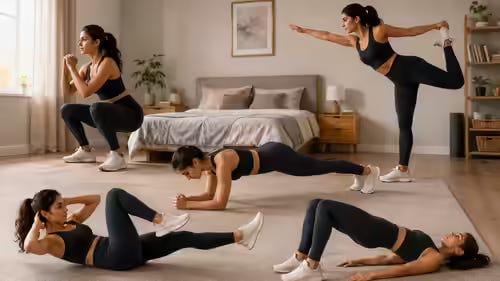
Modern life keeps many people glued to desks, screens, and indoor routines for hours at a time. Whether you work from home, live in a small apartment, study late into the night, or simply want a quick way to stay active, bedroom workouts offer an effective solution. You do not need a gym membership, expensive equipment, or a large amount of space to improve your fitness. In fact, just ten minutes of intentional movement can increase energy levels, improve circulation, support mental health, and help maintain overall physical conditioning.
Short workouts are especially useful because they remove one of the biggest barriers to exercise: time. When people think exercise requires a full hour, travel time, and specialized equipment, consistency becomes difficult. But ten minutes in your bedroom before work, during a study break, or before bed is manageable for almost anyone.
This guide explores practical 10-minute exercises you can perform in a bedroom using little or no equipment. These routines are suitable for beginners while still being adaptable for intermediate fitness levels. You can mix and match exercises depending on your goals, including fat loss, strength, flexibility, mobility, posture improvement, stress reduction, and energy enhancement.
Why 10-Minute Bedroom Workouts Work
Many people underestimate the effectiveness of short exercise sessions. While longer workouts certainly have benefits, shorter bursts of movement also create meaningful physical and mental improvements.
1. They Improve Consistency
A realistic routine is easier to maintain. Ten minutes feels achievable even on busy days. Consistency matters more than occasional intense sessions.
2. They Increase Daily Movement
Long periods of sitting can contribute to stiffness, poor posture, reduced mobility, and fatigue. Brief exercise breaks counteract inactivity.
3. They Support Mental Health
Movement stimulates endorphins and reduces stress hormones. Even a short session can improve mood and mental clarity.
4. They Require Minimal Space
Most bedroom exercises use body weight only. A yoga mat or towel is optional.
5. They Can Be Customized
You can target strength, cardio, flexibility, balance, or relaxation depending on your needs.
Preparing Your Bedroom Workout Space
Before starting, create a safe and comfortable environment.
Clear the Area
Move objects that could cause injury, such as chairs, cables, bags, or sharp furniture corners.
Wear Comfortable Clothing
Flexible clothing helps movement and reduces discomfort.
Hydrate
Drink water before and after exercising.
Use Proper Footwear if Needed
For low-impact routines, barefoot or socks may be fine. For jumping exercises, supportive shoes are preferable.
Warm Up Briefly
Even a one-minute warm-up reduces injury risk.
Simple warm-up ideas:
- Shoulder rolls
- Neck rotations
- Marching in place
- Gentle squats
- Arm circles
1. Full-Body Beginner Bedroom Workout
This routine is ideal for people starting fitness or returning after a long break.
Structure
- 40 seconds work
- 20 seconds rest
- Repeat once
Total time: approximately 10 minutes
Exercises
March in Place
Lift knees comfortably while swinging arms naturally.
Benefits:
- Raises heart rate
- Warms muscles
- Improves circulation
Bodyweight Squats
Stand with feet shoulder-width apart. Push hips backward and bend knees.
Benefits:
- Strengthens legs and glutes
- Improves mobility
- Supports posture
Wall Push-Ups
Place hands against a wall and lower chest toward it.
Benefits:
- Builds upper body strength
- Beginner-friendly
- Low joint pressure
Standing Knee Raises
Lift one knee at a time toward chest.
Benefits:
- Activates core
- Improves balance
- Gentle cardio
Glute Bridges
Lie on your back with knees bent and lift hips upward.
Benefits:
- Strengthens glutes
- Supports lower back
- Helps posture
Bird Dog
On hands and knees, extend opposite arm and leg.
Benefits:
- Improves coordination
- Strengthens core
- Enhances stability
2. Low-Impact Cardio Routine
Perfect for apartment living where loud jumping may disturb others.
Exercise Flow
Perform each for 45 seconds.
Fast Marching
Move quickly while pumping arms.
Side Steps
Step side-to-side continuously.
Toe Taps
Tap feet rapidly on an imaginary platform.
Shadow Boxing
Throw light punches while moving feet.
Standing Twists
Rotate torso side to side.
Heel Digs
Alternate extending heels forward.
Arm Swings
Large controlled arm motions.
Mini Squats
Small repeated squat movements.
Slow Mountain Climbers
Hands elevated on bed if needed.
Deep Breathing Walk
Cool-down movement.
Benefits of low-impact cardio:
- Joint-friendly
- Burns calories
- Improves heart health
- Reduces stress
3. Bedroom Strength Training Routine
You can build meaningful strength using only body weight.
Lower Body Exercises
Squats
Targets:
- Quads
- Glutes
- Hamstrings
Advanced variation:
- Pulse squats
- Jump squats
Lunges
Step one foot forward and lower body.
Benefits:
- Balance
- Leg strength
- Hip mobility
Calf Raises
Rise onto toes slowly.
Benefits:
- Ankle strength
- Lower-leg conditioning
Upper Body Exercises
Push-Ups
Modify using knees or wall.
Benefits:
- Chest strength
- Shoulder stability
- Core engagement
Tricep Dips on Bed
Use sturdy bed edge carefully.
Benefits:
- Arm toning
- Upper-body endurance
Plank Shoulder Taps
Alternate touching shoulders.
Benefits:
- Core control
- Shoulder stability
Core Exercises
Crunches
Traditional abdominal movement.
Bicycle Crunches
Alternating elbow-to-knee motion.
Plank Hold
Maintain straight-body position.
Leg Raises
Lift legs while lying down.
Benefits:
- Lower abdominal activation
- Core endurance
4. 10-Minute Fat-Burning Bedroom Circuit
This routine increases heart rate quickly.
Format
- 30 seconds exercise
- 15 seconds rest
- Repeat circuit twice
Exercises
Jumping Jacks
Modify to step jacks if needed.
High Knees
Lift knees rapidly.
Mountain Climbers
Hands on floor or bed edge.
Burpees
Optional push-up variation.
Squat Pulses
Stay low in squat position.
Speed Punches
Fast boxing punches.
Benefits:
- Burns calories efficiently
- Improves endurance
- Increases energy
5. Morning Wake-Up Stretch Routine
Starting the day with movement improves circulation and mental alertness.
Neck Stretch
Tilt head gently side to side.
Shoulder Rolls
Release upper-body tension.
Cat-Cow Stretch
Alternate spinal rounding and arching.
Seated Forward Fold
Stretch hamstrings and lower back.
Hip Openers
Gentle knee rotations.
Standing Side Stretch
Reach overhead to each side.
Chest Opener
Clasp hands behind back.
Ankle Circles
Improve mobility.
Benefits:
- Reduces stiffness
- Improves flexibility
- Supports posture
- Enhances mood
6. Bedroom Yoga Flow
Yoga combines flexibility, balance, breathing, and mindfulness.
Child’s Pose
Relaxing spinal stretch.
Downward Dog
Stretches calves and shoulders.
Cobra Pose
Strengthens back muscles.
Warrior I
Builds stability and focus.
Warrior II
Improves leg endurance.
Tree Pose
Enhances balance.
Seated Twist
Improves spinal mobility.
Corpse Pose
Deep relaxation.
Benefits of yoga:
- Stress reduction
- Better flexibility
- Improved breathing
- Mental calmness
7. Core-Focused 10-Minute Routine
A strong core supports posture, balance, and daily movement.
Dead Bug
Lie on back extending opposite limbs.
Plank
Maintain neutral spine.
Russian Twists
Rotate torso while seated.
Flutter Kicks
Small rapid leg movements.
Hollow Hold
Hold curved body position.
Side Plank
Strengthens obliques.
Benefits:
- Improved stability
- Reduced back pain risk
- Better athletic performance
8. Quiet Nighttime Exercise Routine
Some people prefer movement before sleep.
Gentle Marching
Slow relaxed pace.
Shoulder Mobility Circles
Release tension.
Glute Bridges
Controlled repetitions.
Cat-Cow Stretch
Slow spinal mobility.
Supine Twist
Relax lower back.
Deep Breathing
Slow nasal breathing.
Benefits:
- Reduces stress
- Encourages relaxation
- Releases muscle tension
Avoid intense cardio immediately before bed because it may increase alertness.
9. Bedroom Exercises for Small Spaces
Even tiny bedrooms can support exercise.
Wall Sit
Lean against wall with knees bent.
Standing Leg Raises
Minimal floor space needed.
Invisible Jump Rope
Simulated rope skipping.
Static Lunges
Stay in one place.
Plank Variations
Compact but effective.
Seated Knee Tucks
Use edge of bed or floor.
Tips for small-space workouts:
- Use vertical movement
- Reduce jumping
- Prioritize control
- Use furniture safely
10. Exercises Using Bedroom Furniture
Furniture can become workout equipment when used safely.
Bed Incline Push-Ups
Hands elevated on mattress.
Chair Squats
Tap chair lightly during squat.
Bed Step-Ups
Carefully step onto sturdy frame.
Towel Rows
Use towel for resistance.
Suitcase Deadlifts
Lift filled backpack carefully.
Safety tips:
- Ensure furniture is stable
- Avoid slippery surfaces
- Maintain control during movements
Creating a Weekly Bedroom Fitness Plan
A simple structure helps maintain momentum.
Monday — Full Body
Strength and cardio mix.
Tuesday — Stretch and Mobility
Recovery-focused movement.
Wednesday — Core Workout
Abdominal and posture training.
Thursday — Low-Impact Cardio
Heart-health session.
Friday — Strength Training
Legs, arms, and core.
Saturday — Yoga Flow
Flexibility and relaxation.
Sunday — Active Recovery
Light walking or stretching.
Tips for Staying Motivated
Keep Expectations Realistic
Small progress still matters.
Track Your Sessions
Use a notebook or app.
Play Music
Music improves workout enjoyment.
Focus on Habit Formation
Consistency beats intensity.
Use Short Breaks Wisely
Ten-minute movement breaks improve productivity.
Common Mistakes to Avoid
Skipping Warm-Ups
Cold muscles are more injury-prone.
Poor Form
Quality matters more than speed.
Overtraining
Rest days are important.
Holding Your Breath
Maintain steady breathing.
Ignoring Pain
Discomfort differs from injury pain.
Benefits of Bedroom Exercise Beyond Fitness
Bedroom workouts support more than physical appearance.
Better Posture
Movement strengthens supporting muscles.
Improved Energy
Exercise boosts circulation and oxygen flow.
Reduced Stress
Physical activity reduces tension.
Increased Confidence
Completing workouts builds discipline.
Better Sleep
Regular movement supports sleep quality.
How to Increase Difficulty Over Time
As exercises become easier, progress gradually.
Increase Repetitions
Add more reps per exercise.
Extend Work Time
Move from 30 to 45 seconds.
Reduce Rest Time
Shorter breaks increase intensity.
Add Resistance
Use backpacks or resistance bands.
Improve Technique
Controlled movement enhances effectiveness.
Quick 10-Minute Sample Routines
Energy Boost Routine
- Jumping jacks
- Squats
- Push-ups
- High knees
- Plank
Relaxation Routine
- Child’s pose
- Cat-cow
- Glute bridges
- Seated twist
- Deep breathing
Beginner Routine
- Marching
- Wall push-ups
- Chair squats
- Standing knee lifts
- Stretching
Fat Burn Routine
- Burpees
- Mountain climbers
- Squat jumps
- High knees
- Plank jacks
Adapting Workouts for Different Fitness Levels
Beginners
- Focus on movement quality
- Use modified exercises
- Take longer rest periods
Intermediate
- Increase speed and intensity
- Add repetitions
- Use supersets
Advanced
- Add plyometric movements
- Use weighted backpacks
- Minimize rest
Mental Health and Bedroom Workouts
Exercise directly affects emotional well-being.
Stress Relief
Movement lowers cortisol levels.
Improved Focus
Short exercise sessions refresh attention span.
Anxiety Reduction
Breathing and movement regulate the nervous system.
Mood Enhancement
Endorphin release promotes positivity.
For many people, a 10-minute workout becomes less about appearance and more about emotional reset and daily balance.
Frequently Asked Questions
Can 10-minute workouts really help?
Yes. Consistent short workouts improve cardiovascular health, strength, mobility, and mood.
Do I need equipment?
No. Most bedroom workouts rely entirely on body weight.
Can I lose weight with bedroom workouts?
Weight loss depends on overall activity and nutrition, but regular short workouts support calorie expenditure and fitness.
How often should I exercise?
Most people benefit from movement at least 4–6 days weekly.
Are bedroom workouts suitable for beginners?
Absolutely. Many exercises can be modified for any fitness level.
Final Thoughts
You do not need a large gym, expensive machines, or perfect conditions to stay active. A small bedroom and ten focused minutes are enough to create positive physical and mental changes when practiced consistently.
The most effective fitness routine is usually the one you can maintain. Bedroom workouts remove barriers such as travel time, crowded gyms, weather, and complicated schedules. Whether your goal is improved energy, better posture, stress relief, fat loss, flexibility, or strength, short home workouts provide a practical and sustainable path forward.
Start small. Choose one routine from this guide and repeat it consistently for a week. Once movement becomes part of your daily rhythm, progress naturally follows.
메타데이터
- post_id
- 883558df66ff
- slug
- 10-minute-exercises-you-can-do-without-leaving-your-bedroom-883558df66ff
- url
- https://medium.com/@lalitagod100/10-minute-exercises-you-can-do-without-leaving-your-bedroom-883558df66ff
- canonical_url
- https://medium.com/@lalitagod100/10-minute-exercises-you-can-do-without-leaving-your-bedroom-883558df66ff
- author_url
- https://medium.com/@lalitagod100
- status
- ok
- fetched_at
- 2026-07-13 06:23:13