The Saint of San Diego
How to Weaponize Mindfulness to Ruin Your Enemies’ Careers in Professional Baseball
MINDFULNESS AS A WEAPON
The Saint of San Diego
How to Weaponize Mindfulness to Ruin Your Enemies’ Careers in Professional Baseball
Photo by Daiji Umemoto on Unsplash
The World Series. Game 1.
People later called it the worst victory that never happened.
I prefer the beginning.
Fifty thousand people filled Montreal Stadium.
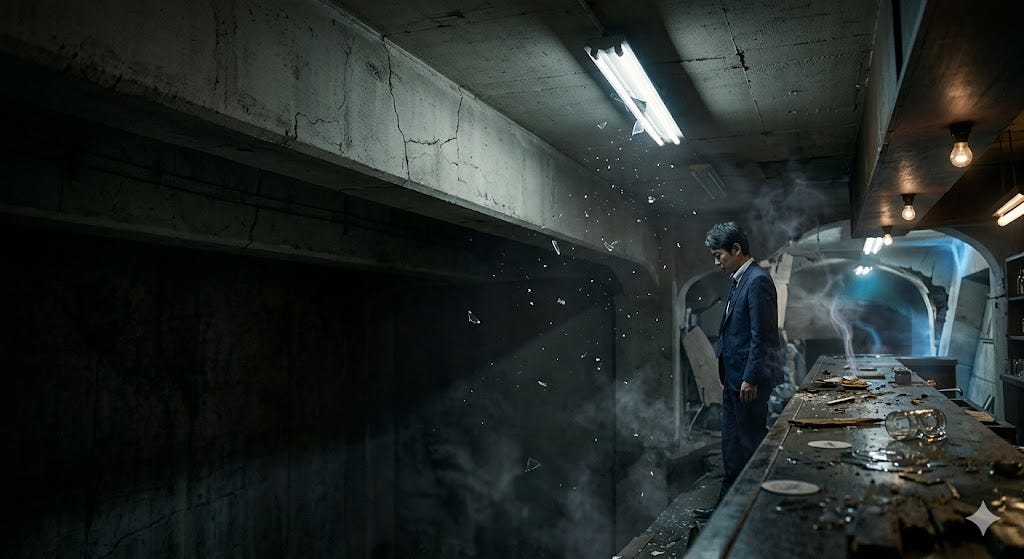
Cold air stayed inside the concrete like an old complaint.
They believed they had come to watch baseball.
Actually, they had come to judge me.
Ken Miyamoto.
Lead-off hitter.
League MVP.
Also:
traitor,
sellout,
desert worshipper,
and occasionally,
“Japanese man who speaks as if weather has legal authority.”
People keep giving me names.
I rarely return them.
Conversation becomes much lighter that way.
Last winter,
Montreal offered me more money than anyone should carry responsibly.
I thanked them.
Then I signed with San Diego.
Reporters asked why.
I answered honestly.
“Baseball is not employment.
It is climate.”
They laughed.
Someone asked if I meant California weather.
I said,
“No.”
Nobody wrote that part down.
Game 1 begins.
I step into the batter’s box.
The noise arrives first.
It does not sound like voices.
It feels assembled.
Thousands of small intentions bolted together into one large object.
People shout.
“VENDU!”
“GO HOME!”
“WE DON’T NEED YOU!”
A plastic beer cup flies toward me.
It misses.
The man who threw it immediately raises one hand.
“Sorry.”
The people around him nod with approval.
Interesting.
Hostility here includes customer service.
I make note of it.
The catcher smiles.
“Ignore them.
It’s Montreal.”
I ask,
“Does everyone receive this much emotion?”
He shrugs.
“Only the people they care about.”
That explanation creates more problems than it solves.
I step away from the plate.
Place the bat on the ground.
Very gently.
“I cannot play today.”
The umpire blinks.
“What?”
“The noise is entering baseball before baseball enters me.”
Silence.
Not complete silence.
Only the kind that happens when thousands of people suddenly become curious at exactly the same moment.
“I believe the game should arrive first.”
The umpire studies my face for several seconds.
Then asks,
“You serious?”
“I believe so.”
There is microphone near the dugout.
Nobody offers it.
I borrow it anyway.
“I like baseball.”
A few boos.
“I do not dislike loud people.
I only dislike loud hatred.
These are different animals.”
Someone throws another beer.
Before security reaches him,
the man stands up.
“I apologize.”
He bows toward me.
Then toward security.
Then toward the beer.
The crowd applauds.
The beer vendor also applauds.
The game waits.
Apparently this is normal procedure.
I continue.
“If children learn baseball from this,
they may believe hatred is official equipment.”
I hand the microphone back.
Nobody remembers giving it to me.
The internet becomes weather.
RespectKen
QuietBaseball
LetKenBreathe
I never use any of them.
Weather does not require permission.
Something should be explained about Montreal.
People there apologize with remarkable accuracy.
During batting practice,
a photographer accidentally steps on another photographer’s camera bag.
Both apologize.
Then both apologize for apologizing at the same time.
A nearby police officer apologizes for witnessing the exchange.
Nobody appears embarrassed.
This city has converted courtesy into infrastructure.
Later that evening,
a pitcher accidentally hits a batter.
The batter walks toward first base.
The pitcher removes his cap.
“I sincerely regret the emotional inconvenience caused by this baseball.”
The batter nods.
“I appreciate your accountability.”
The umpire asks whether both sides feel emotionally prepared to continue.
The crowd waits.
No one complains.
Baseball resumes exactly four minutes later.
The commentators call it
“a beautiful moment for the sport.”
I write that sentence down.
Not because I agree.
Because I cannot classify it.
Game 2 never begins.
Montreal players remain inside the clubhouse.
One by one,
they announce they cannot participate
until Ken Miyamoto feels psychologically welcomed.
Nobody instructed them.
That is precisely why the situation becomes dangerous.
League officials arrive.
Lawyers arrive.
Television crews arrive.
Sponsors arrive first.
Their statement is short.
Respect is essential to baseball. We fully support every athlete’s emotional safety.
I read it twice.
It is an excellent sentence.
There is nowhere to stand against it.
Not even accidentally.
The series moves to San Diego.
The air behaves differently there.
It does not demand agreement.
People clap too early.
Sometimes before the ball lands.
A visiting pitcher throws perfect strike.
Both teams applaud.
This also feels incorrect.
But in softer direction.
No system is symmetrical.
We win three games.
The score becomes
three games to two.
Two games remain.
Back in Montreal.
Nobody packs.
Instead,
our front office releases one sentence.
We cannot compete inside an environment where hostility has become architectural.
I sign my name.
It looks unusually ordinary.
That worries me slightly.
Television panels multiply.
Former players discuss dignity.
Former managers discuss culture.
Former politicians discuss baseball.
Nobody discusses baseball.
The league announces temporary measures.
No abusive language.
No personal insults.
No thrown objects.
No organized hostility.
Fans entering the stadium receive
Respect Guidelines.
Page one simply reads:
Please avoid becoming part of the problem.
Nobody knows what the problem officially is.
Another announcement follows.
Beginning immediately,
every game will start with
Thirty Seconds of Quiet Reflection.
Players stand still.
Fans stand still.
Mascots also stand still.
One mascot later admits
those were the longest thirty seconds
of his professional life.
Corporate sponsors react quickly.
A sports drink launches
Respect Flavor.
Nobody can describe its taste.
Sales exceed expectations.
The league office creates
Department of Emotional Conditions.
Nobody remembers voting for it.
Applications open the following Monday.
Over twelve thousand people apply.
Montreal receives the championship by default.
No final games.
No final outs.
No final swing.
The trophy looks slightly confused.
History accepts the result anyway.
History is surprisingly cooperative.
The championship parade begins.
Everyone smiles carefully.
Confetti falls with appropriate restraint.
One child cheers too loudly.
His parents gently remind him
that excessive celebration
may unintentionally reduce
another person’s emotional comfort.
The child apologizes.
The crowd applauds.
Very softly.
I watch everything from hotel television.
Mami sits beside me.
She eats strawberries.
One at a time.
After several minutes she asks,
“Are you happy?”
I consider the question.
“I believe events have continued.”
She waits.
She knows this sometimes means
I am still thinking.
“I requested less noise.”
She nods.
“The world appears to have heard
something larger.”
News continues.
More statements.
More policies.
More committees.
Everything becomes calmer.
Everything also becomes heavier.
Silence,
I discover,
can accumulate.
The television anchor smiles.
“Beginning next season,
Major League Baseball will introduce
Official Mindfulness Zones
in every stadium.
Fans experiencing excessive emotion
may voluntarily relocate
for guided breathing.”
The word
voluntarily
remains on the screen
slightly longer than necessary.
Mami looks at me.
“Did you expect this?”
“No.”
“You started it.”
“I started speaking.”
She thinks about that.
“So what changed?”
I look at the television.
Then at my own hands.
“I do not know.”
“I think…
people completed
a different sentence.”
Much later,
after Mami falls asleep,
I open my notebook.
Blank page.
I write:
Experiment One Request quieter crowd.
I stop.
Underneath,
I write:
Result: Unknown structural consequences.
I stare at the page.
There should not be
Experiment Two.
I leave the next page blank.
For almost three seconds.
Outside,
the television repeats,
“Respect the Game.”
Somewhere in the city,
people begin applauding.
Very quietly.
For a moment,
I cannot tell
whether they are celebrating,
agreeing,
or apologizing.
For the first time,
my model fails before the world does.
Note: Originally written in Japanese. Self-translated with some reckless abandon via AI assistance.
메타데이터
- post_id
- 8a11084af8bd
- slug
- the-saint-of-san-diego-8a11084af8bd
- url
- https://medium.com/participation-trophy-sports/the-saint-of-san-diego-8a11084af8bd
- canonical_url
- https://medium.com/participation-trophy-sports/the-saint-of-san-diego-8a11084af8bd
- author_url
- https://medium.com/@majibai
- status
- ok
- fetched_at
- 2026-08-25 10:52:36