What I’ve been reading (and watching) week ending 7 June 2026
Google Maps is unreasonably fast. Let me explain
What I’ve been reading (and watching) week ending 7 June 2026
**Google Maps is unreasonably fast. Let me explain**
[embed]
**Why Did the Murders Stop in Baltimore?**
Then, in late 2022, Baltimore’s fortunes turned. Starting sometime late in the calendar year, murder rates started plummeting. The city reported 333 murders that year. Last year, after three years of steady decline, there were just 133 murders in the whole city — a more than 60 percent drop. That’s the fewest murders Baltimore has seen since 1965.
**Where Are the Economies of Scale in Homebuilding?**
We’ve analyzed trends in construction costs in the US and around the world, and noted that construction almost never gets any cheaper: construction costs almost always rise at or above the level of overall inflation. And we’ve considered the most obvious strategy for solving this problem — moving the construction process into a factory — and we saw that the cost savings from prefabricated construction are frequently much less than hoped, often never materializing at all.
**Soft Serve & Soft Power — by Rachel Brown — Listomania**
East Asian countries dominate the foreign chain scene in New York. Nearly a third of all foreign chains are Chinese, and Taiwan is a close second at almost 20 percent ( almost all of which are bubble tea brands). In third place is Japan at almost 10 percent. In total, chains from East Asia account for 65 percent of all foreign chains in the city. Most other countries pale in comparison, with only one chain restaurant in the City (or 3% of the overall count of New York foreign chains).
**Synthetic Customers Earn Their Stripes | Bain & Company**
Synthetic customers — AI-generated representations of real customers — have reached an inflection point that goes beyond qualitative exploration toward structured, repeatable, and accurate quantitative insights. These proxies can come in the form of one-to-one digital twins of customers or segment-based personas derived from a mix of internal company data (such as transactional, behavioral, demographic, and voice-of-the-customer research data) and external sources (product reviews and social media scraping).
**The Lean Startup Author | To Build is a Radical Act**
[embed]
**Law Professors Prefer AI Over Peer Answers — Journal Article — Stanford Law School**
Professors rated LLMs far higher than their peers (average win rate = 75.33%), with models performing similarly to the best instructor. LLM responses were also rarely flagged as harmful (3.53%, vs 12.06% for professors). Preferences for LLM answers were consistent across evaluators and reflected shared professional standards.
**Modern war and the systemic learning deficit in Western military institutions | Lowy Institute**
Cognitive science identifies schema rigidity — the tendency to interpret new information through pre-existing frameworks rather than updating those frameworks — as a core mechanism in both individual learning disabilities and organisational inertia. In military organisations, doctrine functions as a collective schema. Lessons from another country’s conflict that confirm existing doctrine are readily absorbed; those that challenge it are marginalised, reinterpreted, or ignored.
The pattern is consistent: each model generation buys you reliability on hard problems, and charges you time and money for it everywhere. If your work is routine, the premium is wasted; if it’s genuinely hard, it may be the difference between “ship it” and “rewrite it.”
**Compressed Learning Cycles: Or, How to Stop Admiring the Problem and Start Outsmarting It — LPPDE**
After 25+ years in product and process development, I’ve reached a mildly uncomfortable conclusion: most organizations don’t have a knowledge problem — they have a timing problem. Specifically, they learn things far too late to be useful and far too expensively to be healthy.
**I’m kind of over the whole “Anti-monopoly” movement**
Corporate power is a real problem in our society. But we need more reasonable programs, and more reasonable people, to fight it effectively. Banning corporate landlords, calling for price controls, attacking the grocery store industry, forcing airlines out of business, and making accusations against anyone who calls for deregulation of housing supply are just signs of an approach that’s going to lead nowhere good.
**A Functional Taxonomy of World Models — Dr. Fei-Fei Li**
The world is not made of words.
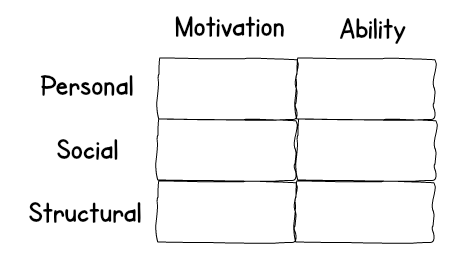
**Role ambiguity: 60 years of research reveals why… | Corporate Rebels**
**The Third Bit: Twelve Ways to Be Wrong About AI-Assisted Coding**
- Counting lines of code generated
- Timing artificial tasks
- Before/after with no control group
- Asking developers if they feel more productive
- Counting commits, pull requests, and tickets
- Measuring only the easy half
- Treating adoption rate as a success metric
- Comparing volunteers to non-volunteers
- Measuring the individual instead of the system
- Measuring during the novelty period
- Treating suggestion acceptance rate as a quality signal
- Comparing AI to nothing
메타데이터
- post_id
- 8b213b1e83fa
- slug
- what-ive-been-reading-and-watching-week-ending-7-june-2026-8b213b1e83fa
- url
- https://medium.com/@jchyip/what-ive-been-reading-and-watching-week-ending-7-june-2026-8b213b1e83fa
- canonical_url
- https://medium.com/@jchyip/what-ive-been-reading-and-watching-week-ending-7-june-2026-8b213b1e83fa
- author_url
- https://medium.com/@jchyip
- status
- ok
- fetched_at
- 2026-06-11 10:13:20