If Tipping Culture Were Removed, What Would We Pay Our Servers?
A hypothetical thought experiment.
If Tipping Culture Were Removed, What Would We Pay Our Servers?
A hypothetical thought experiment.
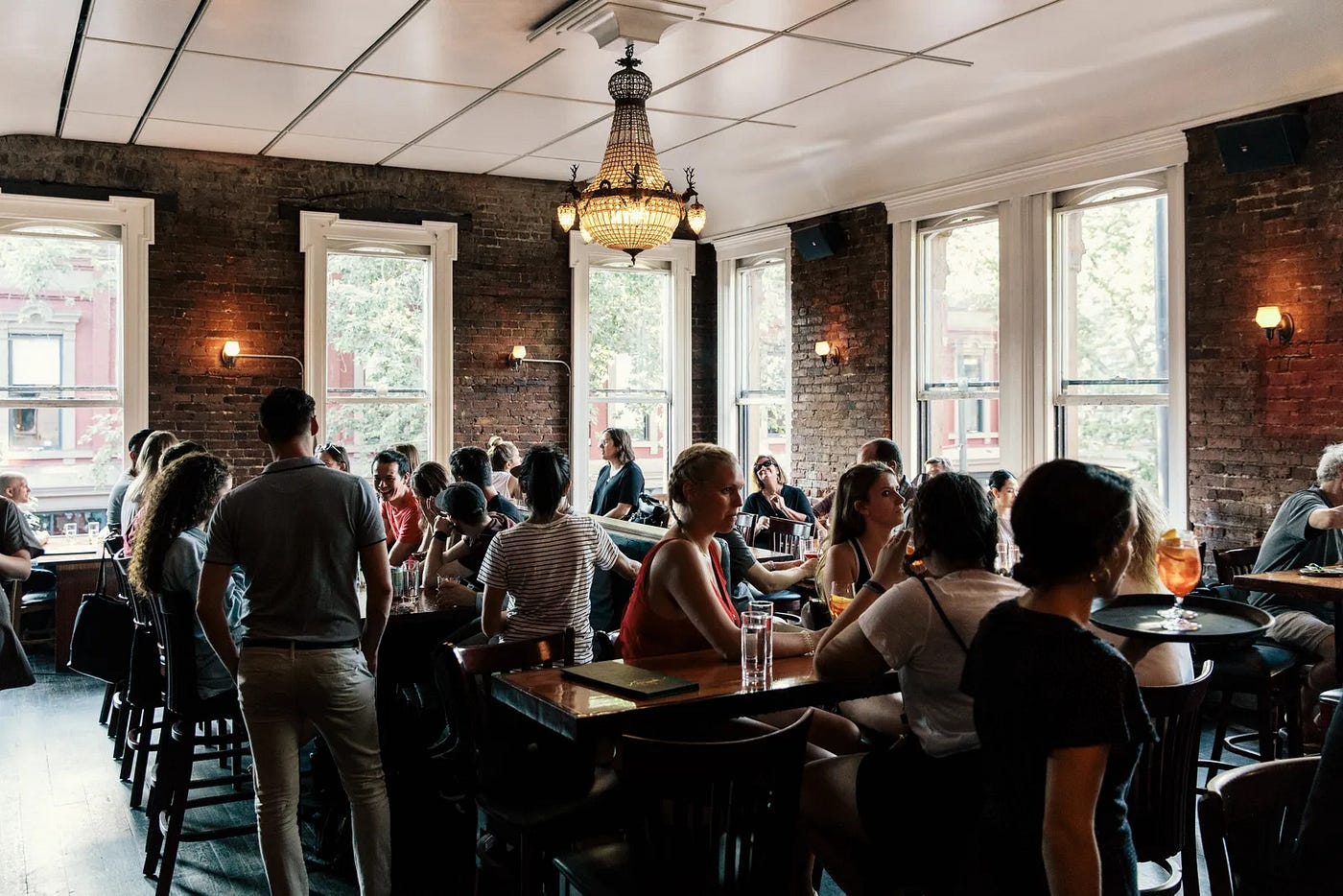
Photo by Blake Wisz on Unsplash
Back in the fall of 2023, while I was knee-deep in journalism school, I took a break to chat with fellow food reporter Corey Mintz. I like reaching out to Corey from time to time — he’s sharp, opinionated, and has spent years covering the intersection of food, culture, and labour.
At the time, tipping — and the now-ubiquitous term tip-flation — was dominating public discourse. Frustrations were mounting as consumers faced an ever-growing number of tip prompts. Corey and I dug into the issue, exploring both sides. What troubled us most was the same thing that troubles many: a system built on the generosity of patrons to support the livelihoods of low-paid workers. It’s a uniquely North American problem, one that affects not only hospitality staff but gig workers and service employees across the board. And no matter how we turned it over, we kept arriving at the same conclusion — it’s a broken system. But it’s also deeply embedded in our culture.
Nearly two years later, tip-flation is still a lightning rod. A recent survey found that even in full-service restaurants, tip prompts are now turning diners off. The Tyee covered it, then CBC, Vancouver Is Awesome, and others followed suit. It’s easy fodder for media because it strikes a nerve: How did you feel about being asked to tip? For many, tipping is automatic — something you do without thinking. But for others, it’s a loaded question: What’s fair? What’s expected? What can I afford? In a shaky economy, every dollar counts.
But here’s the real question: Should consumers be the ones shouldering this burden at all?
To unpack this, I want to ask — what if they didn’t? What if tipping culture was removed in Canada? What would we actually pay our servers?
Let’s dig in.
To address this idea, a few key questions come to mind immediately.
- What would restaurateurs do?
- How would servers respond?
- Would diners accept a new norm of higher menu prices and no tip line?
What would restaurateurs do?
Naturally, you’d assume many restaurateurs would welcome a no-tipping model — it would give them full control over how they compensate staff. For most Canadian restaurants, this would represent a major paradigm shift. In the latest episode of my podcast, we touched on tip-flation, and I asked Shaun Layton, co-owner of ¿CóMO? Taperia, for his take on the current tipping dynamic. Here’s what he said:
“The tip is, in my opinion, part of the revenue restaurants aren’t building into the price. You’re tipping on the service, which goes to the employees. And while people think of the tip as something ‘earned,’ I don’t necessarily agree with the idea that the guest should be the one to decide that. That’s just how it’s always been — not necessarily right, but that’s the system.”
How owners would actually respond — balancing compensation needs against consumer expectations — would be fascinating to watch. To think it through, let’s first look at where things stand today.
As of June 1, minimum wage in B.C. is $17.85/hour. According to Living Wage for Families BC, the living wage in Metro Vancouver as of November 2024 was $27.05/hour. That’s a nearly $10/hour gap. In most cases, tips have been expected to make up the difference — and then some.
So the real question for employers becomes: What do my workers deserve, and what can I afford?
At first glance, raising prices 18–20% to offset lost tips might seem like a straightforward fix. But I’d argue it’s more complicated. Sticker shock is real. Even if diners are already tipping that much, seeing it built into the price changes the psychological equation. Behavioral economists Amos Tversky and Daniel Kahneman explored this kind of cognitive bias for decades — we anchor to the first number we see. If a burger is listed at $18, bumping it to $22 — even with justification — can feel jarring, even if it’s the exact same cost in the end.
That’s a major challenge for operators. But there’s another, equally tough dilemma: What are my staff actually worth — and will I be paying them more or less than what they’re making now?
Here’s where things get tricky. It’s not just servers and bartenders. You also have to factor in kitchen staff, hosts, bussers, and managers. And then there’s the larger societal question: Where does a hospitality worker fall on the wage spectrum?
Back in October 2019, I wrote a column titled *Will Hospitality Employees Ever Escape Their Third-Class Stigma?* That question still feels urgent. So much so, I explored it even further this past fall for a video series on the CBC. For decades, tipping has served as a kind of smokescreen — removing responsibility from owners to define the true value of various roles. But in a tipless model, that luxury disappears.
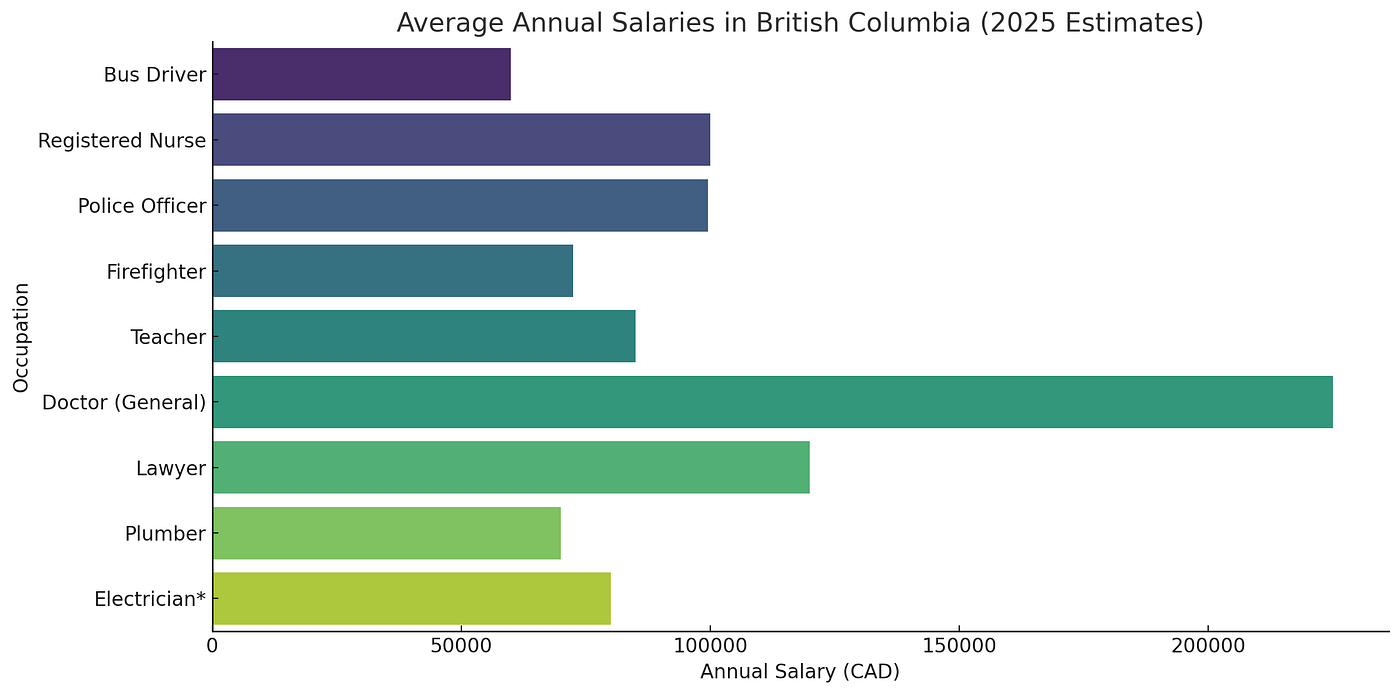
So we’re left with this: Do we, as a society, value a server more or less than a teacher? A nurse? A bus driver? These are uncomfortable comparisons, but without tipping, we’ll have to reckon with them.
I don’t envy restaurateurs if ever presented with this process.
How would servers respond?
This is where the hypothetical gets especially interesting — because I think you’d find a split consensus among workers.
One lesser-known truth for those outside the industry is that there’s good money to be made under the tipping model. For many servers, bartenders, and even select bussers and hosts, pulling in $200–$300+ in tips per shift isn’t uncommon. Paired with B.C.’s minimum wage of $17.85/hour, that’s a decent living — especially in comparison to other jobs requiring similar formal qualifications.
But here’s the trade-off: the work is demanding. Shift variability, late nights, high stress, difficult guests, and the lingering perception that it’s not “real work” all take their toll. There’s no question that tipping contributes to some of these stressors. Remove tipping, and you also remove the anxiety of whether you’ll get a good section, a generous table, or even have a busy night at all. In theory, a stable wage could relieve that constant uncertainty.
Still, there’s something about the current model that many staff (and owners) appreciate: it’s a sales job. The drive to upsell — whether that’s a premium bottle of wine or an extra dessert — can lead to a bigger bill, and in turn, a bigger tip. The car industry works the same way. So if a server prefers this model, who could blame them?
But here’s the catch — not all restaurant jobs offer that level of reward. Some venues generate far fewer tips, and most now use tip pooling, so earnings are distributed across staff. That’s a good thing in terms of equity, but it means top earners may not see the full benefit of their sales hustle anyway.
At the end of the day, the question most servers would be asking is simple: “If tipping ends, will I make as much — or more — than I do now?”
And that answer depends almost entirely on how owners respond. If wages don’t rise to meet expectations, or if take-home pay drops significantly, it’s fair to assume many workers would leave the industry altogether. And if the money isn’t competitive, who’s going to stick around?
Would diners accept a new norm of higher menu prices and no tip line?
At the heart of this issue is a simple truth: diners are frustrated. The explosion of tip prompts — at coffee shops, takeout windows, self-serve kiosks — has pushed many to rethink what tipping actually means. And as we’ve seen, there’s no easy solution.
But in a hypothetical world where tipping was abolished, diners would have to adjust to a few new realities.
Menu prices would rise. How much would depend on the establishment. Large chains like Cactus Club or Earls would likely find ways to soften the blow, using their buying power to avoid scaring off price-sensitive guests. But for independent restaurants, the math is different. If owners want to pay staff fairly, price hikes would be unavoidable.
So here’s the question: Would diners accept $14 beers or $24 cocktails? Would they keep going out as often?
The fear of sticker shock looms large. In a hyper-competitive market, even small price differences can shift consumer behaviour. It’s why so many restaurants underprice their menus — they’re afraid to lose customers, even if it means undervaluing their product.
On the most recent episode of my podcast, I asked Shira Blustein, owner of The Acorn, what it’s like pricing a veg-forward menu in this climate:
“We should be charging more. We’ve been open 13 years, and we’re still working on showing the general population that good-quality ingredients — even if they’re vegetable-forward — have value.
So we should be charging way more, 100%. And that’s why our labour cost is as high as it is. But I think we’re at a tough time right now. People are spending less. Now’s not necessarily the time for a big increase. We’re just holding tight. But yeah — we should charge more, 100%.”
Fear of pricing isn’t the only obstacle. There’s also a power dynamic at play — one we rarely talk about. For many diners, tipping isn’t just a reward system — it’s a form of control. A way to judge the experience, assert expectations, and determine what someone “deserves.” Remove the tip line, and you remove that power. For some, that’s a relief. For others, it’s uncomfortable.
We like to think that most people would welcome a system that pays workers fairly without relying on tips. But theory and emotion don’t always align. Unlike going to a doctor or a dentist, eating out feels personal — and personal experiences invite personal judgments. The power to tip 5%, 10%, or 25% gives diners the sense that they can directly shape the outcome of their experience. Take that away, and the dynamic shifts entirely.
Some will fear worse service. Others will scoff at a 20% baked-in increase, arguing they rarely tip that much. And beneath it all lies a deeper tension:
What’s fair? What’s expected? What can I afford?
For most diners, those answers aren’t always the same.
So where does that leave us? Tipping may be flawed, but it’s familiar. I can attest to this personally as I’ve worked in this model most of my career. I’m invested. I can see and understand all points and perspectives. Moving away from it would mean more than just changing how we pay — it would mean shifting deeply held cultural expectations around value, control, and fairness. The question isn’t just what should we pay servers — it’s what are we willing to confront about how our dining culture really works?
메타데이터
- post_id
- a8ac74e3c92b
- slug
- if-tipping-culture-were-removed-what-would-we-pay-our-servers-a8ac74e3c92b
- url
- https://medium.com/track-and-food/if-tipping-culture-were-removed-what-would-we-pay-our-servers-a8ac74e3c92b
- canonical_url
- https://medium.com/track-and-food/if-tipping-culture-were-removed-what-would-we-pay-our-servers-a8ac74e3c92b
- author_url
- https://medium.com/@jamiemah
- status
- ok
- fetched_at
- 2026-06-12 18:14:10