Dive into Go Zero’s Marketing Strategy: How It Built a Zero Sugar Ice Cream Brand
The company positioned itself around one simple promise: enjoying dessert without guilt.
Dive into Go Zero’s Marketing Strategy: How It Built a Zero Sugar Ice Cream Brand
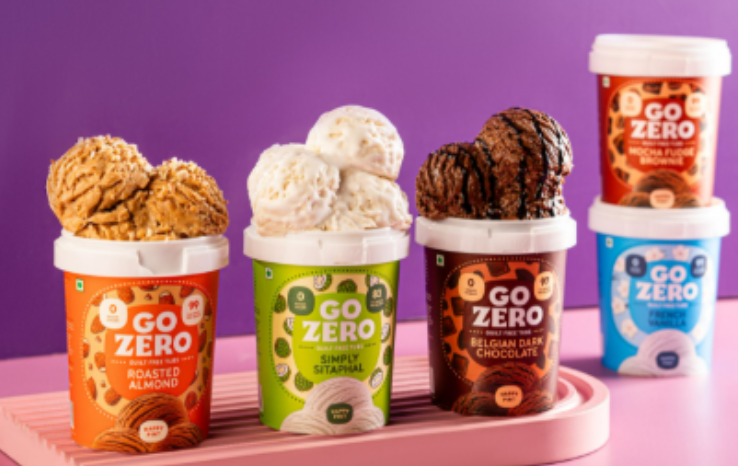
The company positioned itself around one simple promise: enjoying dessert without guilt.
Go Zero offers zero added sugar and low-calorie ice creams targeted at consumers who want balance rather than restriction. Instead of asking people to stop eating desserts, the brand gives them an alternative that feels healthier while still satisfying cravings.
What makes Go Zero strategically interesting is that it is not just selling ice cream. It is selling reassurance.
The brand understands a core consumer tension: People want to eat healthier, but they do not want to sacrifice enjoyment.
This insight became even stronger after the pandemic, when sugar awareness, calorie consciousness, and fitness culture grew rapidly across urban India. Consumers started reading ingredient labels more carefully, following nutrition creators online, and searching for healthier substitutes across food categories.
Go Zero entered the market at exactly the right moment.
But the real challenge was not creating a healthier dessert. The real challenge was making consumers believe it could actually taste good.
That is why Go Zero’s strategy focuses heavily on:
- Education
- Trust-building
- Behavioral positioning
- Convenience-driven distribution
The company combines quick commerce, fitness influencers, short-form content, lifestyle positioning to make healthy desserts feel normal instead of niche.
This breakdown explores how Go Zero: Built awareness, earned trust, used quick commerce strategically and created a brand that fits into modern wellness culture.
More importantly, it evaluates whether this strategy can become a sustainable long-term business rather than just a fast-growing startup.
Brand Overview & Market Context
Go Zero is a healthy dessert brand focused on zero added sugar and low-calorie ice creams. Founded by Kiran Shah in 2022, the company aims to make indulgence feel compatible with healthier lifestyles.
The brand stands for:
- Zero added sugar
- Lower calorie desserts
- No preservatives or artificial ingredients
- Sweeteners like stevia, maltitol, and FOS
- Health-conscious indulgence without giving up taste
Market Context
India’s traditional ice cream market has historically focused on:
- Taste
- Celebration
- Indulgence
Brands like Amul, Kwality Wall’s, Baskin Robbins, and Naturals built strong emotional associations around treats, family moments and cheat meals.
But consumer behavior has started changing.
Several shifts created space for brands like Go Zero:
- Rising awareness around sugar consumption
- Growth of fitness and wellness culture
- Calorie-conscious eating habits among Gen Z and millennials
- Increased interest in healthier alternatives
- Expansion of D2C and quick commerce ecosystems
This created an important market gap.
Consumers still wanted desserts. They just wanted desserts that felt less harmful.
Go Zero identified this opportunity early and positioned itself as: “guilt-free indulgence.”
That positioning matters strategically because the company is not competing only in the ice cream category. It is competing in the broader “better-for-you food” category.
Target Audience & Consumer Psychology
Go Zero primarily targets urban, health-conscious consumers who care about balance, fitness, and ingredient awareness.
Primary Persona: Health-Conscious Young Adults (18–30)
Characteristics:
- Students and young professionals
- Urban Tier 1 and Tier 2 consumers
- Fitness-focused or calorie-conscious
- Active on Instagram and wellness content
- Comfortable ordering through Blinkit, Zepto, Swiggy, and D2C websites
Pain Point:
They enjoy desserts but associate traditional ice cream with sugar, weight gain and guilt.
Buying Trigger:
- “Zero added sugar” messaging
- Low-calorie positioning
- Fitness influencer recommendations
- Convenience through quick commerce
Trust Drivers:
- Ingredient transparency
- Nutritional labels
- Real reviews and creator validation
Secondary Persona: Balanced Lifestyle Consumers (25–40)
Characteristics:
- Working professionals and young parents
- Moderately health-conscious
- Interested in reducing sugar intake without extreme dieting
Pain Point:
They want healthier alternatives without sacrificing enjoyment.
Buying Trigger:
- Convenient availability
- Better ingredients
- Taste reassurance
- Word-of-mouth trust
The Core Strategic Insight Behind Go Zero
The strongest part of Go Zero’s strategy is that it understands how people consume ice cream emotionally.
Ice cream is not usually a planned purchase. It is:
- Impulsive
- Craving-driven
- Emotionally motivated
That is why quick commerce works so effectively for the category.
Go Zero appears exactly where cravings happen.
This is one of the smartest parts of the company’s strategy.
Instead of forcing consumers to actively search for healthier desserts, the brand inserts itself directly into- late-night cravings, post-dinner orders and impulse snacking moments.
Distribution itself becomes marketing.
Marketing Channels Breakdown
1. Quick Commerce: The Core Growth Engine
Platforms: Blinkit Zepto Swiggy Instamart
This is Go Zero’s most strategically important channel.
Why it works:
Ice cream is a high-intent impulse category. Consumers usually want it immediately.
Quick commerce solves: Speed, convenience and discovery simultaneously.
A consumer browsing “ice cream” or “healthy snacks” can discover Go Zero even without prior awareness.
This gives the company three advantages:
A. Convenience-Based Conversion
The shorter the time between craving and purchase, the higher the conversion probability.
B. Discovery Through Platforms
Blinkit and Zepto function almost like search engines for consumer products.
Consumers often discover brands while browsing categories rather than searching intentionally.
C. Behavioral Timing
Go Zero appears during late-night cravings, movie watching, weekend snacking and post-meal dessert moments.
That timing alignment is strategically powerful.
However, this model also creates long-term risks.
Quick commerce platforms charge commissions, sponsored placement costs and promotional fees.
Frozen logistics also increase operational complexity because ice cream requires cold-chain infrastructure.
This means quick commerce may accelerate growth while simultaneously pressuring margins.
The long-term sustainability of this strategy therefore depends heavily on repeat purchase frequency.
2. Instagram & Short-Form Content
Instagram acts as Go Zero’s education engine.
Unlike traditional dessert brands that mainly showcase indulgence, Go Zero must first convince consumers that healthy ice cream is believable.
Its content usually focuses on:
- Zero sugar explainers
- Calorie comparisons
- Fitness-oriented humor
- Craving-related content
- Customer reviews and reactions
Why this works:
The brand understands that skepticism is the biggest barrier.
Many consumers initially react with: “healthy ice cream probably tastes bad.”
So the content strategy focuses on reducing doubt before driving purchase.
This is psychologically important because education reduces friction and reduced friction improves conversion.
Go Zero also positions itself within: Gym culture, fitness routines and wellness conversations.
That changes the emotional framing of the product from: “cheat dessert” to “balanced lifestyle choice.”
3. Influencer Marketing & Trust Building
Go Zero’s influencer strategy is highly focused and strategically smart.
Instead of celebrity influencers, the company works with:
- Fitness creators
- Nutritionists
- Dieticians
- Weight-loss creators
- Wellness-focused micro influencers
Why this works:
Health claims require credibility.
Consumers trust expert validation more than celebrity reach when it comes to food and wellness products.
This is especially important because: “zero sugar” is naturally met with skepticism.
A nutritionist explaining: ingredients, calories, and sweeteners creates stronger trust than a traditional advertisement.
Go Zero’s strategy here is not about maximum reach. It is about reducing skepticism.
That improves buyer quality rather than just traffic volume.
4. Shark Tank India & PR Credibility
Shark Tank acted as a massive credibility accelerator for Go Zero.
The importance of Shark Tank was not just visibility. It was legitimacy.
Healthy ice cream is still a relatively new category in India. Consumers naturally question whether such products are real, healthy or effective.
Shark Tank created:
- Social proof
- Investor validation
- Mainstream credibility
This moved consumers psychologically from: “interesting idea” to: “this might actually be trustworthy.”
The timing was also strategically valuable because the episode aired during a weaker seasonal period for ice cream sales.
5. Retail Presence & Offline Visibility
Although Go Zero remains primarily digital-first, retail presence still matters strategically.
Retail creates:
- Physical visibility
- Legitimacy
- Walk-in discovery
- Shelf credibility
Seeing a product in premium supermarkets, wellness stores or gym cafes makes the brand feel more established.
This matters because consumers often trust products more when they appear in physical retail environments.
Retail also introduces Go Zero to non-digital buyers, family shoppers and impulse supermarket consumers.
How Go Zero’s Funnel Actually Works
Stage 1: Awareness
Channels:
- Instagram reels
- Influencer collaborations
- Shark Tank PR
- Fitness content
Goal:
Introduce the idea of healthy ice cream and reduce skepticism.
Stage 2: Consideration
Channels:
- Ingredient explainers
- Nutrition-focused content
- Reviews and testimonials
- Quick commerce discovery
Goal:
Convince consumers that the product is real, healthy and worth trying.
Stage 3: Conversion
Channels:
- Blinkit & Zepto delivery
- IPL promotions
- Discounts & bundles
- Swiggy/Zomato discovery
Goal:
Convert cravings into immediate purchases.
Stage 4: Retention
This is where Go Zero still has the biggest opportunity.
The brand currently performs strongly at:
- Discovery
- Trial generation
- Awareness
But long-term success depends on whether consumers repeatedly return.
Can Go Zero Build a Sustainable Business — Not Just a Fast Growing Brand?
Go Zero’s biggest challenge is no longer awareness.
The company has already proven that healthier desserts have demand among urban Indian consumers.
The harder challenge now is economics.
Healthy D2C brands often scale quickly in the beginning because of influencer marketing, perform efficiently, novelty drives curiosity and quick commerce increases discovery.
But over time, acquisition costs usually rise because:
- Influencer pricing increases
- Sponsored visibility becomes competitive
- More brands enter the category
This creates pressure on profitability.
For Go Zero, the challenge becomes even more complex because frozen products involve:
- Cold-chain logistics
- Storage costs
- Delivery complexity
- Platform commissions
This means long-term profitability likely depends more on repeat purchases than first-time orders.
If consumers order only occasionally, customer acquisition costs become difficult to recover sustainably.
But if Go Zero becomes part of weekly routines, customer lifetime value improves significantly.
That is why retention becomes strategically critical.
The strongest consumer brands are tied to recurring behaviors:
- Morning coffee
- Post-workout protein
- Evening snacks
- Post-dinner desserts
Go Zero’s opportunity is to become the default “guilt-free dessert” within those routines.
However, there is also a psychological challenge.
Consumers may initially try Go Zero because it sounds healthier. But they will repeatedly buy it only if the product feels emotionally satisfying rather than restrictive.
This distinction matters.
If consumers think “healthy but not enjoyable” then retention may remain weak.
But if the brand becomes associated with: Comfort, balance, fitness lifestyles, satisfying indulgence and repeat behavior strengthens naturally.
That is where long-term defensibility gets built.
Retention May Become Go Zero’s Biggest Competitive Advantage
Most of Go Zero’s current marketing engine focuses on acquisition.
- Influencers drive trust.
- Quick commerce drives trials.
- IPL campaigns drive visibility.
- Shark Tank drives awareness.
These channels are effective for growth.
But long-term leadership may depend more on customer retention infrastructure.
One major risk is platform dependency.
Today, much of Go Zero’s discovery depends on:
- Blinkit algorithms
- Zepto visibility
- Swiggy recommendations
- Instagram reach
This creates vulnerability because third-party platforms control visibility.
As competition increases, sponsored discovery may become significantly more expensive.
That makes first-party customer relationships strategically important.
Go Zero should invest more deeply in:
- WhatsApp CRM systems
- Personalized reorder reminders
- Subscription models
- Customer segmentation
- Loyalty ecosystems
- Personalized flavor recommendations
For example:
If a customer repeatedly purchases chocolate protein-focused flavors, the company could trigger:
- Personalized bundle recommendations
- Replenishment reminders
- Limited-edition flavor suggestions
This shifts the company from transaction-led growth to relationship-led growth.
Competitive Pressure & Long-Term Differentiation
Go Zero currently benefits from strong early positioning in India’s healthy dessert category.
However, competition will become more intense over time.
Large incumbents like Amul, Naturals, Baskin Robbins and Kwality Wall’s already possess:
- Larger manufacturing scale
- Stronger distribution
- Deeper retail penetration
- Bigger marketing budgets
From a product perspective, these companies can likely launch- low-sugar, high-protein or low-calorie variants relatively quickly.
This means product formulation alone is unlikely to remain a long-term moat.
However, incumbents face a different challenge: authenticity.
Traditional ice cream brands are deeply associated with indulgence, cheat meals, and sugary treats.
Consumers may not immediately perceive them as authentic wellness brands.
This creates an opportunity for Go Zero.
Its advantage comes less from ingredients and more from: identity alignment.
The brand is already connected to:
- Wellness creators
- Fitness communities
- Calorie-conscious consumers
- Guilt-free lifestyle conversations
That emotional positioning may be harder to replicate than the product itself.
Products can be copied faster than cultural relevance.
That is why trust, habit formation, community credibility and emotional association may become Go Zero’s strongest long-term moat.
Real Consumer Behavior Signals
One important insight visible across- Instagram comments, reviews and creator discussions is that consumers are highly curious but also highly skeptical.
Common reactions include:
- “Does this actually taste good?”
- “Is zero sugar really healthy?”
- “Will artificial sweeteners affect health?”
- “Can this actually replace normal ice cream?”
This shows that Go Zero’s biggest challenge is not awareness. It is reassuring.
Consumers need repeated proof before they fully trust the category.
This is why reviews, nutrition explainers, creator demonstrations and customer testimonials are strategically important.
They reduce uncertainty.
And lower uncertainty improves repeat purchases.
Advanced Strategic Recommendations
1. Build Scientific Authority
Go Zero should move beyond generic “guilt-free” messaging and build stronger scientific credibility.
This could include:
- Nutrition expert partnerships
- Ingredient explainers
- Sweetener education content
- Certified comparisons
- Health-focused educational videos
Education improves trust. Trust improves retention.
2. Reduce Platform Dependency
The company should invest more aggressively in:
- Email retention systems
- WhatsApp communities
- CRM flows
- Subscriptions
- Direct consumer loyalty programs
Owning customer relationships reduces long-term dependence on platform algorithms.
3. Expand Beyond Fitness Audiences
Go Zero currently performs strongly among- fitness-focused consumers, wellness-oriented millennials and calorie-conscious Gen Z audiences.
But adjacent segments may create stronger long-term stability:
- Diabetics
- Parents reducing sugar intake
- Health-conscious families
- Older consumers managing diet restrictions
This broadens the category from: fitness dessert to everyday healthier indulgence.
4. Build Habit Loops Instead of Discount Loops
Many D2C brands rely heavily on discounts to drive repeat purchases.
That often weakens margins.
Instead, Go Zero should focus on behavioral habit systems:
- Recurring subscriptions
- Nighttime dessert bundles
- Post-workout snack packs
- Personalized reorder timing
- Routine-based recommendations
The strongest consumer brands are often the ones consumers buy automatically without actively thinking.
That should be Go Zero’s long-term goal.
Final Conclusion
Go Zero has built one of India’s most strategically interesting emerging food brands by combining:
- Quick commerce timing
- Influencer trust
- Wellness positioning
- Behavioral insight
- Lifestyle-driven marketing
The company identified an important consumer shift early: Modern consumers increasingly want balance rather than restriction.
Instead of asking people to stop eating desserts, Go Zero positioned itself as a smarter alternative that fits into modern lifestyles.
That helped the brand grow quickly among urban consumers, fitness audiences and convenience-driven buyers.
However, the next stage of growth will depend less on awareness and more on economics and retention.
As acquisition costs rise and competition intensifies, long-term success may depend on whether Go Zero can:
- Increase repeat purchases
- Strengthen emotional loyalty
- Reduce platform dependency
- Improve customer lifetime value
- Build stronger first-party relationships
- Become part of recurring consumer routines
The real competitive advantage may not come from “zero sugar” alone.
It may come from becoming the brand consumers instinctively choose when they want indulgence without guilt.
That is the difference between a fast-growing startup and a lasting consumer brand.
메타데이터
- post_id
- b1ee1f899e39
- slug
- dive-into-go-zeros-marketing-strategy-how-it-built-a-zero-sugar-ice-cream-brand-with-d2c-quick-b1ee1f899e39
- url
- https://medium.com/@haneefabegum0404/dive-into-go-zeros-marketing-strategy-how-it-built-a-zero-sugar-ice-cream-brand-with-d2c-quick-b1ee1f899e39
- canonical_url
- https://medium.com/@haneefabegum0404/dive-into-go-zeros-marketing-strategy-how-it-built-a-zero-sugar-ice-cream-brand-with-d2c-quick-b1ee1f899e39
- author_url
- https://medium.com/@haneefabegum0404
- status
- ok
- fetched_at
- 2026-06-20 20:29:01