After the Hype: What’s Actually Driving China’s Footwear Market
Occasions disappeared before formal shoes did
After the Hype: What’s Actually Driving China’s Footwear Market
Occasions disappeared before formal shoes did
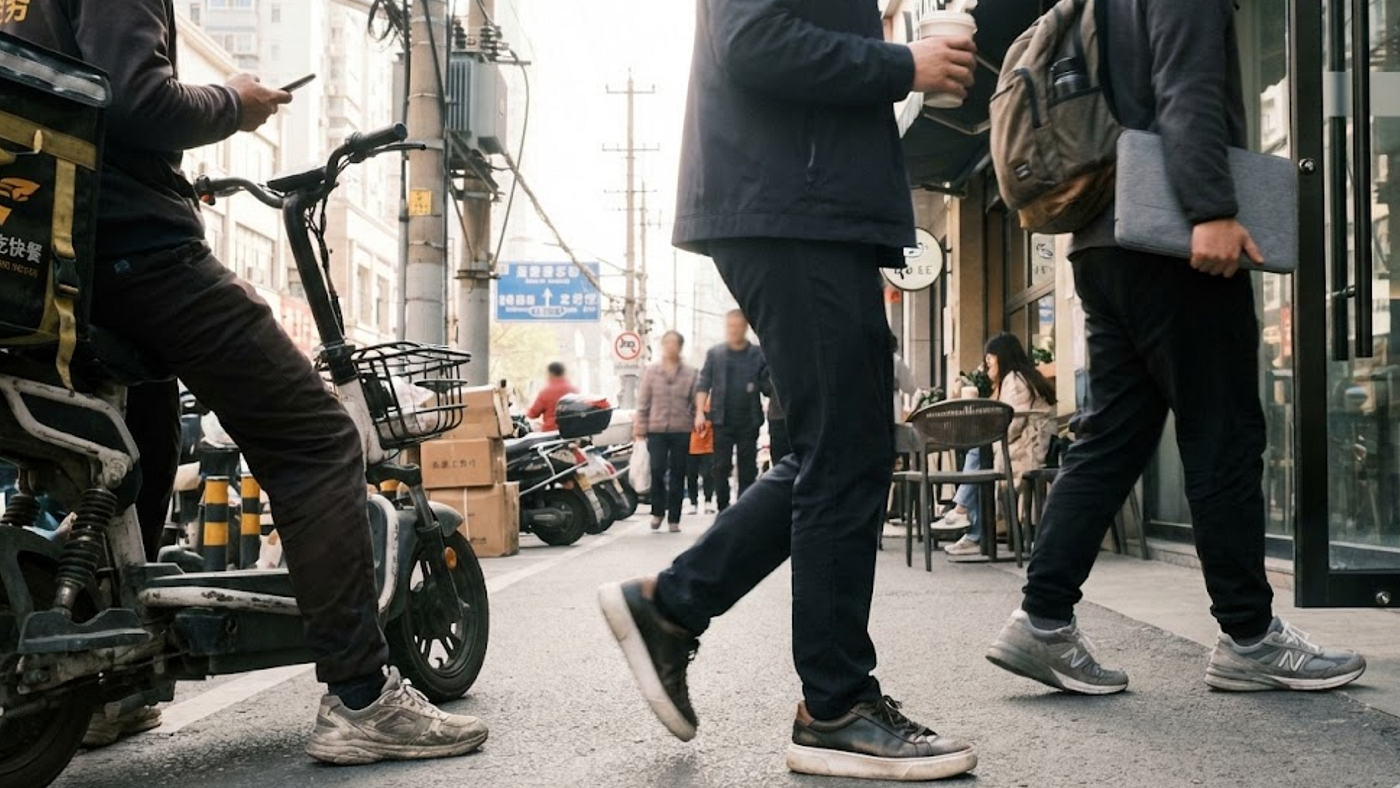
AI generated for editorial usage
Bank of America put out a 61-page report last week. Sneakers are done, they said. Twenty-year super-cycle, over. Adidas dropped 7.6% in one day.
Everybody’s asking if athletic footwear has peaked.
Maybe on Wall Street.
But in China, I think something else is going on. It’s beyond “sneakers vs dress shoes”. The whole way people think about what they put on their feet is changing.
Money’s tight
China’s GDP grew 5% last year. Fine on paper.
But consumer confidence tells a different story. It’s stuck around 89. Long-term average is 108. That’s a big gap. People are spending, but they’re careful about it.
When budgets get tight, you cut what you don’t really need.
Shoes you only wear occasionally? Easy cut.
Look at young people. Youth unemployment hit 21.3% in mid-2023. Government changed how they count it. Now it’s around 15–17%. Still high. And 11.79 million college students graduated last year. Record number.
What does that mean?
The old path was: graduate, job hunt, buy a suit, get hired, buy office shoes.
Millions of young Chinese never got past step one. No job. No office. No reason to buy leather shoes.
The “first pair of dress shoes” market didn’t shrink. For a lot of people, it just doesn’t exist.
It has become a broken life milestone.
Nobody’s dressing up anymore
This is happening everywhere.
Japan’s “Cool Biz” started as a summer energy-saving thing. Now it’s year-round. Salarymen in polo shirts and leather sneakers. UK has 11% of workers on four-day weeks. Some Silicon Valley offices make you take your shoes off at the door.
China has its own version.
Tech company culture spread beyond tech. Hoodies, sneakers, sometimes slippers. On Douyin (Chinese version of TikTok), “gross office outfits” (上班恶心穿搭) became a thing. Young workers showing up in pajamas. Quiet rebellion against dressing up for the sake of it.
One comment I saw nailed it:
“大老板穿休闲装运动鞋,基层小卡拉米穿皮鞋。”
“Big bosses wear casual and sneakers. Entry-level guys wear leather shoes.”
When the most powerful people dress the most casually, the rules are changing.
Why this won’t reverse?
- Three years of working from home built new habits.
- Younger workers never learned “formal = professional.”
- When budgets are tight, office wardrobes go first.
200 million
The real shift happens.
Here’s a staggering number. China has 200 million people in gig work: delivery guys, Didi (Uber) drivers, freelancers, livestreamers. This group alone reshapes the footwear market more than any fashion trend ever could. The entire US labor force is just 167 million.
These 200 million don’t have offices. Don’t have dress codes. A lot of them used to be white-collar. Economy shifted. Now they’re on scooters delivering food.
Their footwear needs changed completely. They used to care about looking professional, but now all they need is something they can stand in for 12 hours. It’s a massive chunk of the population. And their footwear needs have nothing to do with dress shoes.
The numbers back it up
Various market research estimates put athletic footwear at roughly 35–45% of China’s shoe market, which is the fastest growing segment. Leather and dress shoes are around 23–25% and continue to shrink.
Globally, athletic footwear is projected to hit 56% market share by 2037. High heels grow flat at 1.8% a year. Industry reports describe dress shoes as being in structural decline, with inventory piling up.
What’s growing instead: hybrid iterations. Dress shoe on top, sneaker sole underneath. Cole Haan, ECCO. For people who went back to offices but refuse to be uncomfortable.
Comfort tech is showing up everywhere.
What people really want
Depending on how life is structured today:
Actually exercising. Real runners want real running shoes. Asics, Hoka. Function over everything. One person said their Adidas Pro 4 lasted 100km, sole barely worn. Or Chinese brands offering similar tech at lower prices.
Just want comfort. The biggest group. “Life is hard enough, why torture your feet?” “Once you’ve worn cushioned soles every day, leather feels like punishment.”
Say something. Shoes as identity. “If you don’t know how to talk to clients, just wear On. It speaks for itself.” On became a middle-class signal in China. Not about performance. About what it says about you.
Need it to work everywhere. No more full-time office. People bounce between meetings, school pickups, cafes. They need one shoe that handles all of it. Black sneakers. Hybrid loafers.
Going back to classics. After the hype dies, some people land on timeless stuff. “The endpoint of all shoes is a black loafer.” But a comfortable one.
One thing connects all five: comfort IS the baseline.
The culture changed
Sneaker culture remains, but the hype has ended.
For many years, sneakers weren’t really shoes. They were investments. Status symbols. Currency. People camped outside stores. Resale markets boomed. A limited pair could pay your rent.
“限量球鞋已经不是财富密码了,大家已经去魅了。”
“Limited editions aren’t wealth codes anymore. The spell is broken.”
Shoes still mean something, but just different things now.
They used to be investment, and scarcity meant value. But shoes are more of expression (this is who I am) and fit matters. This mirrors something bigger happening in Chinese consumption: Less showing off and more intention.
The key criteria is “does this actually fit my life?”
Sneakers just stopped being financial instruments.
What’s next
Next 1–2 years: Casual keeps winning. Hybrid shoes grow. Sneaker soles under everything. Performance categories keep splitting up into niche segments. Running, tennis, outdoor, each doing their own thing.
Next 3–5 years: “Works for everything” becomes a design priority. Comfort tech becomes standard across all categories.
Things to watch: AI changes work patterns. Probably speeds all this up.
Does workplace formality come back? I doubt it.
So what
I don’t think dress shoes are coming back big time.
Not because sneakers won some market share battle. The occasions that required them are disappearing. Offices are optional now. Dress codes are fading. 200 million people work jobs where leather soles make no sense. And a whole generation never learned that professional meant uncomfortable.
The hype era of sneakers is over. But that’s not the end of anything. It’s just shoes becoming shoes again. Something you wear. Something that fits your lifestyle.
Occasions disappeared before formal shoes did.
Heading into 2026, casualization is here to stay.
If you’re a brand navigating China’s footwear or lifestyle market and questioning what actually works next, this is exactly the kind of conversation I spend my time on.
Wei Kan is the founder of Conduit Asia, specializing in cross-cultural brand strategy for APAC markets. He spent 20+ years leading marketing for Nike, Converse, Yahoo! and BenQ across Asia-Pacific.
Connect: *wei.kan@conduitasia.com | [LinkedIn](https://www.linkedin.com/in/weikan/)*
메타데이터
- post_id
- b4156aa83f7f
- slug
- after-the-hype-whats-actually-driving-china-s-footwear-market-b4156aa83f7f
- url
- https://medium.com/@wei.kan/after-the-hype-whats-actually-driving-china-s-footwear-market-b4156aa83f7f
- canonical_url
- https://medium.com/@wei.kan/after-the-hype-whats-actually-driving-china-s-footwear-market-b4156aa83f7f
- author_url
- https://medium.com/@wei.kan
- status
- ok
- fetched_at
- 2026-06-16 19:09:56