Stop Calling Women “Too Emotional”
When my daughter was young, she dressed exactly how she wanted. Long skirts with high-collar shirts. Sometimes all black. Purple or pink…
Stop Calling Women “Too Emotional”
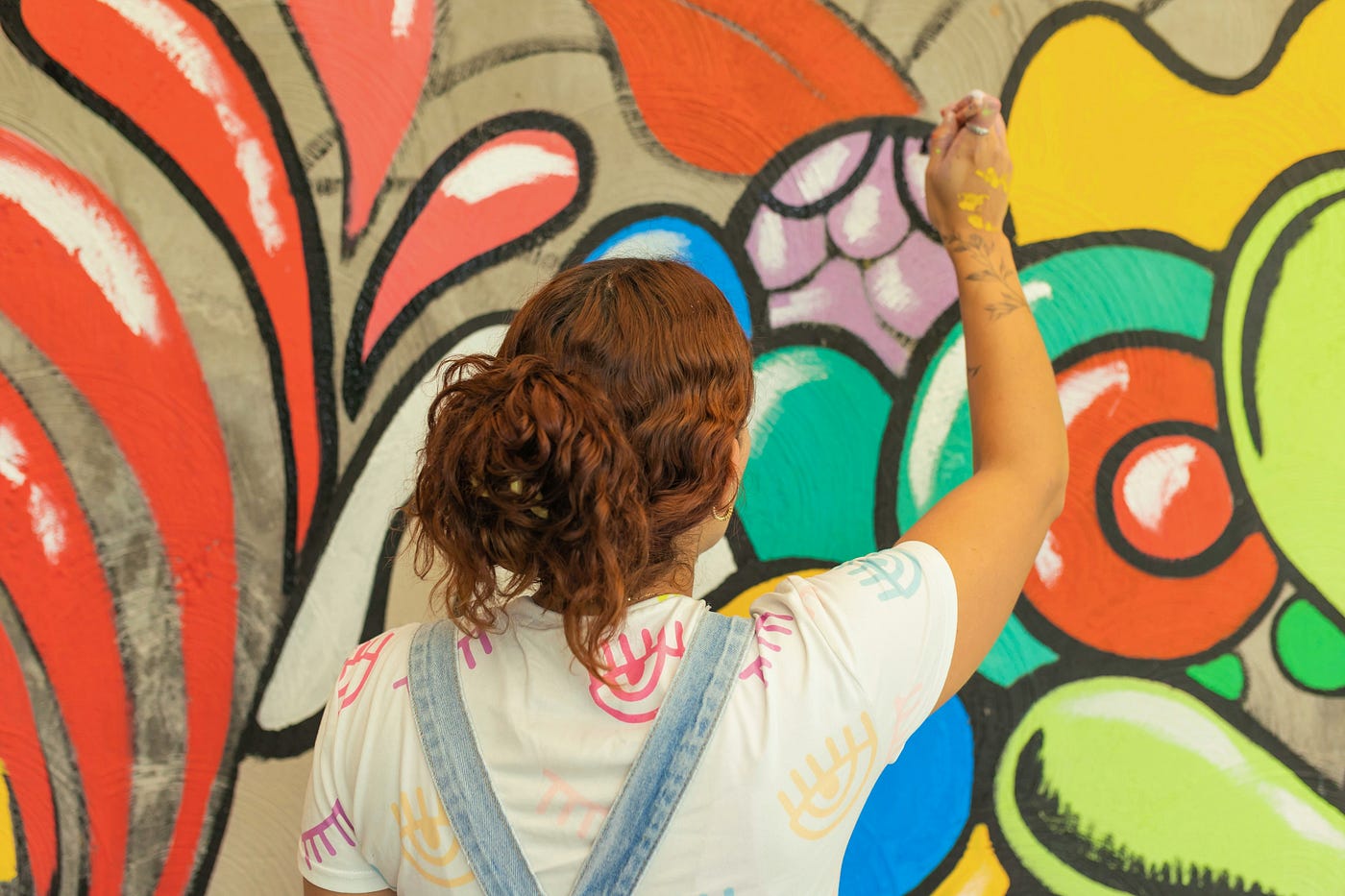
Woman taking up space boldly through artistic expression and refusing to make herself smaller
When my daughter was young, she dressed exactly how she wanted. Long skirts with high-collar shirts. Sometimes all black. Purple or pink highlights when the mood struck her.
Other parents made comments. “Isn’t that a bit much?” “Why does she need to stand out like that?”
She wasn’t hurting anyone. She was figuring out who she was. I decided early that mattered more than making other people comfortable.
When she was starting high school, I overheard her on the phone with a friend. “I want you to think about what self-respect looks like in this situation.”
She got off the phone and found me. “Mom, thanks for always making me think about that question. What does self-respect actually look like? It definitely isn’t about believing you’re too much or too loud or too weird.”
That conversation showed me why my work matters. My daughter learned early that her wholeness matters more than others’ comfort. Most women never get that message. They spend years trying to rediscover who they are beneath what they were taught to hide.
The Women Who Walk Through My Door
Women come to **Healing Arts Center** carrying years of messages telling them to be less.
One woman told me she’d been called “too sensitive” so many times she stopped trusting her own reactions. She couldn’t discern anymore if her feelings about situations were valid or if she was overreacting. Her body held years of second-guessing herself.
Another woman spent her whole career being told she was “too aggressive” when male colleagues did the exact same thing and got called “passionate” and “driven.” She started erasing herself in meetings. Softening her language. Apologizing before stating opinions. Her shoulders carried the tension of constantly monitoring herself.
A military spouse came in exhausted from holding everything together during deployment while being told she should be “grateful” and “strong.” She wasn’t allowed to be overwhelmed. Wasn’t allowed to struggle. Her body stayed locked in survival mode even when her partner returned.
These women weren’t broken. Their bodies responded as anyone would after years of being told their natural ways are wrong.
The Language Double Standard
When men show conviction about something they care about, people call them passionate. Driven. Natural leaders.
When women do the same thing, the language shifts. Dramatic. Bossy. Too emotional.
This isn’t just about hurt feelings. This is about systems designed to keep women questioning themselves. When you’re busy wondering if you’re asking for too much, you’re not asking for the raise. You’re not leaving the relationship that’s shrinking you. You’re not speaking up about what’s not working.
Every woman I work with has a version of this story. The promotion went to the man who advocated for himself while she waited to be noticed. The relationship in which her needs were “demanding” while his were just “normal.” The family system in which her boundaries were “selfish,” while everyone else’s were respected.
The pattern is always the same: women are the problem. Women need to be quieter, more careful, and less visible.
I refuse to participate in that message. The work I do is about helping women recover what they were told to give up.
Where Being “Too Much” Lives in the Body
When women tell me they feel like they’re excessive, I hear something different.
I hear that someone in their life wasn’t equipped to handle their full presence. Maybe parents who didn’t have the emotional tools to care for a sensitive child. Maybe romantic partners who felt threatened instead of curious. Maybe workplaces that punish authenticity.
When a woman says she’s overwhelmed, what I actually hear is that her circumstances and her people were insufficient.
This isn’t about women needing to shrink. The issue is that the systems and people around them are too restricted.
The body remembers every time you were told to be quieter. Every time you apologize for having needs. Every time you compress yourself to make someone else comfortable. That memory lives in your shoulders, your jaw, your chest. It shows up as tension you can’t explain, exhaustion that sleep doesn’t fix, and constant low-level anxiety.
The Work of Reclaiming Your Full Presence
At Healing Arts Center, we work with what’s happening in your body, not just your thoughts.
You can understand intellectually that you deserve to take up space. You can know logically that your emotions are valid. And yet, your body still holds years of learning to contract.
Somatic work helps by reconnecting you to your physical experience, showing you where you’re holding tension and helping you release it so your body can begin to feel safe expressing your full presence again. You can learn more about our approach to body-based work and trauma-informed support in our article on Reiki, Military Life, and Trauma-Informed Support for Service Members and Families.
One client described it as “finally having permission to be as big as I actually am.” She’d spent so long compressing herself in her marriage that she forgot what her full presence even felt like. Through our work together, she began noticing where she physically held that compression. The remorseful hunch within her shoulders. The way she lowered her voice. The constant bracing for criticism.
As she released that physical holding, things shifted. She started speaking up, establishing limits, and taking up space without apology. Her partner had to adjust. Their marriage either needed to expand, or it wouldn’t survive. That was scary, but necessary.
Another woman came in after being told her whole life she was “excessively emotional.” She’d learned to disconnect from her feelings entirely. Couldn’t tell you what she actually wanted or needed. Just knew she was exhausted all the time.
We worked on reconnecting her to the signals her body was sending. Learning to identify what different emotions feel like physically. Building trust that her feelings were information, not defects. She started making decisions based on what she actually wanted rather than what she thought she should want. Her whole life reorganized around that shift.
What Reclaiming Yourself Actually Looks Like
This work isn’t gentle. It’s not about positive affirmations or bubble baths, though those have their place.
It’s about perceiving that the voice telling you you’re excessive isn’t even yours. It’s every message you absorbed about what women should be. Every time someone punished you for taking up space. Every time you learned that being less visible kept you safer.
It’s about comprehending that your body holds all of that. The work is helping your body learn something different. That your full presence is safe. That your voice is significant. That your needs aren’t burdensome.
One military spouse I worked with described it like this:
“I spent so long being strong for everyone else that I forgot I was allowed to need support. My body was holding all that stress, all that aloneness. Learning to actually ask for what I needed felt terrifying at first. Now it feels like breathing.”
Another woman said:
“I realize now that every relationship I stayed in longer than I should have, every job I didn’t leave when my gut told me to, every time I ignored what I knew was true — I was choosing being liked over being honest. That stops now.”
This is what happens when women start to trust themselves, stop asking permission to exist, and let their bodies remember how to occupy the space they deserve.
The Containers That Are Too Small
I think about women fighting for basic autonomy and being told their demands are excessive. I think about accounts that still blame women for violence committed against them. The message repeats: women need to adjust, accommodate, and apologize.
The fury I feel about this runs deep. I watch systems designed to keep women inside boxes. Systems that profit from making us doubt ourselves, question our voices, and second-guess our knowing.
The work I do resists that. It helps women recognize that they’re not the problem. The containers people tried to fit them into were inadequate.
What This Means for Every Woman Reading This
If you’ve been called too emotional, too sensitive, too dramatic, excessively assertive — those criticisms are actually information about your capacity to feel, to care, to lead, and to speak truth.
The people who tried to compress you showed you exactly what you were capable of that threatened them.
You’re not excessive. You never were. The spaces you were made to fit were never big enough.
Your emotions are intelligence. Your sensitivity is strength. Your voice is significant. Your full presence is exactly what the world needs.
At Healing Arts Center, I help women remember this in their bodies, not just in their minds. That’s where the real work happens — where you stop compressing yourself and start trusting your wholeness.
Self-respect doesn’t look like believing you’re burdensome. Self-respect looks like knowing your voice is significant and using it anyway.
The world doesn’t need more women who learned to disappear. It needs women who refuse to contract. Who trust themselves. Who speak up even when it’s uncomfortable.
My daughter learned this early because I refused to teach her otherwise. The women I work with are learning it now, sometimes for the first time. It’s never too late to retrieve what you were told to give up.
If you’re ready to stop compressing yourself, you can **learn more about somatic coaching or book a session here**.
메타데이터
- post_id
- b9cd6ac9d35a
- slug
- stop-calling-women-too-emotional-b9cd6ac9d35a
- url
- https://medium.com/@info_86536/stop-calling-women-too-emotional-b9cd6ac9d35a
- canonical_url
- https://medium.com/@info_86536/stop-calling-women-too-emotional-b9cd6ac9d35a
- author_url
- https://medium.com/@info_86536
- status
- ok
- fetched_at
- 2026-08-02 20:48:00