From Raw Reads to Microbial Insights: My Journey Analyzing the Breast Tissue Microbiome with QIIME2
Project Summary
From Raw Reads to Microbial Insights: My Journey Analyzing the Breast Tissue Microbiome with QIIME2
Project Summary
In this project, I analyzed publicly available 16S rRNA sequencing data from breast tumor and normal breast tissues of Black and White women using QIIME2, DADA2, and ANCOM-BC to investigate microbial diversity, community structure, and differentially abundant taxa associated with breast cancer.
Why I Chose This Project
Breast cancer remains one of the leading causes of cancer-related deaths among women worldwide. While genetics, hormones, and lifestyle factors are well-established contributors to breast cancer development, an emerging area of research focuses on the role of the microbiome — the community of microorganisms that inhabit different parts of the human body.
Recent studies suggest that microbes present within breast tissue may influence inflammation, immune responses, and tumor progression. At the same time, breast cancer outcomes are not uniform across populations. Black women often experience more aggressive disease subtypes and higher mortality rates compared to White women.
These observations led me to a question:
Could differences in the breast tissue microbiome contribute to our understanding of breast cancer biology and health disparities?
To explore this question while strengthening my bioinformatics skills, I undertook a microbiome analysis project using publicly available sequencing data.
Working with Public Data
Unlike many laboratory-based studies, I did not generate my own sequencing data. Instead, I leveraged publicly available datasets from the National Center for Biotechnology Information (NCBI) Sequence Read Archive (SRA).
I selected BioProject PRJNA637875, which contains 16S rRNA sequencing data from breast tumor tissues and matched normal adjacent tissues collected from Black non-Hispanic (BNH) and White non-Hispanic (WNH) women.
For this project, I selected twenty samples representing four groups: For this project, I selected twenty samples representing four groups:
Group
-
BNH_N (Black Non-Hispanic Normal Tissue)
-
BNH_T (Black Non-Hispanic Tumor Tissue)
-
WNH_N (White Non-Hispanic Normal Tissue)
-
WNH_T (White Non-Hispanic Tumor Tissue)
My objective was not simply to obtain results, but to complete a fully reproducible microbiome analysis workflow from raw sequencing data to biological interpretation.
Tools and Technologies Used
The analysis was performed entirely in a Linux environment using a combination of open-source bioinformatics tools:
- SRA Toolkit
- FastQC
- MultiQC
- QIIME2 (v2024.10)
- DADA2
- SILVA 138 Database
- MAFFT
- FastTree
- ANCOM-BC
- Git and GitHub
This project also provided valuable hands-on experience with command-line workflows, reproducible research practices, and version control.
The Bioinformatics Workflow
The workflow consisted of several key stages:
1. Data Retrieval
Sequencing data were downloaded from NCBI using the SRA Toolkit.
2. Quality Assessment
Raw sequencing reads were assessed using FastQC and summarized with MultiQC to identify potential quality issues and sequencing artifacts.
3. Denoising and ASV Generation
Reads were imported into QIIME2 and processed using the DADA2 plugin. This step included quality filtering, error correction, chimera removal, and generation of Amplicon Sequence Variants (ASVs).
4. Taxonomic Classification
Representative sequences were classified using a SILVA 138-trained Naive Bayes classifier.
5. Diversity Analysis
Alpha diversity (Shannon index) and beta diversity (Bray-Curtis dissimilarity) were calculated to evaluate differences in microbial diversity and community structure among study groups.
6. Differential Abundance Analysis
ANCOM-BC was used to identify bacterial taxa exhibiting significant differences in abundance between tumor and normal tissues.
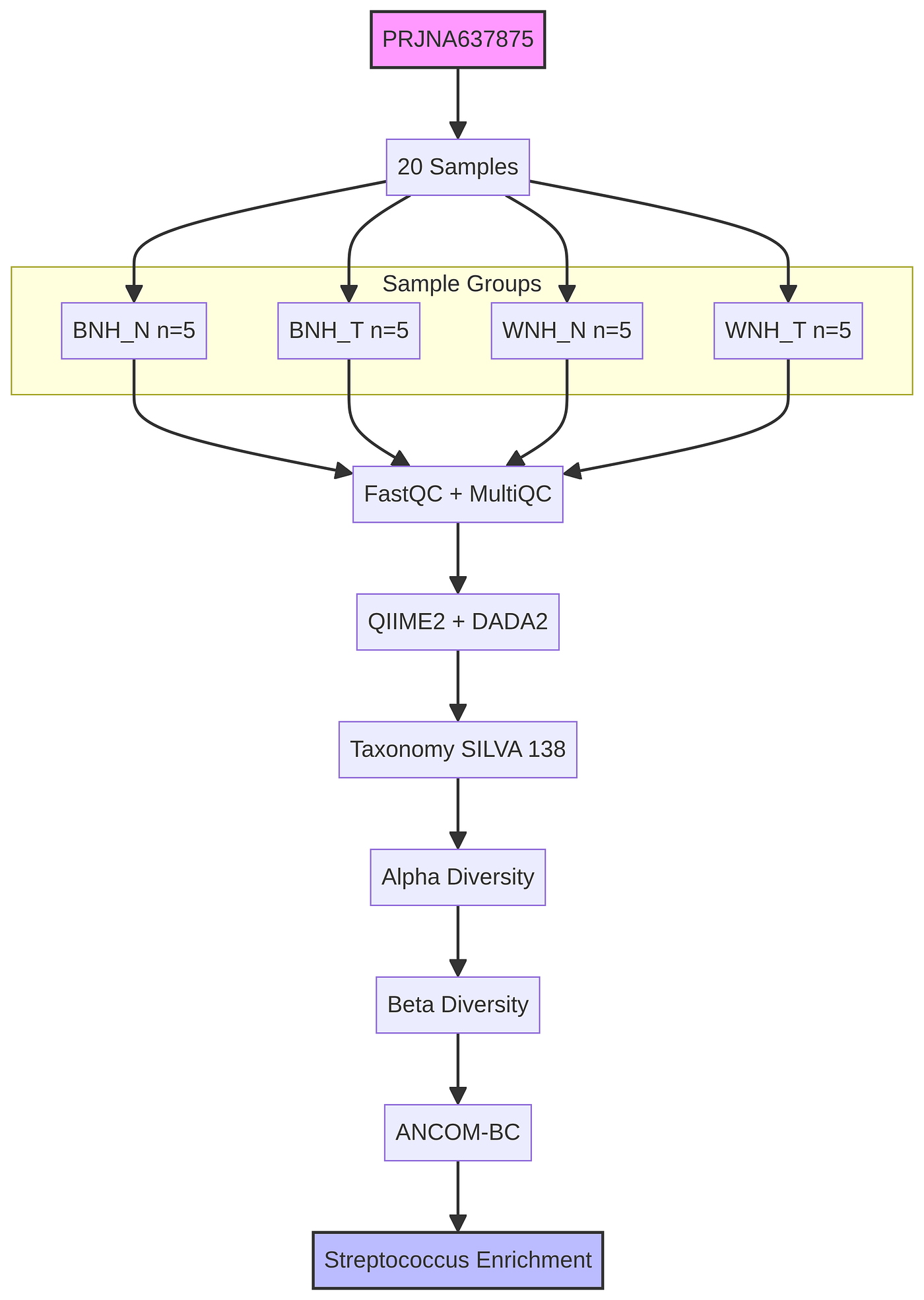
Figure 1: Workflow Diagram for Breast Tissue Microbiome Analysis.
The Challenge Nobody Sees
One of the most memorable parts of this project was not the final results — it was the troubleshooting.
When I reached the denoising stage using DADA2, I expected the workflow to proceed smoothly. Instead, I encountered repeated errors that required extensive debugging. I spent hours reviewing sequence quality profiles, checking parameters, validating file formats, and rerunning analyses.
At the time, it was frustrating.
However, this experience taught me an important lesson: bioinformatics is not simply about running tools. It is about understanding the data, interpreting outputs critically, and systematically solving problems when things do not work as expected.
In many ways, troubleshooting the denoising stage became the most valuable learning experience of the entire project.
What Did I Find?
After quality filtering and denoising, a total of 135,857 high-quality reads were retained, resulting in 832 Amplicon Sequence Variants (ASVs).
Taxonomic Composition
The breast tissue microbiome was dominated by several bacterial phyla, including:
- Proteobacteria
- Actinobacteriota
- Firmicutes
- Bacteroidota
At the genus level, dominant taxa included:
- Ralstonia
- Rubrobacter
- Staphylococcus
- Cutibacterium
- Corynebacterium

Figure 2: Genus-Level Taxonomic Composition Across Study Groups
Alpha Diversity
To determine whether microbial richness and evenness differed among groups, I calculated the Shannon diversity index.
The analysis revealed no statistically significant differences among the four study groups (Kruskal-Wallis p = 0.191).

Figure 3: Shannon Diversity Analysis Ordination
This suggests that overall microbial diversity remained relatively stable across tumor and normal tissues.
Beta Diversity
I next evaluated differences in overall microbial community composition using Bray-Curtis dissimilarity.
Again, no statistically significant differences were observed (PERMANOVA p = 0.471).

Figure 4: Bray-Curtis Beta Diversity Analysis Ordination
These results indicate that the overall structure of the breast tissue microbiome was broadly similar across groups.
Differential Abundance Analysis
While overall diversity metrics showed little variation, ANCOM-BC revealed an important finding.
The genus Streptococcus was significantly enriched in Black non-Hispanic tumor tissues relative to Black non-Hispanic normal tissues.

Figure 5: Differential Abundant Taxa Identified By ANCOM-BC
This finding suggests that specific bacterial taxa may provide more biologically meaningful signals than broad diversity metrics alone.
Interpreting the Findings
One of the most interesting outcomes of this project was the contrast between community-level and taxon-level analyses.
The alpha and beta diversity analyses suggested that the breast tissue microbiome remained relatively stable across groups. However, differential abundance testing revealed that specific taxa, particularly Streptococcus, may be associated with tumor status.
This observation reinforces an important concept in microbiome research:
Sometimes, the most informative biological signals are found in specific organisms rather than in overall community diversity measures.
While these findings should be interpreted cautiously due to the study’s small sample size, they highlight the potential value of investigating microbial biomarkers in breast cancer research.
Lessons Learned
Beyond the biological findings, this project taught me several valuable lessons:
- Public datasets can be powerful resources for meaningful research.
- Linux proficiency is essential for modern bioinformatics workflows.
- Troubleshooting is a critical scientific skill.
- Reproducibility matters as much as obtaining results.
- Version control using Git and GitHub greatly improves research organization.
Most importantly, I learned that progress in bioinformatics often comes from persistence rather than perfection.
Limitations
As with many pilot microbiome studies, several limitations should be considered.
The relatively small sample size may have reduced the ability to detect subtle microbial differences among groups. Additionally, 16S rRNA sequencing limits taxonomic resolution, making species-level identification difficult in many cases.
Breast tissue is also a low-biomass environment, meaning contamination from laboratory reagents or sample processing can influence sequencing results. Because this study relied on publicly available data, access to extraction controls and detailed laboratory metadata was limited, preventing direct assessment of potential contamination sources.
Future studies incorporating larger cohorts, contamination-aware analytical approaches, shotgun metagenomics, and multi-omics integration may provide deeper insights into the relationship between the breast tissue microbiome and breast cancer.
Final Thoughts
This project demonstrated that meaningful bioinformatics research can be conducted using publicly available datasets and open-source tools.
While overall microbial diversity remained relatively stable across study groups, the enrichment of Streptococcus in Black non-Hispanic tumor tissues suggests that specific bacterial taxa may provide valuable insights into breast cancer biology and warrant further investigation.
More importantly, the project strengthened my skills in microbiome bioinformatics, Linux, QIIME2, data analysis, scientific communication, and reproducible research.
The complete workflow, analysis scripts, metadata files, figures, and project documentation are available on GitHub:
🔗 https://github.com/mercybisola/breast-tumor-microbiome-analysis
If you’re beginning your journey in bioinformatics, my advice is simple:
Start with public datasets, embrace the debugging process, document your work, and keep learning. The challenges are real, but so is the reward.
메타데이터
- post_id
- c36f46e754ec
- slug
- from-raw-reads-to-microbial-insights-my-journey-analyzing-the-breast-tissue-microbiome-with-qiime2-c36f46e754ec
- url
- https://medium.com/@mercybisola23/from-raw-reads-to-microbial-insights-my-journey-analyzing-the-breast-tissue-microbiome-with-qiime2-c36f46e754ec
- canonical_url
- https://medium.com/@mercybisola23/from-raw-reads-to-microbial-insights-my-journey-analyzing-the-breast-tissue-microbiome-with-qiime2-c36f46e754ec
- author_url
- https://medium.com/@mercybisola23
- status
- ok
- fetched_at
- 2026-07-13 06:45:54