5 Best Cameras for Fashion Photography:
Field-Tested Picks for 2026
5 Best Cameras for Fashion Photography:
Field-Tested Picks for 2026

Fashion photography looks glamorous from the outside. From behind the camera, it can be a pretty unforgiving job.
You’re dealing with models moving unpredictably, mixed studio and daylight, reflective fabrics, difficult skin tones, aggressive backlighting, fast outfit changes, makeup artists working around you, and clients who expect a technically perfect frame while you’re shooting at a pace that leaves almost no room for mistakes.
I’ve spent more than a decade working with cameras in situations where getting the shot matters more than having the most impressive specification sheet. For fashion work, I’ve learned that resolution is only part of the equation. Autofocus reliability, skin-tone rendering, lens sharpness, battery behavior, ergonomics, and how quickly you can change settings without taking your eye away from the model all matter just as much.
Note: Just so you know, I may earn a small commission if you click on some of the links in this post and make a purchase. This helps support my work at no extra cost to you!
For 2026, these are the five cameras I’d seriously consider for professional fashion photography.
The 5 Best Cameras for Fashion Photography at a Glance
CameraSensorBest ForBiggest StrengthMain Weakness **Sony α1 II 50.1MP full frame stackedEditorial, runway, commercialSpeed + resolutionComplex menu system [Canon EOS R5 Mark II](https://amzn.to/4cCI2yF) 45MP full frame stackedFashion + hybrid workAF and versatile filesHigh-performance workflow can consume storage[ Nikon Z8](https://amzn.to/4gnwEI6) 45.7MP full frameStudio, editorial, runwayImage quality + handlingBattery life is merely good [Fujifilm GFX100 II](https://amzn.to/45CXTcO) 102MP medium formatHigh-end editorial, campaignsIncredible detail and tonal depthLarger, slower system [Leica SL](https://amzn.to/4gJv18W) 3**60.3MP full frameLuxury editorial, portraitsBuild + rendering + controlAF isn’t the strongest here
If I had to choose one camera for the widest range of fashion assignments, I’d take the Sony α1 II. If ultimate detail and controlled studio work were the priority, the Fujifilm GFX100 II would be very hard to beat.
Best Cameras for Fashion Photography
1. Sony α1 II: Best Overall Camera for Fashion Photography

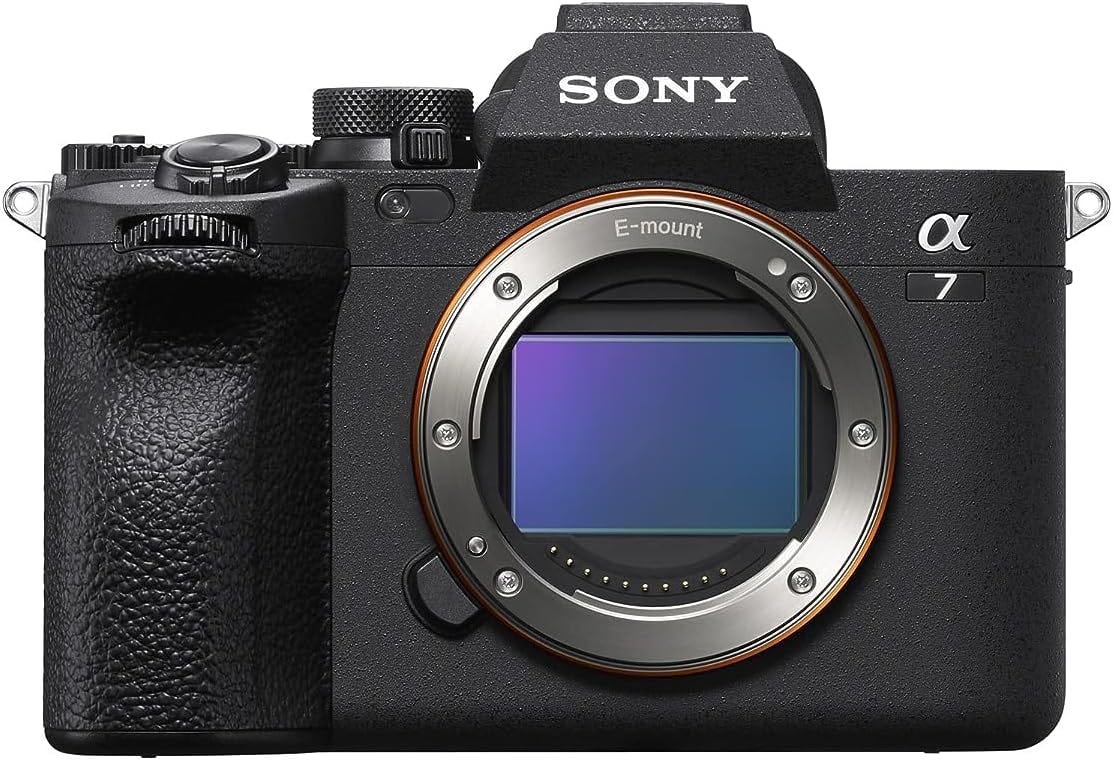
The **Sony α1 II **is the camera I’d put at the top of the list when fashion photography involves a mixture of editorial portraits, runway work, location shoots, and fast-moving assignments.
**Sony α1 II** 50.1-megapixel full-frame stacked sensor gives you an unusually useful combination: serious resolution without giving up the speed normally associated with lower-resolution professional bodies. Sony specifies up to 30 fps continuous shooting with full AF/AE tracking, along with AI-based subject recognition and blackout-free viewing.
That combination matters more than it sounds.
Fashion isn’t always a model standing perfectly still against a gray seamless background. A model might be walking toward you, turning through a pool of window light, throwing a jacket over one shoulder, or moving through a runway under rapidly changing illumination.
Why the Sony α1 II works so well for fashion
The 50MP sensor gives you enough resolution for aggressive cropping and large commercial output. At the same time, the stacked architecture helps the camera react quickly enough for movement-heavy work.
The sensor also handles difficult exposure changes well. That’s important when a model moves from open shade into direct sunlight or when you’re shooting around reflective clothing.
The autofocus is arguably the bigger story. Sony’s AI-based recognition can identify people and prioritize the subject while you’re concentrating on composition.
Field note: I’ve always found that runway photography becomes less about photographing the model and more about predicting the model. When a subject is walking directly toward you, the α1 II’s tracking gives me more freedom to watch posture, fabric movement, and the expression instead of constantly checking whether the AF box has wandered.
Lenses matter
For fashion, I’d pair it with Sony’s high-end G Master primes and zooms. A 50mm or 85mm is ideal for portraits, while a 24–70mm-class zoom is useful when you’re moving quickly around a set.
Sony’s lens ecosystem is one of the reasons the α1 II earns the overall recommendation.
Best for: Editorial, runway, location fashion, commercial campaigns, and photographers who also shoot action.
Photo by Ahmed Carter on Unsplash
2. Canon EOS R5 Mark II: Best Canon Camera for Fashion Photography

The **Canon EOS R5 Mark II is a fascinating fashion camera because [Canon EOS R5 Mark II](https://amzn.to/4cCI2yF)** doesn’t force you to choose between resolution and speed.
Canon uses a new 45-megapixel full-frame stacked back-illuminated sensor. The camera can shoot up to 30 fps electronically and adds improved autofocus, eye-control focus, subject recognition, and People Priority functionality.
For fashion, I particularly like the combination of resolution and Canon’s autofocus behavior.
Skin, hair, eyes, and clothing can create a surprisingly complicated visual scene. A model with loose hair crossing the face or an elaborate garment partially obscuring the body can confuse less capable systems.
The R5 Mark II is designed to keep working through that kind of chaos.
Image quality and skin tones
The 45MP sensor gives you plenty of latitude for retouching. That’s important because professional fashion files often undergo considerably more post-processing than a standard editorial image.
The camera’s high-resolution files preserve enough information for skin work, fabric texture, jewelry, and fine hair detail without requiring a medium-format system.
The Canon operating system
Canon’s menus and physical controls are relatively easy to understand, particularly if you’ve spent years with EOS bodies.
That matters on a fashion set.
You’re often changing shutter speed, aperture, ISO, AF behavior, drive mode, and white balance while someone is already waiting for you.
Field note: On a location portrait session with changing window light, I found myself bouncing between manual exposure and Auto ISO while the model moved around the set. The R5 Mark II’s controls let me make those changes without breaking concentration, which is exactly what I want from a working camera.
Where it fits
The R5 Mark II is especially attractive for photographers who shoot fashion but also cover weddings, advertising, events, portraits, or video.
Best for: Fashion photographers who want one body capable of handling almost everything.
For readers comparing Canon bodies more broadly, my Canon cameras for working photojournalists guide goes deeper into how Canon’s professional bodies behave under deadline pressure.
Photo by Marjan Taghipour on Unsplash
3. Nikon Z8: Best Nikon Camera for Fashion Photography

The **Nikon Z8** is probably the least flashy recommendation on this list, and that’s partly why I like it.
Nikon Z8 has a 45.7-megapixel full-frame sensor, dual card slots, Nikon’s Z-mount lens system, and a control layout that feels extremely natural once you’ve spent some time with it. Nikon lists CFexpress/XQD and SD storage, giving you a useful combination for professional redundancy and workflow flexibility.
For studio and editorial fashion, those characteristics are enormously practical.
Sensor performance in difficult fashion lighting
Fashion lighting can get weird.
You might have a hard key light hitting one side of the face, a colored background, reflective jewelry, and a black jacket absorbing almost everything else.
The Z8’s high-resolution sensor gives you substantial room to work with shadows and highlights during raw processing.
Its 45.7MP files are also detailed enough for magazine spreads and commercial crops without stepping into the enormous file sizes associated with medium format.
Autofocus and movement
The Z8 uses Nikon’s subject detection and 3D tracking system, which is particularly useful when a model isn’t standing perfectly still.
That makes the Z8 a strong choice for photographers who shoot fashion editorials with movement rather than purely static studio portraits.
Field note: I’ve shot portraits where the model’s movement was deliberately loose and unscripted. Rather than stopping every few seconds to reset the pose, I prefer letting the subject move naturally. The Z8’s tracking gives me confidence to shoot through those moments and choose the expression and body position later.
Battery and handling
Here’s the catch: the Z8’s battery endurance isn’t in the same league as some larger professional bodies.
For a full-day fashion production, I carry multiple batteries and don’t treat battery life as an afterthought.
The payoff is a relatively compact body with professional-level image quality and dual-card recording.
Best for: Studio photographers, editorial shooters, portrait specialists, and Nikon users who want flagship-level image quality without a flagship-sized body.
Photo by JC Gellidon on Unsplash
4. Fujifilm GFX100 II: Best Medium-Format Camera for Fashion Photography

If your definition of fashion photography starts with enormous files, incredible tonal transitions, and meticulous studio work, the **Fujifilm GFX100 II** deserves serious attention.
Its 102-megapixel medium-format sensor measures 43.8 × 32.9mm, substantially larger than a conventional full-frame sensor. **Fujifilm GFX100 II** also gives it five-axis stabilization rated at up to eight stops under its stated test conditions.
This is the camera I’d choose when image quality takes priority over compactness.
Why medium format makes sense for fashion
There is a particular quality to a large sensor when you’re photographing people carefully.
Skin transitions can look beautifully smooth. Fine fabric textures remain exceptionally detailed. Jewelry, embroidery, hair, and makeup survive heavy crops with remarkable amounts of information intact.
And 102MP gives you ridiculous amounts of flexibility.
You can photograph a full-length model and later make a much tighter crop for a secondary layout without immediately destroying the file.
The downside
The GFX100 II isn’t the camera I’d grab for every runway assignment.
It’s a bigger system, and the lenses are part of that equation. You’re committing to a medium-format workflow from the moment you put the camera in your bag.
That isn’t necessarily bad. It simply means you should know what you’re buying.
Field note: For controlled portrait work, I’d rather slow down and make one exceptional frame than fire through hundreds of almost-identical images. That’s where the GFX system makes sense to me. When the lighting is controlled and the model is working deliberately, the files reward that patience.
Lens selection
Fujifilm’s GF lenses are a major reason the system works. The optics are designed around the larger sensor, and the combination can produce extremely detailed files without making them look clinically flat.
Best for: Luxury campaigns, beauty, high-end editorial, studio portraits, and photographers delivering extremely large files.
For a deeper look at how medium-format bodies behave in professional shooting, see my Hasselblad X2D vs Fujifilm GFX 100 II field comparison.
Photo by Pedro Vit on Unsplash
5. Leica SL3: Best Luxury Editorial Camera for Fashion Photography

The **Leica SL3** is the wildcard here.
**Leica SL3** doesn’t chase the highest burst rate or the most aggressive autofocus system. Instead, it offers a 60.3MP full-frame sensor, 5-axis stabilization, a rugged metal body, and a very refined shooting experience. Leica rates the body as IP54 splash-water protected and lists dual storage using CFexpress Type B and SD cards.
For fashion photographers who value deliberate composition, that combination is compelling.
The sensor and rendering
The 60.3MP sensor produces files with plenty of detail for commercial and editorial work.
The real attraction, though, is the way the SL3 encourages you to slow down.
That’s not necessarily a disadvantage.
Fashion portraiture often benefits from a photographer who is watching the entire frame rather than spraying bursts.
Controls and operating system
Leica’s interface is comparatively clean and tactile. The camera gives you physical controls where they matter, while the touchscreen handles the rest.
The 5.76-million-dot electronic viewfinder is another strong point, especially when you’re working with carefully controlled lighting.
Field note: There are fashion portraits where the technical challenge is easy and the creative challenge is everything. With a camera like the SL3, I find myself paying more attention to the relationship between the model, wardrobe, background, and light rather than constantly thinking about settings.
The limitation
Autofocus performance and burst-oriented shooting aren’t the reason to buy the SL3.
If you’re shooting a fast runway show, I’d rather have the α1 II or R5 Mark II.
Best for: Editorial portraits, luxury fashion, controlled sets, and photographers who prioritize handling and image character.
For another fixed-lens approach to premium portraiture, my Leica Q2 vs Q3 field assessment covers how Leica’s compact philosophy changes the shooting experience.
Photo by Andrey Zvyagintsev on Unsplash
Which Camera Is Best for Fashion Photography?
If you prioritize…My pickBest overall fashion camera **Sony α1 II Fast fashion + hybrid shooting [Canon EOS R5 Mark II](https://amzn.to/4cCI2yF) Studio/editorial versatility [Nikon Z8](https://amzn.to/4gnwEI6) Maximum detail[ Fujifilm GFX100 II](https://amzn.to/45CXTcO) Luxury editorial experience [Leica SL3](https://amzn.to/4gJv18W) Runway photographySony α1 IIBeauty and commercial work [Fujifilm GFX100 II](https://amzn.to/45CXTcO) Location portraitsCanon EOS R5 Mark IIDeliberate editorial portraitsLeica SL3**
What Professional Fashion Photographers Actually Need
There’s a temptation to shop for fashion photography based on megapixels.
I wouldn’t.
Resolution matters, but once you’re above roughly 40MP, the differences become less important than what happens around the sensor.
I care about whether autofocus stays on the eye when the model moves.
I care whether the sensor retains useful highlight information when a white dress catches a hard light.
I care whether a 10-hour shoot leaves me hunting for batteries.
And I care whether I can change AF behavior or exposure compensation without taking the camera away from my face.
That’s why the α1 II is my overall winner.
The GFX100 II wins the resolution contest, but the Sony is the better all-around working tool.
How Different Photographers See These Cameras
Beginner fashion photographer
I’d lean toward the Canon EOS R5 Mark II or Nikon Z8. Both give you enough resolution to grow into commercial work without making the system unnecessarily complicated.
Experienced portrait photographer
The Leica SL3 becomes more interesting here. Someone who already understands light and posing can take advantage of its deliberate shooting experience.
Commercial fashion photographer
The Fujifilm GFX100 II makes a lot of sense when clients demand enormous files, detailed crops, and maximum image quality.
Runway photographer
The Sony α1 II is the obvious choice. Speed, tracking, blackout-free shooting, and resolution are exactly the combination you want when the model is moving toward you under inconsistent lighting.
Hybrid fashion creator
The Canon EOS R5 Mark II gets my vote because it combines still photography with a very capable video platform.
Final Verdict: The Best Camera for Fashion Photography in 2026
If I were packing one camera for an unpredictable week of fashion assignments, I’d take the Sony α1 II.
It has the resolution for serious commercial work, the speed for runway photography, the autofocus intelligence for moving subjects, and a lens ecosystem deep enough to build a complete professional kit around it.
But that doesn’t make it universally better.
The Fujifilm GFX100 II is the one I’d want for a carefully lit campaign where every pore, thread, and highlight matters.
The Canon EOS R5 Mark II is the versatile all-rounder.
The Nikon Z8 is the dependable workhorse.
And the Leica SL3 is the choice I’d make when the shooting experience itself matters almost as much as the specification sheet.
The right fashion camera isn’t the one with the longest list of features. It’s the one that disappears in your hands while the model is moving, the light is changing, and the client is waiting for the next frame.
Fashion Photography Camera Q&A
What is the best camera for fashion photography?
For most professional fashion photographers, I’d choose the Sony α1 II because it combines 50.1MP resolution, fast continuous shooting, strong subject recognition, and excellent lens options.
Is 45MP enough for fashion photography?
Absolutely. A 45MP full-frame camera such as the Canon EOS R5 Mark II or Nikon Z8 provides more than enough resolution for editorial, advertising, portraits, and substantial cropping.
Is medium format better for fashion photography?
Medium format can deliver exceptional detail and tonal depth, particularly for controlled studio and commercial work. The Fujifilm GFX100 II is an excellent example. But it isn’t automatically better for runway or fast-moving fashion.
What focal length is best for fashion photography?
An 85mm lens is one of my favorite choices for portraits because it gives flattering perspective and useful subject separation. A 50mm works well for environmental fashion, while a 24–70mm zoom is extremely useful when you’re moving quickly around a set.
Is autofocus important for fashion photography?
Very much so. Even controlled fashion sessions involve movement. Strong eye detection and subject tracking allow you to concentrate on expression, pose, wardrobe, and composition instead of constantly checking focus.
How many megapixels do I need for professional fashion photography?
I’d consider 40MP-plus an excellent range for modern professional work. More resolution is useful for commercial crops and large-format output, but it shouldn’t come at the expense of autofocus, handling, or lens quality.
What matters more: camera or lens?
Once you’re working with a modern professional body, I’d put a lot of attention into the lens. A great sensor cannot rescue poor optics. For fashion, I’d rather pair a very capable body with an exceptional 50mm, 85mm, or 70–200mm lens than spend everything on the camera and compromise on glass.
Which camera is best for fashion runway photography?
The Sony α1 II is my first choice because runway work rewards fast autofocus, high burst rates, blackout-free viewing, and enough resolution to crop aggressively.
Which camera is best for fashion portraits?
For maximum detail, the Fujifilm GFX100 II is difficult to ignore. For a more responsive full-frame workflow, I’d choose the Sony α1 II or Canon EOS R5 Mark II.
Can I use a fashion camera for other photography?
Absolutely. In fact, that’s one reason I prefer these cameras. The Sony and Canon bodies are excellent for events and action, the Nikon is a strong general-purpose professional body, the Fujifilm is superb for portraits and commercial work, and the Leica can handle demanding editorial assignments beautifully.
메타데이터
- post_id
- ca013befc5f8
- slug
- 5-best-cameras-for-fashion-photography-ca013befc5f8
- url
- https://medium.com/@WhyThisCamera/5-best-cameras-for-fashion-photography-ca013befc5f8
- canonical_url
- https://medium.com/@WhyThisCamera/5-best-cameras-for-fashion-photography-ca013befc5f8
- author_url
- https://medium.com/@WhyThisCamera
- status
- ok
- fetched_at
- 2026-08-31 18:59:54