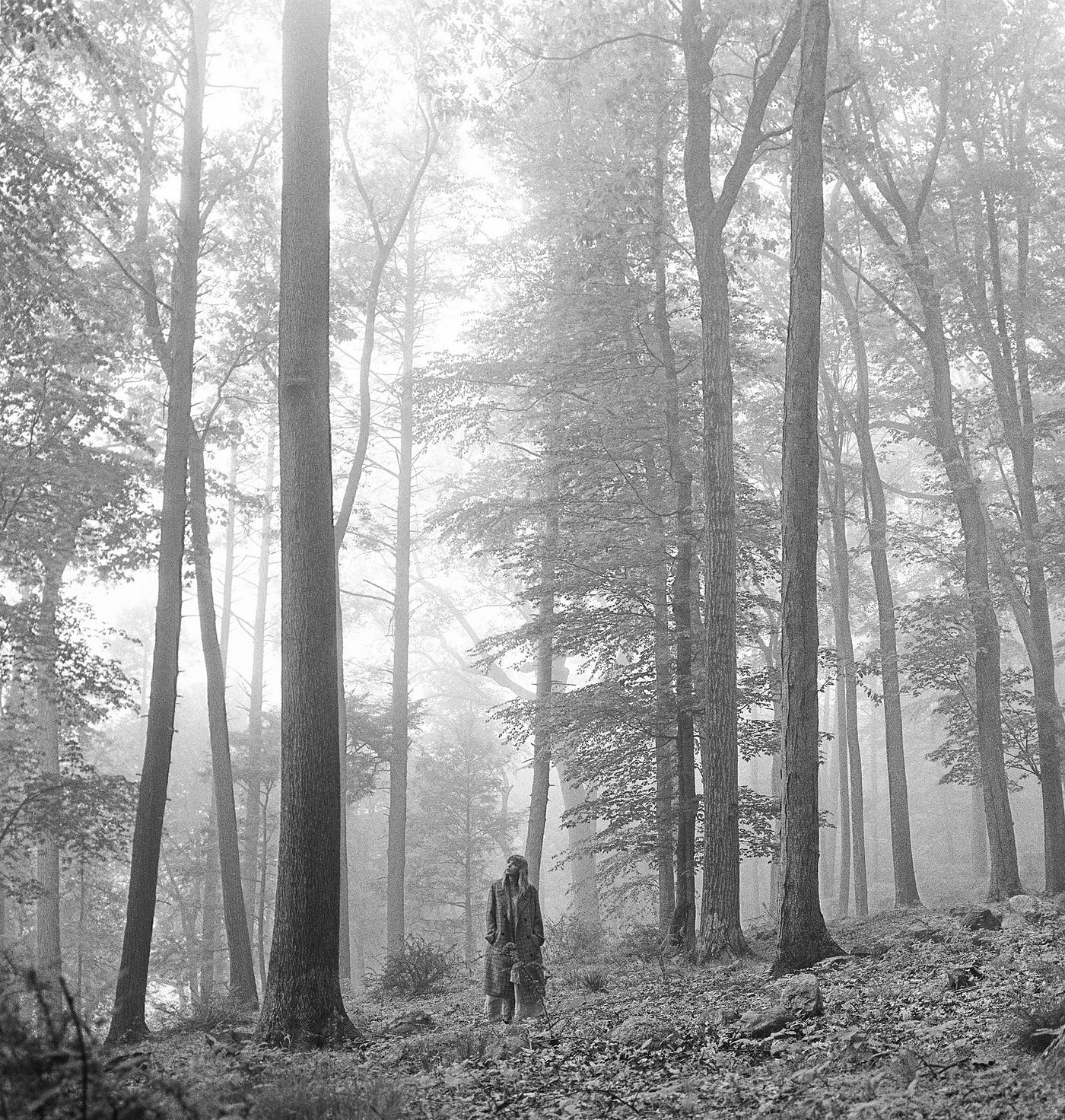
I’m going back to exile city, I do believe I’ve had enough
“Lend yourself to others, but give yourself to yourself,” Montaigne wrote. I remembered it as my heart beat like a hammer. I was walking to…
I’m going back to exile city, I do believe I’ve had enough
“Lend yourself to others, but give yourself to yourself,” Montaigne wrote. I remembered it as my heart beat like a hammer. I was walking to steady my nerves. My best friend-my doctor who wouldn’t tell me what it is I’ve got, had taught me ways to distract myself: ice pressed into palms, cold showers, box breathing, running down the road, walking through a park, noticing things as they appear. I chose to walk. I smoked a thin cigarette and rushed through the narrow park lanes, waiting for something I could not name, like waiting for test results of an illness I didn’t know I had.
The lines came back to me again. I remembered them without meaning to, but I knew why. I thought of Porthos in The Three Musketeers, and how he died the first time he tried to think. I thought of Cléo in Cléo from 5 to 7, walking through the city in brittle nerves as she waited to know if she had cancer. I thought of Anna Karina crying as she watched Joan of Arc in silence, then drifting off to make love in a cheap room in Vivre Sa Vie, and how the cover of Levy’s Cost Of Living had a still from the film with Anna Karina smoking and resting her chin on some man’s shoulder, his face immaterial. I thought of Roy’s dark red Mother Mary Comes to Me. On the cover, she was smoking too, her eyes bright and young, proud of knowing something no one else did.

A Still from Vivre Sa Vie
That red book made me think of La Chinoise, all that deep red, Mao red, Mao’s little red book that Theo held in The Dreamers. I had read in the news that we are close to eliminating all Maoists, and the state says we will be free of them by 2026. I thought of who they were, and what kept them fighting a war they might never win. Sometimes the state takes credit when it could be human resolve wearing thin. The Maoists were notorious well into the early 2010s, then we heard less and less. The war on terror took precedence. Revolutions, even bloody, tire when no one watches. Even Öcalan, after decades of armed struggle, had to turn to peaceful politics in the end.

A Still from La Chinoise
But I was getting ahead of myself. I needed to slow down. My thoughts were a kind of cacophony, like Mingus in Track A: Solo Dancer. I bought an OJ and sat on a steel-green bench in the park. On my left, a few people smoked dope. On my right, couples were meeting after a day’s work and would soon return to their homes when night settled in. I lit another cigarette and let the nicotine rise into my head. There were no clouds, no moon, no stars. Perhaps no god.
I was still not calm. All the thoughts I had pushed away came back again. I remembered how being alone with nothing to think about had felt like hell, and how being in love and wanting to think of nothing was something else entirely. And if, while falling in love, you cannot think of anything else because the person before you has claimed you, then perhaps being in love through fights, misunderstandings, and insecurities is only another way of thinking of nothing but love. I did not want to be like Antoine in Stolen Kisses, so used to running and chasing that he is told he likes falling in love more than actually being in love.
I thought of my lonely room from a year ago, and I remembered Antoine’s in Antoine and Colette, his small room, the sink beside his bed that must have given off a stink, and the Bach records he played each morning. He would wake, reach for a fat-butted cigarette from the ashtray, and smoke it as the light came in. I had my moments too, when I was surrounded only by films, books, and my own excesses in my room. I had my morning songs, my afternoon songs, and others for the evening and night.

A Still from Antoine and Colette
But on bad days, nothing would calm me. And I am talking about those times, when everything feels helpless, the real unmanageable ones, the tough ones, when your heart beats like a hammer, and your eyes are full of tears. ‘Depression is anger turned inward.’ Melfi said to Tony in Sopranos. Not sadness, but anger. The anger grows inside, feeds on itself, and then we become anxious. And when the mind runs loose, there are only so many things one can do, even with all the powers one can summon.
“When you send back all the invitations that your mother and father send you, and when you are tired of all of your angers and creations, and when all the advisers and clowns that you have commissioned all feel vain trying to prove that you shouldn’t make your conclusions so drastic, and when you are sick of all these repetitions, would you have still have faith in yourself, mon amour? “
But it doesn’t always have to be that way. The lows don’t have to be so low. Everyone needs to be told that once in a while. On most days we don’t want to hear that we can do it because others are doing it too. What we need to hear is that we will fail at what we try, and we will fail again, but we will still be able to do it. A new city, a new job, a new school or college, new friends, family, and love, all feel unmanageable. And you will fail while dealing with them. But you will still make it. Have faith in yourself.
And just about then, in the park, I needed to hear that. I needed to know it was alright. But nothing would calm me then. What I am writing now is an afterthought, written with a certain sense of calm I did not have then. I needed shelter. I needed to cry out those blues. There is one battle to win, and there will be many more, but that would be for another day. I would take whatever gets me through the night, even if it meant being careless, losing faith and respect in myself, and falling into the pits of my thoughts and my addictions.

A Still from Masculine Feminin
Perhaps we now have the language to articulate what’s happening to us. Or maybe we think we do. Our notions of personal peace, security, progress, love and relationships stand in direct contradiction to the help one needs to climb out of their pit, or to break the glass ceiling. We tell ourselves we are becoming more empathetic. We tell ourselves we have seen too much. And we come very quickly, to the conclusion that whatever matters lies within us. And once the self becomes sacred in that way, everything else must bend around it. Love must not disturb it. Work must not exhaust it. Friends and family must not demand too much of it. Even grief must arrive and leave on time. We stay guarded because we believe we will break.
We all want love, or something that resembles it, and it has to be perfect. It has to happen at the right place and at the right time, has to check off all boxes if not some to make sense pop-culturally so that it becomes acceptable to others. It has to be quirky but not too much, it has to be safe but not too boring, it has to be exciting but not too dangerous, but on most days we forget that the brunt of the quirks, excitement and rebellion is something that one has to live through even after falling in love.
Right then, I didn’t feel too good, and I was surprised at how many things I had to convince myself of before I could accept what I needed to. And that was to have faith. Faith and trust. And a little patience, with myself and with the girl I love. I needed to know right then, if this feeling of urgency was what love is. And then I remembered a line of Zizek, “Love feels like a great misfortune, a monstrous parasite, a permanent state of emergency that ruins all small pleasures.”

And we think love and beauty are the same, but they are not. Beauty warrants attention, but not too much. It wishes to bear witness to great tragedies of rise and fall, but from afar. It is as much an aftertaste or an afterthought as it is something immediate. We can witness beauty from a distance, but love, one wants it, one cherishes it, one needs it. In love too, you wake up one day, after days and months of being together, and you can feel the beauty seeping through you. Love lacks conviction of the rational mind, right and wrong, and it lingers in the space between doubts and contradictions. It is plasma, it is air. It is nature. It is human and inhuman. It is violent. It is necessary. One has to see why it is; one has to see it in something.
Love is violent. Poetry is violent. Art is violent. The people there are in such a violent world that they don’t want to see that. You stay, you read and write and love because something in you hopes the storm will pass, and because leaving would mean giving up the small, stubborn part of yourself that still believes in warmth and light. It’s all cyclical. One love fails, one succeeds. A war starts and a few years later another does. You live in a city as a kid and years later return to work there. A French film says something an Italian film says too. A song you hear now seems familiar from some other time. And memories, they’re all the same, some are dreams and some are forgotten.

And all this time while I was going about in pity for myself, a great wind carried me across the sky. And I remembered what my lover said to me once, “Lightly child lightly. Learn to do everything lightly. Yes, feel lightly even though you are feeling deeply. Just lightly let things happen and lightly cope with them.”
메타데이터
- post_id
- d64a4baa9864
- slug
- im-going-back-to-exile-city-i-do-believe-i-ve-had-enough-d64a4baa9864
- url
- https://medium.com/@harshaevani64/im-going-back-to-exile-city-i-do-believe-i-ve-had-enough-d64a4baa9864
- canonical_url
- https://medium.com/@harshaevani64/im-going-back-to-exile-city-i-do-believe-i-ve-had-enough-d64a4baa9864
- author_url
- https://medium.com/@harshaevani64
- status
- ok
- fetched_at
- 2026-07-14 15:46:17