The 5-Minute Daily Habit That Transformed My Gut (And My Energy)
Why fermented foods might be the missing piece in your wellness puzzle
The 5-Minute Daily Habit That Transformed My Gut (And My Energy)
Why fermented foods might be the missing piece in your wellness puzzle
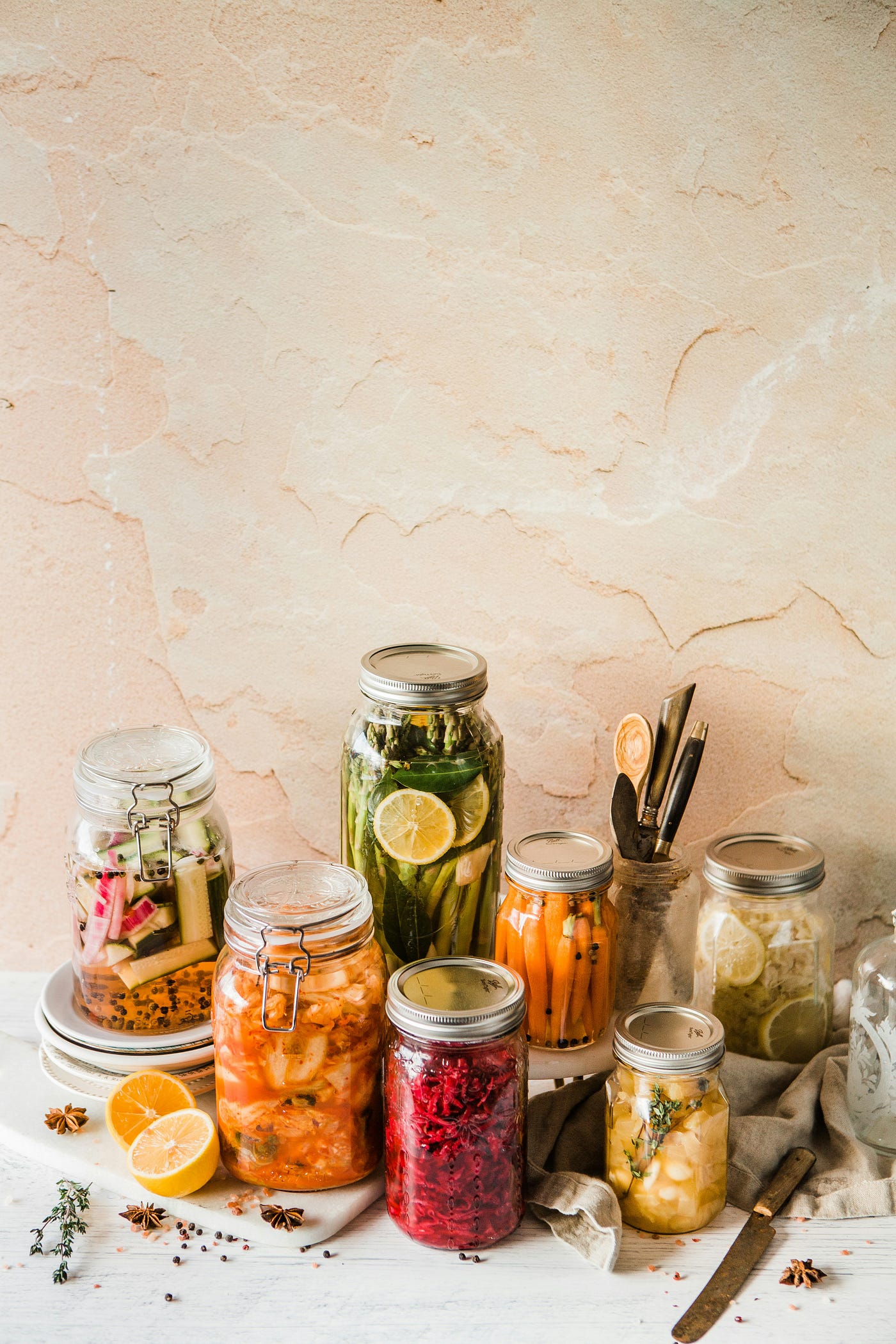
Photo by Brooke Lark on Unsplash
A little support goes a long way! If you found value in my writing and you’d like to help me keep creating, you can do so at http://buymeacoffee.com/katems .
I used to think probiotics came in expensive pill bottles from the health food store.
You know the ones refrigerated, with fancy strain names, promising to “support digestive health” for forty pounds a month.
I’d buy them with good intentions. Take them religiously for a week or two. Then the bottle would sit in my fridge, forgotten, until I noticed it expired.
What I didn’t realize was that people have been supporting their gut health with food, not supplements, for thousands of years.
And it’s simpler, cheaper, and more effective than any pill I ever bought.
What Your Ancestors Knew
Before refrigeration, fermentation was how humans preserved food. Cabbage became sauerkraut. Milk became yogurt. Cucumbers became pickles. Soybeans became miso.
This wasn’t just about preservation. It was accidental genius for gut health.
The fermentation process creates beneficial bacteria (probiotics) that colonize your digestive system and support everything from digestion to immunity to mental health.
Your great-great-grandmother didn’t know about microbiomes or gut-brain connections. She just knew that fermented foods made her feel good. They were digested easily. They kept well. They were part of daily life, not special supplements.
Somewhere along the way, we lost this wisdom. We sterilized everything. We relied on refrigeration. We started buying probiotics in pills instead of eating them in food.
And our gut health suffered for it.
What Fermentation Actually Does
When you ferment food, you’re creating an environment where beneficial bacteria and yeasts break down sugars and starches.
This process does several remarkable things:
It pre-digests the food, making nutrients more bioavailable and easier for your body to absorb. This is why people who can’t tolerate regular milk can often handle yogurt or kefir.
It creates probiotics, live beneficial bacteria that support your gut microbiome.
It produces enzymes, which help you digest other foods you eat alongside them.
It increases vitamins. Fermentation actually creates B vitamins and vitamin K2 that weren’t present in the original food.
It breaks down anti-nutrients, compounds that can interfere with nutrient absorption.
You’re not just eating preserved food. You’re eating food that’s been transformed into something more nutritious and more supportive of your digestion than it was before fermentation.
The Change I Noticed
I started with something simple: a spoonful of sauerkraut with my lunch every day.
That’s it. Not a whole bowl. Not fermented foods at every meal. Just one spoonful of real, traditionally fermented sauerkraut.
Within two weeks, my digestion was noticeably better. Less bloating after meals. More regular bowel movements. That uncomfortable full feeling that used to linger for hours? Gone.
My energy improved. Remember that gut-brain connection we talked about? When your gut is functioning well, when beneficial bacteria are producing neurotransmitters, when inflammation decreases, you feel it in your energy and mood.
My sugar cravings decreased. This surprised me. But it makes sense, when your gut microbiome is balanced, those bacteria that thrive on sugar and create cravings get crowded out by beneficial bacteria that prefer fiber and whole foods.
I got sick less often. About 70% of your immune system lives in your gut. Support your gut microbiome, and you support your immunity.
One spoonful a day. That’s all it took for noticeable changes.
The Fermented Foods You Already Know
You don’t need to make your own kombucha or master the art of Korean kimchi (though you can if you want to).
Fermented foods you probably already have access to:
Yogurt — the real kind, with live active cultures. Not the sugar-laden fruit-flavoured kind, but plain yogurt with actual beneficial bacteria.
Kefir — like drinkable yogurt, but with even more diverse probiotic strains. Great in smoothies or just sipped plain.
Sauerkraut — fermented cabbage. Make sure you’re buying the kind in the refrigerated section, not shelf-stable. If it’s shelf-stable, it’s been pasteurized, which kills the beneficial bacteria.
Kimchi — Korean fermented vegetables. Spicy, tangy, incredibly flavourful. A little goes a long way.
Miso — fermented soybean paste. You can add it to soups, dressings, or even just stir a teaspoon into hot water for a quick probiotic boost.
Kombucha — fermented tea. Naturally fizzy, slightly sweet, comes in endless flavours. Though watch the sugar content in commercial brands.
Pickles — but again, only the kind made through actual fermentation, not just cucumbers in vinegar.
Tempeh — fermented soybeans formed into a cake. Great source of protein and probiotics.
You don’t need all of these. Pick one or two that appeal to you and start there.
What “Real” Fermented Food Means
Here’s where most people get tripped up: not all products labelled as fermented foods actually contain live probiotics.
If it’s been pasteurized, the beneficial bacteria are dead. Shelf-stable pickles, sauerkraut, or kimchi have been heat-treated for safety and shelf life, which kills the probiotics.
If it’s made with vinegar instead of fermentation, it’s just pickled, not fermented. There’s a difference. Fermentation creates probiotics. Vinegar doesn’t.
Look for these clues when shopping:
“Contains live active cultures” or “probiotics” on the label.
Refrigerated section, true fermented foods need to be kept cold.
Simple ingredients, sauerkraut should be cabbage and salt, not a long list of preservatives.
Slight fizziness when you open the jar, that’s a sign of active fermentation.
Yes, real fermented foods cost a bit more than the shelf-stable versions. But you’re eating tiny amounts daily, so a jar lasts a while. And compared to buying probiotic supplements, it’s actually cheaper.
How to Actually Incorporate Them
I know what you’re thinking: “Great, but how do I actually eat this stuff regularly?”
The key is making it easy and enjoyable, not forcing yourself to choke down something you hate.
With meals: A spoonful of sauerkraut or kimchi on the side of whatever you’re eating. It adds tanginess and crunch.
In food: Mix yogurt or kefir into smoothies. Stir miso into soups or salad dressings. Use kimchi in scrambled eggs or rice bowls.
As a snack: Kombucha instead of soda. A few pickles mid-afternoon. Some yogurt with berries.
The timing matters: Remember from my mindful eating article how digestion works best when you’re calm? Fermented foods are best eaten alongside meals, not on an empty stomach, especially when you’re first starting.
Start small: If your gut isn’t used to fermented foods, too much too soon can cause digestive upset. Begin with a teaspoon or two daily. Let your body adjust. Then gradually increase.
Make it a ritual: I eat my spoonful of sauerkraut at lunch every single day. It’s not something I have to remember or decide about. It’s just part of lunch now, like salt or pepper.
The Diversity Factor
Here’s something fascinating: different fermented foods contain different strains of beneficial bacteria.
Yogurt has certain strains. Kimchi has others. Miso has different ones still.
The more diverse your gut microbiome, the better your overall health. So ideally, you’d rotate through different fermented foods rather than eating only one type forever.
But don’t let perfect be the enemy of good. If you only ever eat one fermented food regularly, that’s still infinitely better than eating none.
I rotate: yogurt daily, kefir some days, sauerkraut other days, picles when I’m in the mood, kombucha occasionally. But if I had to pick just one for the rest of my life? Sauerkraut. Simple, versatile, easy to incorporate.
What About Probiotic Supplements?
I’m not anti-supplements. There are times when they make sense: after antibiotics, during digestive issues, when traveling.
But food-based probiotics have advantages that pills don’t:
They come with food. The beneficial bacteria arrive in your gut with the fiber and nutrients they need to thrive.
They’re more diverse. A spoonful of sauerkraut can contain dozens of bacterial strains. Most supplements have 5–10.
They’re tested by time. Humans have been eating these foods for millennia. We know they’re safe and effective.
They’re whole-food nutrition. You’re not just getting probiotics. You’re getting vitamins, minerals, enzymes, all working together.
Your body recognizes them as food, not as a supplement to process separately.
Can supplements be helpful? Absolutely. Are they necessary if you’re eating fermented foods regularly? Probably not for most people.
The Connection to Everything Else
Notice how fermented foods tie into every other aspect of wellness we’ve discussed?
That overnight fast we talked about? Breaking it with some yogurt and fruit gives your gut beneficial bacteria right when it’s most receptive.
That gut-brain connection? The probiotics in fermented foods literally produce neurotransmitters that affect your mood and mental clarity.
That stress response affecting your gut? Regular probiotic intake helps maintain gut integrity even during stressful periods.
That lymphatic system needing movement? A healthy gut reduces inflammation throughout your body, supporting better lymphatic flow.
It all connects. You can’t isolate one aspect of health and expect everything else to fall into place. But when you support your gut microbiome with fermented foods, you create a foundation that makes everything else work better.
The Simplest Starting Point
If you do nothing else, try this for two weeks:
Add one spoonful of real, refrigerated sauerkraut or kimchi to your lunch every day.
That’s it. One spoonful. Five minutes to implement.
Notice what changes: Your digestion. Your energy. Your mood. Your cravings. Your immunity.
I’m not promising miracles. But I am promising that your gut will respond to this simple daily input of beneficial bacteria.
Your body is designed to work with these foods. It recognizes them. It knows what to do with them.
All you have to do is provide them.
Beyond the Basics
Once you’ve made fermented foods a regular part of your routine, you might get curious about making your own.
Homemade fermented foods are incredibly economical. A head of cabbage becomes a huge jar of sauerkraut for minimal cost.
They’re fresher and more potent. Homemade ferments often contain more diverse and abundant probiotics than commercial versions.
They’re customizable. You can adjust flavors, spice levels, and ingredients to your preference.
But this is a next step, not a starting point. First, just buy some real fermented foods and eat them regularly. Get your body used to them. Notice the benefits.
Then, if you’re interested, explore making your own. It’s easier than you think, mostly just vegetables, salt, time, and patience.
The Wisdom Your Gut Remembers
Your digestive system evolved alongside fermented foods. For most of human history, we ate them regularly without thinking about it.
Your gut microbiome is designed to be supported by these foods. It’s waiting for them. It recognizes them as the nourishment it needs.
When you eat fermented foods, you’re not doing something new or trendy. You’re returning to something ancient and foundational.
You’re feeding the trillions of beneficial bacteria that support your digestion, your immunity, your mental health, your energy.
One spoonful at a time.
Simple. Ancient. Powerful.
Do you eat fermented foods regularly? If not, which one would you be willing to try first? I’d love to hear what appeals to you, or what’s holding you back.
I will share more weekly in my newsletter. Join me here: https://substack.com/@katems
Continue the journey with another story:
[embed]Letter Of November — A Writing Challenge The Shoes I Can’t Throw Awaymedium.com
메타데이터
- post_id
- d83da8132863
- slug
- the-5-minute-daily-habit-that-transformed-my-gut-and-my-energy-d83da8132863
- url
- https://medium.com/no-time/the-5-minute-daily-habit-that-transformed-my-gut-and-my-energy-d83da8132863
- canonical_url
- https://medium.com/no-time/the-5-minute-daily-habit-that-transformed-my-gut-and-my-energy-d83da8132863
- author_url
- https://medium.com/@katems
- status
- ok
- fetched_at
- 2026-06-11 11:25:07