Three Problems Every Runner Has. I Built an App for Each One.
On sweat lakes in rainproof jackets, tempo runs with the wrong playlist, and the time you lose naming your Strava activity.
Three Problems Every Runner Has. I Built an App for Each One.
On sweat lakes in rainproof jackets, tempo runs with the wrong playlist, and the time you lose naming your Strava activity.
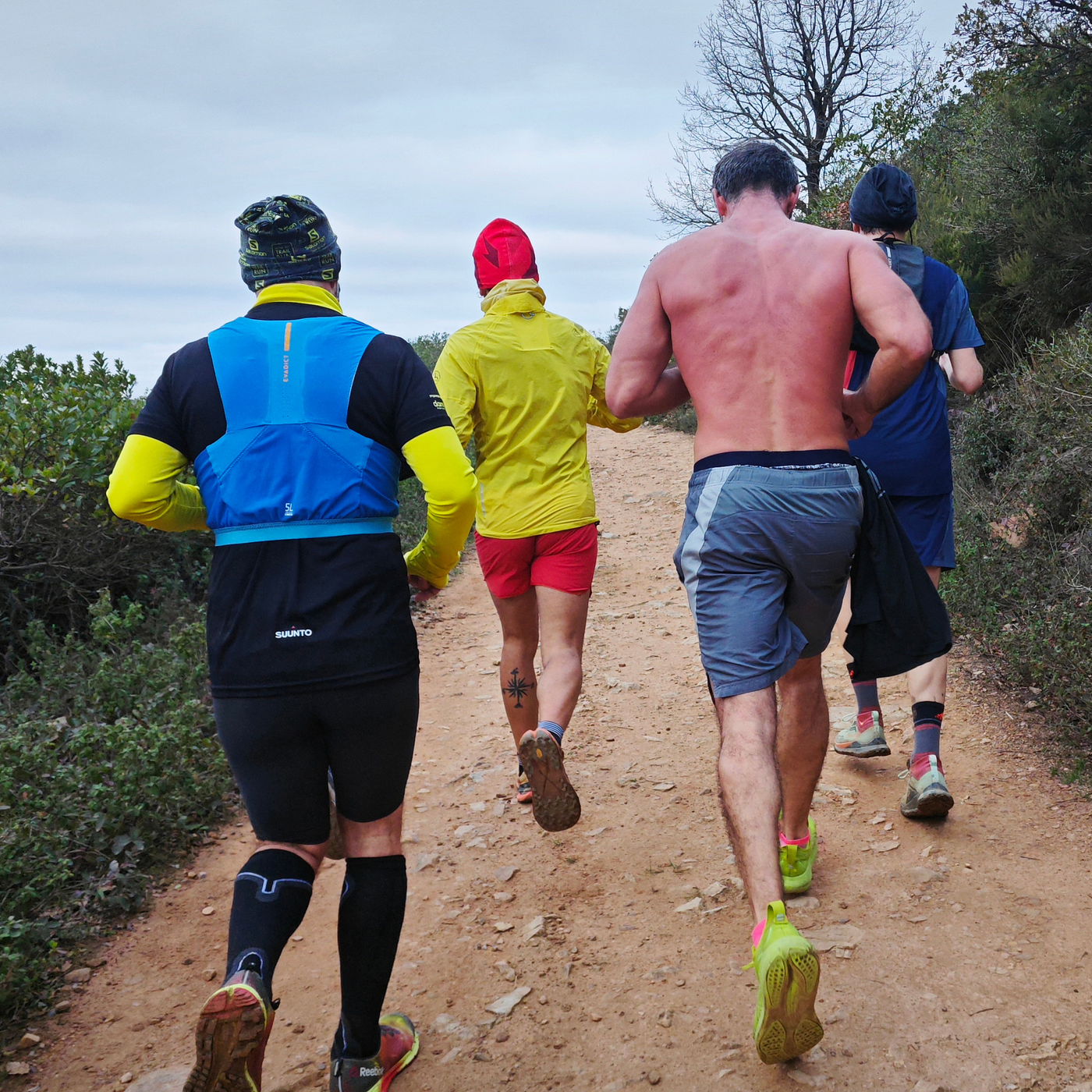
Who has the perfect outfit ?
I love running in the rain. There’s something about wet trails, puddles you stop trying to avoid, the smell of forest after the first drops hit the ground. So when it was raining properly one morning, I put on my Nike Storm-Fit ADV running jacket and headed out to the trails.
Twenty minutes in, I was soaked. Not from the rain. From the inside.
The jacket was doing exactly what it was designed to do: keeping water out. What it couldn’t account for was that I was running hard enough to generate more heat than the fabric could vent. By the time I noticed, there were small pools of sweat collecting at my elbows. I remember thinking: I would have been more comfortable just getting rained on.
That’s the kind of problem that sounds trivial until it happens to you mid-run, in a forest, with no easy way to fix it. And it’s one of three problems I eventually got annoyed enough to build something for.
Problem 1: What to wear
The jacket situation isn’t unique to me. Every runner has a version of it. You check the weather, see “cloudy, 12°C,” dress accordingly, and spend the first mile either overheating or wishing you’d brought gloves. The forecast tells you temperature. It doesn’t tell you wind chill, how your body will respond after thirty minutes of effort, or whether the low visibility at 6am means you should be wearing something reflective.
Especially if you’re running somewhere new, somewhere you don’t know the microclimates or the exposure, dressing right is genuinely hard. And getting it wrong isn’t just uncomfortable. On a long effort, it can affect performance significantly.
So I built **Running Outfit Weather**. It pulls real-time weather data from your location using the Open-Meteo API, applies wind chill and heat index formulas to calculate what the temperature actually feels like rather than what the thermometer says, adds a degree or two for every thirty minutes of running since your body heats up over time, and then tells you what to wear. A visual runner figure shows you the recommended layers. If you’re heading out early or late, it flags low visibility and suggests a reflective vest.

It doesn’t guarantee you’ll dress perfectly. But it asks better questions than most weather apps do.
Problem 2: The playlist that kills your pace
Have you ever been mid-tempo run, holding a pace that’s uncomfortable but manageable, and then a slow song comes on? Not just slow. Mellow. The kind of track that’s great for a Sunday morning but completely wrong for the effort you’re currently in.
You feel your legs respond before your brain catches up. The pace drops. The rhythm breaks. You spend the next thirty seconds trying to rebuild what took ten minutes to find.
Music affects running more than most people acknowledge. The right BPM at the right moment keeps you in flow. The wrong one pulls you out of it. When I’m doing interval work, I need something that pushes. When I’m in easy zone two, I want something I can settle into without being driven. The problem is that curating the right playlist for each type of run takes time I don’t always have, and even a good playlist will eventually shuffle into the wrong song.

**Pace to Playlist* takes your target pace, matches it to an appropriate BPM range, and gives you ten songs that fit. It’s a starting point, not a finished product. The library will grow. But the core idea is simple: your music should match your effort, not work against it.*
Problem 3: The five minutes you spend naming your run
This one is smaller but strangely relatable to anyone who shares their runs.
You finish. You’re tired, probably a little proud, maybe a little broken. You open Strava or Instagram and stare at the activity name field. “Morning run.” Again. Or you want to write something that captures what the last hour actually felt like, something with a bit of personality, but you’re too tired to be creative and the algorithm has already started pulling you into the feed before you’ve decided what to write.
Sound familiar?

**Name Your Run* takes a few inputs: your city, the weather, your distance, your mood, where you ran. It generates a unique name for your run and a motivational line to go with it. Something specific to that run, not generic*. You can use it before you head out to get motivated, or after you finish to find the words for what just happened.
It’s a small thing. But the time you save not staring at a blank text field is the time you could spend stretching.
I spend a lot of my professional time thinking about how digital systems shape human behavior. These three tools came from a different place: the specific, physical frustrations of someone who runs a lot and wanted to solve his own problems.
And if you have a running problem that should have a simple digital solution but somehow doesn’t yet, I’m listening.
Running tools: Pace to Playlist · Running Outfit Weather · Name Your Run
More about my running: recepzerk.com/running.
메타데이터
- post_id
- de52bd64f5f5
- slug
- three-problems-every-runner-has-i-built-an-app-for-each-one-de52bd64f5f5
- url
- https://medium.com/@recepzerk/three-problems-every-runner-has-i-built-an-app-for-each-one-de52bd64f5f5
- canonical_url
- https://medium.com/@recepzerk/three-problems-every-runner-has-i-built-an-app-for-each-one-de52bd64f5f5
- author_url
- https://medium.com/@recepzerk
- status
- ok
- fetched_at
- 2026-06-09 15:37:30