The Everyday Payments Scandal Is About More Than Missing Money — It’s About Who Should Control Tips
Has this issue exposed why tipping culture is such a fraught way to run a business?
The Everyday Payments Scandal Is About More Than Missing Money — It’s About Who Should Control Tips
Has this issue exposed why tipping culture is such a fraught way to run a business?
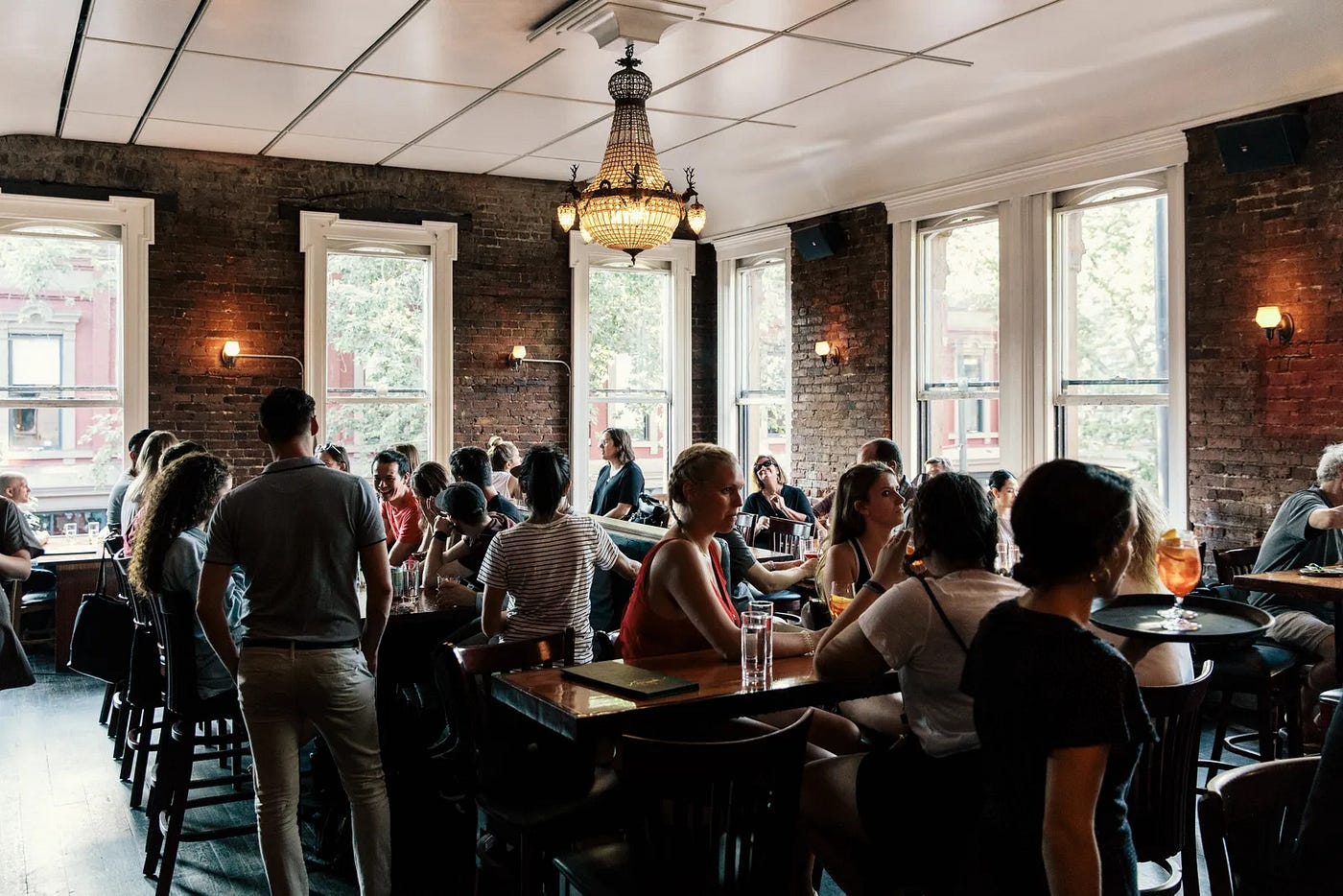
Photo by Sam Dan Truong on Unsplash
Last July, during yet another wave of “tip-flation” backlash, I wrote a column asking what would happen if tipping culture disappeared from the Canadian restaurant scene.
I posed three questions:
What would restaurateurs do? How would servers respond? Would diners accept higher menu prices and no tip line?
The thought experiment sparked real debate. It forced many in the industry to confront a possibility few had seriously entertained: could restaurants operate without tipping at all?
From what I’ve seen — in British Columbia, across Canada, and in parts of the United States — restaurants that attempt to eliminate tipping often struggle to sustain it. Removing the model would likely require either a coordinated industry-wide shift or government intervention.
For all the complaints about tip-flation, the truth is this: for most operators, tipping works.
Until it doesn’t.
What happens when the model breaks — not philosophically, but structurally?
What happens when the infrastructure that moves gratuities collapses?
Restaurants weren’t auditing wallet balances
On January 29th, Ian Tostenson, CEO of the British Columbia Restaurant and Foodservices Association received a call from a restaurant owner in Whistler alerting him to missing money from his Everyday payments wallet. “One of our brand promises,” Tostenson told me, “is that we operate like an emergency room triage. When operators have a crisis, they call us.”
Within hours, more calls followed. What began as a single complaint quickly spread across the province. “I would say tens of millions of dollars for sure,” Tostenson said. “I know three businesses in British Columbia that total two million dollars.”
For years Tostenson said restaurants prepaid gratuities into digital wallets and rarely audited them. “They assumed the money was secure.” The money was meant to sit in custodial accounts until staff or the restaurant transferred it to prepaid cards. Few operators imagined the funds themselves could disappear.
But in this case, there had been warnings about XTM/Everyday Payments — formerly known as Anyday or TipsToday. In June and November of 2023, my friend and fellow food journalist Corey Mintz published two features in The Globe and Mail regarding XTM and the ramifications of disruption technology that become too entangled in our restaurant economy for lawmakers to act. For Mintz, “the ideal solution should incorporate the needs of employees and employers, while also being CRA-compliant.” XTM wasn’t it. “I wrote two articles about this company two years ago trying to pull apart what seemed suspicious about it. So when I read this latest story, I felt anger for the businesses — and at the same time, a bit of ‘we warned you,’” Mintz told me.
But ultimately for Mintz, the broader issue isn’t just corporate mismanagement. It’s a business model. “A lot of fintech is about inserting itself between two parties — employer and employee — to extract a fraction of value,” he said. “That’s a scam masquerading as convenience.”
So how did we get here?
CRA rules pushed industry toward third-party facilitators
The growth of gratuity facilitators wasn’t accidental. Two factors played a role in this. The first being that most transactions today are done with some form of card versus cash, which makes separating tips for employees time consuming for employers. While the second came from the Canada Revenue Agency and how they tightened definitions around controlled tips. To navigate this, restaurants sought ways to avoid additional payroll burdens using third-party platforms as workarounds: employers didn’t “touch” the tips, and payouts became seamless.
Or so they thought.
“Someone said to me,” Tostenson said, “if I hadn’t been forced into this by the CRA’s model on gratuities, I wouldn’t be in this situation.”
The dilemma at the core of this issue is straightforward. If the government knows tipping is the economic backbone of the restaurant industry, why is the system structured in a way that encourages operators to pretend they never touch the money?
The question now is whether the workaround model of using third party fintech platforms is sustainable. If nearly every tip today originates from a credit card terminal, is the distinction between “direct” and “controlled” tips still meaningful? Or has it simply incentivized an ecosystem of intermediaries designed to avoid payroll classification?
Even if all those who currently had been using Everyday move to a competitor such as Atlas, the dance of pretending continues. Employees will still have to pay in transaction fees or by a lack of convenience in accessing the money they’ve earned. While employers save time and labour costs associated with not having to dole out cash envelopes, while still maintaining control over tip allocation. That all being said, when tips were mostly cash, keeping this system in place was easy. But now that tips are overwhelmingly digital, wouldn’t it be so much easier if they were treated as income?
The Everyday Payments collapse didn’t just expose one company’s failures. It exposed how much of the tipping system relies on technicalities — and how quickly those technicalities unravel.
WorkSafe may now push tips back toward payroll reporting
During my interview with Tostenson, he brought up a surprising wrinkle to this story that could have ramifications longterm if fully implemented.
“The issue we’re having right now is with WorkSafe BC. They’ve issued an industry-wide reminder that restaurants collecting gratuities must add those gratuities into payroll when paying WorkSafe premiums.”
Tostenson understands they’re not wrong in asking for this, as when an employee files a WorkSafe claim, they report wages plus gratuities. WorkSafe is saying they’re paying out on that basis but not collecting premiums on it.
Tostenson expressed concern that the ‘verifiable’ designation could set a precedent beyond WorkSafe BC — that once auditors can walk into a restaurant and pull gratuity data directly from a point-of-sale system, it opens the door for other regulators to do the same.
The fear here Tostenson told me comes from what the precedent this potentially sets up with the CRA.
“You’re potentially creating an unintended consequence and putting the industry completely out of step with CRA.”
For 27 months, Tostenson has been having discussions with WorkSafe BC about possible workarounds regarding this issue. The goal as he sees it is to get WorkSafe BC to understand that you’re better off having industry working with you as this is all for the benefit of employees.
“Indirectly, the Everyday Payments collapse may actually become the leverage point to get WorkSafe to back off,” Tostenson said.
A dual compliance nightmare
I feel for restaurant owners as they try to navigate what to do here. For those who got caught by Everyday/XTM payments, lost money and are trying to find a way to pay their staff tips they earned, I empathize. This cannot be easy.
For employees who are still waiting to collect those tips and have bills to pay, what an awful scenario to be in. This is definitely not your fault and so unfair. When neither side bears responsibility for what happened, it’s hard to walk away from this feeling anything but burned.
But as many operators move on to Everyday competitors such as Atlas (Tostenson is urging everyone to do so), the headache of compliance with the CRA and now WorkSafe BC has to feel confusing. Paying premiums so employees can garner the most they deserve under WorkSafe BC is in everyone’s best interest. But doing so means acknowledging that tips exist as a form of controlled revenue in some way, thus overriding the need for third-party fintech companies. But as I outlined in my column last summer, doing away with tipping isn’t as easy as it seems. Culturally consumers may be fed up with tip-flation, but there’s an underlying level of conditioning they’ve grown accustomed to which I believe would be harder to navigate than many suspect. It stems from a deeply ingrained power dynamic — one we rarely talk about.
Here’s what I wrote previously to help illustrate what I mean here:
For many diners, tipping isn’t just a reward system — it’s a form of control. A way to judge the experience, assert expectations, and determine what someone “deserves.” Remove the tip line, and you remove that power. For some, that’s a relief. For others, it’s uncomfortable.
We like to think that most people would welcome a system that pays workers fairly without relying on tips. But theory and emotion don’t always align. Unlike going to a doctor or a dentist, eating out feels personal — and personal experiences invite personal judgments. The power to tip 5%, 10%, or 25% gives diners the sense that they can directly shape the outcome of their experience. Take that away, and the dynamic shifts entirely.
Some will fear worse service. Others will scoff at a 20% baked-in increase, arguing they rarely tip that much. And beneath it all lies a deeper tension:
What’s fair? What’s expected? What can I afford?
For most diners, those answers aren’t always the same.
So what to do?
Between the CRA framework, WorkSafe’s new “verifiable” standard, and collapses like this one, the system is being regulated piecemeal into something that increasingly resembles wage income anyway. The industry is being dragged toward that outcome whether it wants it or not, just in the most chaotic and painful way possible rather than through any coherent policy.
Here are some fundamentals worth remembering.
Tipping is culturally awkward.
- Consumers think it’s optional.
- Employers pretend not to control it.
- Employees rely on it as income.
- Regulators define it differently.
- Fintech inserts itself in the gap.
Every attempt to rationalize tipping without fundamentally rethinking it creates new problems somewhere else.
So I’ll end where I ended last summer:
What are we actually willing to confront about how our dining culture really works?
메타데이터
- post_id
- e181f12ec77a
- slug
- the-everyday-payments-scandal-is-about-more-than-missing-money-its-about-who-should-control-tips-e181f12ec77a
- url
- https://medium.com/track-and-food/the-everyday-payments-scandal-is-about-more-than-missing-money-its-about-who-should-control-tips-e181f12ec77a
- canonical_url
- https://medium.com/track-and-food/the-everyday-payments-scandal-is-about-more-than-missing-money-its-about-who-should-control-tips-e181f12ec77a
- author_url
- https://medium.com/@jamiemah
- status
- ok
- fetched_at
- 2026-06-12 18:14:10