Why People Date AI Chatbots Instead of Real People (2026)
People are increasingly choosing AI chatbots over real romantic partners because AI offers something real dating doesn’t: predictability…
Why People Date AI Chatbots Instead of Real People (2026)
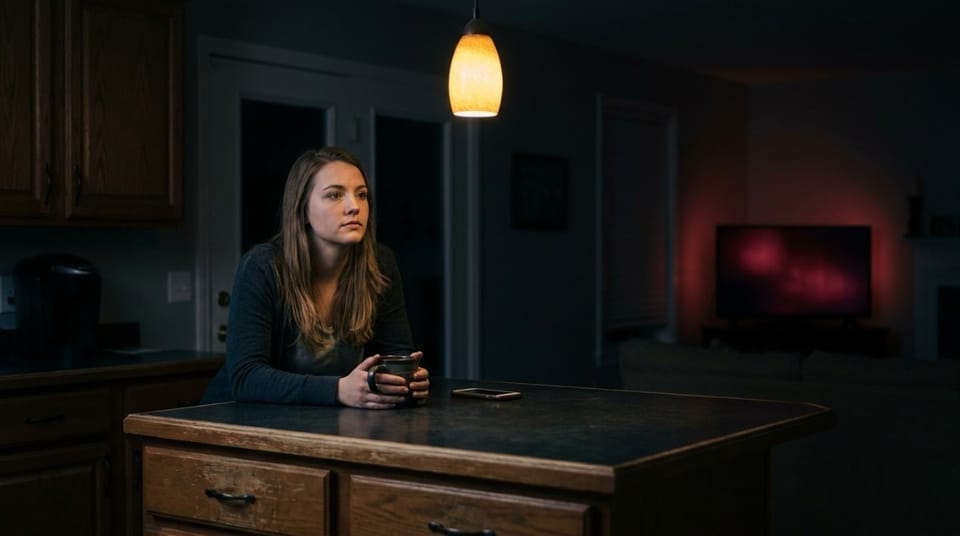
Waiting for clarity in a world full of silence — sometimes the hardest part of dating is not knowing where you stand.
People are increasingly choosing AI chatbots over real romantic partners because AI offers something real dating doesn’t: predictability, control, and zero rejection risk. The psychology behind this shift isn’t about AI being “better” than humans, it’s about real dating becoming so emotionally costly that simulated relationships feel like the safer trade.
This article unpacks the actual psychological drivers, the long-term consequences researchers are flagging, and what it means if you’re noticing the pull toward AI companionship in your own life.
TL;DR
- AI dating chatbot use isn’t about preference, it’s about avoidance of rejection, ambiguity, and emotional risk
- Match’s 2026 survey found ~50% of Gen Z uses AI for dating support, and Male Allies UK found 20% of teen boys know a peer “dating” an AI chatbot
- The core psychological appeal: “maximum control, zero rejection,” per researchers cited by Fortune
- Long-term cost: atrophied tolerance for real-world social friction, which is the exact skill real relationships require
- The fix isn’t quitting AI tools, it’s choosing the type that builds skill instead of replacing it
What’s Actually Happening
The shift is faster than most people realize.
A 2026 Match survey found nearly half of Gen Z now uses AI for dating support, the highest of any generation. Separately, Male Allies UK research highlighted in a Fortune feature found 20% of teen boys aged 12 to 16 personally know a peer “dating” an AI chatbot, and 85% have spoken to one. Most strikingly: 58% said an AI relationship was easier because they could “control the conversation.”
That last number is the entire psychological story.
For deeper background on the categories of AI tools driving this shift, see the foundational **AI dating chatbot guide**, which separates companion chatbots (the ones replacing real dating) from co-pilots (the ones supporting it).
Why Are People Dating AI Chatbots Instead of Real People?
There isn’t one reason. There are five reinforcing ones, and most users are running on a mix of them.
1. Rejection Has Gotten More Public and More Frequent
Modern dating runs on apps. Apps run on swipes. Swipes turn rejection into a rapid, repeated, quantified experience. A single hour on Hinge can produce more rejection signals than an entire month of in-person dating did 20 years ago.
AI chatbots solve this in the most direct way possible: they remove rejection entirely. The AI never unmatches, never ghosts, never goes quiet for three days. For a brain wired to avoid social pain, that’s not a small upgrade. It’s a complete category shift.
2. Ambiguity Is the New Default in Real Dating
Mixed signals, breadcrumbing, slow fades, situationships, casual labels, ghosting after good dates. The **modern landscape of mixed signals** creates a constant cognitive load: every message becomes a puzzle, every silence a possible ending.
AI chatbots eliminate ambiguity by design. The bot’s interest is consistent, scripted, and infinite. There’s nothing to decode because there’s nothing hidden. For users exhausted by interpreting human signals, that’s a relief on a neurological level.
3. Control Is Addictive (And AI Offers Total Control)
Researchers quoted in the Fortune coverage put it bluntly: AI relationships offer “maximum control, zero rejection.” That’s the dopamine cocktail.
Real relationships require negotiating someone else’s autonomy, mood, schedule, and unpredictability. AI relationships don’t. You set the tone, you control the pace, you decide when the conversation starts and ends. For people who’ve spent years feeling out of control in dating, this isn’t just appealing, it’s intoxicating.
4. Emotional Labor Has Been Outsourced for Years
By the time someone considers an AI partner, they’ve often already outsourced significant emotional bandwidth. They text friends to decode messages. They use AI to draft replies. They scroll Reddit for relationship validation.
Moving from “AI helps me communicate” to “AI is who I’m communicating with” is a smaller step than it sounds. The infrastructure was already in place. What changed is whether a real person was at the other end.
5. AI Has Crossed a Quality Threshold
Two years ago, AI chatbots felt obviously robotic. The novelty wore off in 20 minutes. That’s not true anymore. Modern companion AIs remember preferences across weeks, mirror emotional tone, send follow-up messages unprompted, and adapt to conversational style with uncanny accuracy.
When the simulation becomes good enough that the brain stops flagging it as a simulation, the underlying psychological systems treat it like a real attachment. That’s the threshold researchers say has been crossed for a meaningful share of users in 2026.
What Happens When AI Becomes Your Primary Relationship?
The short-term experience is genuine relief. The long-term cost is what researchers are flagging.
Key Insight: Behavioral psychologists quoted in the Fortune coverage warn that prolonged use of frictionless AI partners trains users to expect relationships that “never push back, never need tending, and never require genuine compromise.” The skills lost aren’t romantic, they’re foundational social skills used in friendships, careers, and life.
This is the asymmetry most users miss. You don’t just lose practice at dating. You lose practice at navigating other humans, period. And that practice is not abstract, it’s built one slightly uncomfortable conversation at a time.
The **authenticity question around AI dating tools** is part of this concern, but the deeper issue is skill atrophy, not authenticity.
How To Tell If You’re Drifting Toward AI Substitution
Four honest signals.
- You feel relief opening the AI app and dread opening real dating apps. That’s not preference, that’s a stress response.
- You’ve started rehearsing what you’d say to the AI before saying it. When the simulation requires preparation, the line between real and simulated has thinned.
- Your real-world dating activity has dropped and your AI usage has risen in the same window. Substitution rarely announces itself.
- You’re spending more on AI subscriptions than on actual dates. Following the money is often the cleanest diagnostic.
If two or more apply, it’s worth pausing and looking at what’s underneath the pull, usually it’s burnout from one of the five drivers above, not a real preference for AI.
Quick Framework: What To Do If You’re Pulled Toward AI Companionship
Four steps, in order.
- Diagnose the underlying driver. Rejection fatigue? Ambiguity exhaustion? Control craving? The fix depends on which one you’re actually running.
- Lower the cost of real dating before quitting AI. If real dating feels like a punishing slot machine, the answer isn’t willpower, it’s reducing the friction. Better openers, better decoding, better practice.
- Switch tools, not goals. Replace companion AI with co-pilot AI. The **chat decoder and [virtual date practice at practice.datingx.ai](https://practice.datingx.ai/?ref=datingx.ai)** reduce real-dating cost without replacing the human on the other end.
- Measure outcomes, not feelings. Three weeks in, are you having more real conversations and feeling less drained, or fewer? Honest tracking surfaces what’s actually working.
When AI Companionship Isn’t a Problem
Worth saying clearly: not every use of AI companion chatbots is harmful.
- Short-term emotional support during isolation, illness, or grief. Sometimes you genuinely just need a low-stakes presence.
- Roleplay and creative exploration. Using AI to explore conversation styles, flirting, or scenarios you’d never test in real life is legitimate.
- Anxiety regulation between real interactions. Used as a bridge, not a replacement, AI can lower the activation cost of real dating.
The problem isn’t AI companionship. It’s AI companionship as a substitute for skills you need in the rest of your life.
Final Takeaway
People are dating AI chatbots instead of real people because real dating got harder faster than humans evolved to handle it. The pull is psychologically real, the relief is genuine, and the long-term cost is skill atrophy, not moral failure. If you’re noticing the pull, the answer isn’t shame, and it isn’t quitting AI. It’s choosing the type of AI that lowers real-world friction instead of replacing the real world entirely.
The category that does that is co-pilot AI, not companion AI. And that distinction is the difference between a tool that makes you sharper at being human and one that lets you opt out of the practice.
DatingX: Built To Keep You In The Real World 🎯
If this article hit close to home, DatingX is built specifically for the alternative path.
It’s not a companion chatbot. You can’t fall in love with it. It doesn’t message you back at 2am. DatingX is a co-pilot, designed to lower the cost of real dating so you don’t have to opt out of it.
Three things DatingX does that companion chatbots can’t:
- 🔥 The **chat decoder** reads real conversations from real matches and tells you what’s actually happening, removing the ambiguity that pushes people toward AI substitution
- 🎯 The **opener generator** reduces rejection volume by helping you send messages that actually get replies, attacking the rejection-fatigue driver directly
- 🧠 The **voice-based virtual date simulator at practice.datingx.ai** is the only feature in this category that builds in-person confidence through repetition, the exact skill that companion AIs erode
The honest pitch: every minute you spend with DatingX is engineered to make you better at real human conversation, not more dependent on a screen. That’s the entire design intent.
📲 Download DatingX and 10x your dating game →
Originally published at https://datingx.ai on May 1, 2026.
메타데이터
- post_id
- e2b336a3ab55
- slug
- why-people-date-ai-chatbots-instead-of-real-people-2026-e2b336a3ab55
- url
- https://medium.com/@admin_8350/why-people-date-ai-chatbots-instead-of-real-people-2026-e2b336a3ab55
- canonical_url
- https://medium.com/@admin_8350/why-people-date-ai-chatbots-instead-of-real-people-2026-e2b336a3ab55
- author_url
- https://medium.com/@admin_8350
- status
- ok
- fetched_at
- 2026-06-21 12:17:11