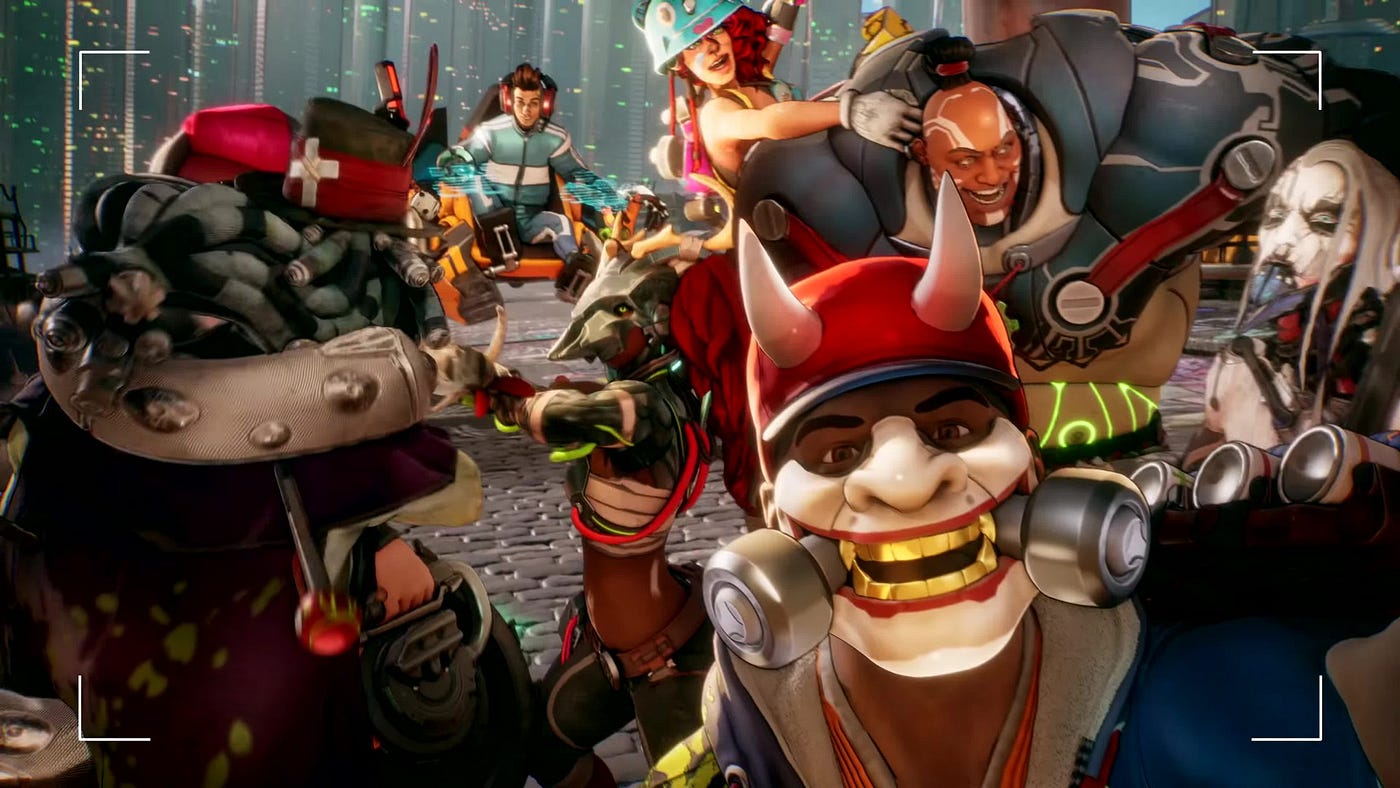
How Doom and PUBG become million dollar games and how to replicate their success
Great games don’t “compete.” They rewrite what the genre is allowed to be.
How Doom and PUBG become million dollar games and how to replicate their success

Doom didn’t show up to “innovate.” It showed up to break a rule everyone had quietly agreed to follow. PUBG did the same thing twenty years later, in a genre people thought was already finished.
In this article I’m going to show you what Doom and PUBG actually did from a positioning angle: how they created (or reshaped) a category by rejecting the existing emotional contract, then forced everyone else to play on their terms.
This isn’t a tech breakdown. I’m interested in the move that matters: how a game gets into people’s mind so deeply that everything else starts to look “old.”
Because most game launches fail for the same boring reason: the game is “good,” but it’s not necessary.
Players aren’t sitting around waiting for the next well-made shooter or well-made action game. They’re already overloaded. If your game doesn’t create a clear new mental slot or a clear new reason to care, it gets filed under “another one of those” and it dies politely. Doom and PUBG are useful because they show how you don’t die politely.
Most developers try to win inside the existing rules.
They polish. They balance. They add content. They chase “differentiation” that amounts to a feature list: a new story, a new weapon class, a new crafting layer, a new perk tree, a new map gimmick.
That’s not how category shifts happen. That’s how you become a footnote to whatever already owns the slot.
Worse, teams often avoid making enemies. They’re too respectful of the genre. They don’t want to be seen as “attacking” the games they love. So they ship something that sits next to everything else, smiling politely, waiting to be noticed.
Nobody notices polite.
A new category isn’t created by adding. It’s created by rejecting something the old category depends on.
At the end of this article you’ll be able to look at your own genre and spot the hidden “supposed to” rules that keep everyone making the same kind of game. You’ll also be able to tell whether your idea is a real category wedge…or just a nicer version of what already exists.
Find the genre rule everyone treats as law, then break it on purpose.
In the late ’80s and early ’90s, PC games were dominated by sims, strategy, CRPGs, and adventure games. Big boxes, thick manuals, “serious” vibes. Meanwhile consoles and arcades owned speed and immediacy. Even inside the PC world there were “rules” people repeated like physics: PCs weren’t supposed to scroll smoothly, PCs weren’t built for arcade action, PCs weren’t supposed to feel fast.
That’s why the story starts with “supposed to.” Every genre has these unspoken rules, and most teams treat them like gravity. Doom didn’t. PUBG didn’t. The move isn’t “add a twist.” The move is: find the assumption the genre relies on, then violate it so hard that everyone else starts looking like they’re still obeying a dead religion.
Doom didn’t invent “first-person.” It made speed and instinct the default identity of PC action.
Wolfenstein 3D proved the idea. Doom imposed the reality. Before Doom, PC games had a weird need to justify themselves. They were “serious,” “complex,” “respectable.” Action belonged to arcades and consoles. Doom stomped on that hierarchy and trained players to stop thinking before moving. It wasn’t just fast movement; it was fast cognition. Hesitation became failure. Planning became a trap. That single flip created a new mental slot: real-time, embodied, reflex-first action as the normal way to play on PC. After that, slower first-person experiments didn’t feel “different.” They felt outdated.
Read the full article on my Substack here.
메타데이터
- post_id
- e2ceab671ff2
- slug
- how-doom-and-pubg-become-million-dollar-games-and-how-to-replicate-their-success-e2ceab671ff2
- url
- https://medium.com/@federico.cicchi/how-doom-and-pubg-become-million-dollar-games-and-how-to-replicate-their-success-e2ceab671ff2
- canonical_url
- https://medium.com/@federico.cicchi/how-doom-and-pubg-become-million-dollar-games-and-how-to-replicate-their-success-e2ceab671ff2
- author_url
- https://medium.com/@federico.cicchi
- status
- ok
- fetched_at
- 2026-06-21 23:24:37