The Biggest Objections Brands Have Before Hiring a TikTok Shop Expert — Answered Honestly
Every week, I have some version of the same conversation. A brand owner is interested, clearly needs help, and then stalls. Here is what is…

The Biggest Objections Brands Have Before Hiring a TikTok Shop Expert — Answered Honestly
Every week, I have some version of the same conversation. A brand owner is interested, clearly needs help, and then stalls. Here is what is actually going on, and my honest response to each one.
I want to start with something that might seem counterintuitive coming from someone who sells TikTok Shop services. Not every brand should hire me. Not every brand should hire anyone right now. There are situations where the timing is wrong, the product is not ready, or the internal capability genuinely exists to figure this out without outside help. But that is not what most of the objections I hear are really about. Most of the objections I hear are fear dressed up as logic. A brand owner senses the risk of a new platform, a new investment, a new dependency on someone they have just met — and their brain generates a reason to wait. The reason sounds rational. It feels rational. But underneath it, the real question is almost always some version of: what if this does not work, and I wasted the money? That is a fair question. It deserves a direct answer, not a sales pitch. So here are the five objections I hear most often, what they are usually really about, and my honest response to each one.
Objection 1: “We can figure TikTok Shop out ourselves.” This is the most common one. And to be clear, it is sometimes true. If you have a team member with genuine platform experience, dedicated time to learn and manage the channel, and the patience to absorb three to four months of trial and error while the platform teaches you what works, you can absolutely build a functioning TikTok Shop operation in-house. The real question is not whether you can do it yourself. It is what it actually costs to do it yourself versus what it costs to shortcut that learning curve. Here is what I typically see when brands go the DIY route: they spend the first four to six weeks setting things up incorrectly, usually with unoptimised listings and an affiliate programme that is activated but not actually managed. They generate low or inconsistent sales and conclude that TikTok Shop does not work for their brand. Some of them abandon the channel entirely at this point. Others realise something is wrong and start looking for help, but now they are three to four months behind where they could have been, with a thin review profile and an algorithm that has already formed an impression of their store. The cost of figuring it out yourself is not just the time. It is the opportunity cost of the window you are in right now, while the platform is still scaling and competition in most categories is still relatively low. A year from now, TikTok Shop will be more crowded and more expensive to compete in. The brands that establish themselves now will have reviews, ranking history, and affiliate relationships that new entrants cannot easily replicate. That window does not stay open indefinitely. If you have the internal capability and want to try it yourself first — genuinely, go ahead. But go in with a clear timeline. Give yourself eight weeks, measure real metrics, and be honest about what the results are telling you.
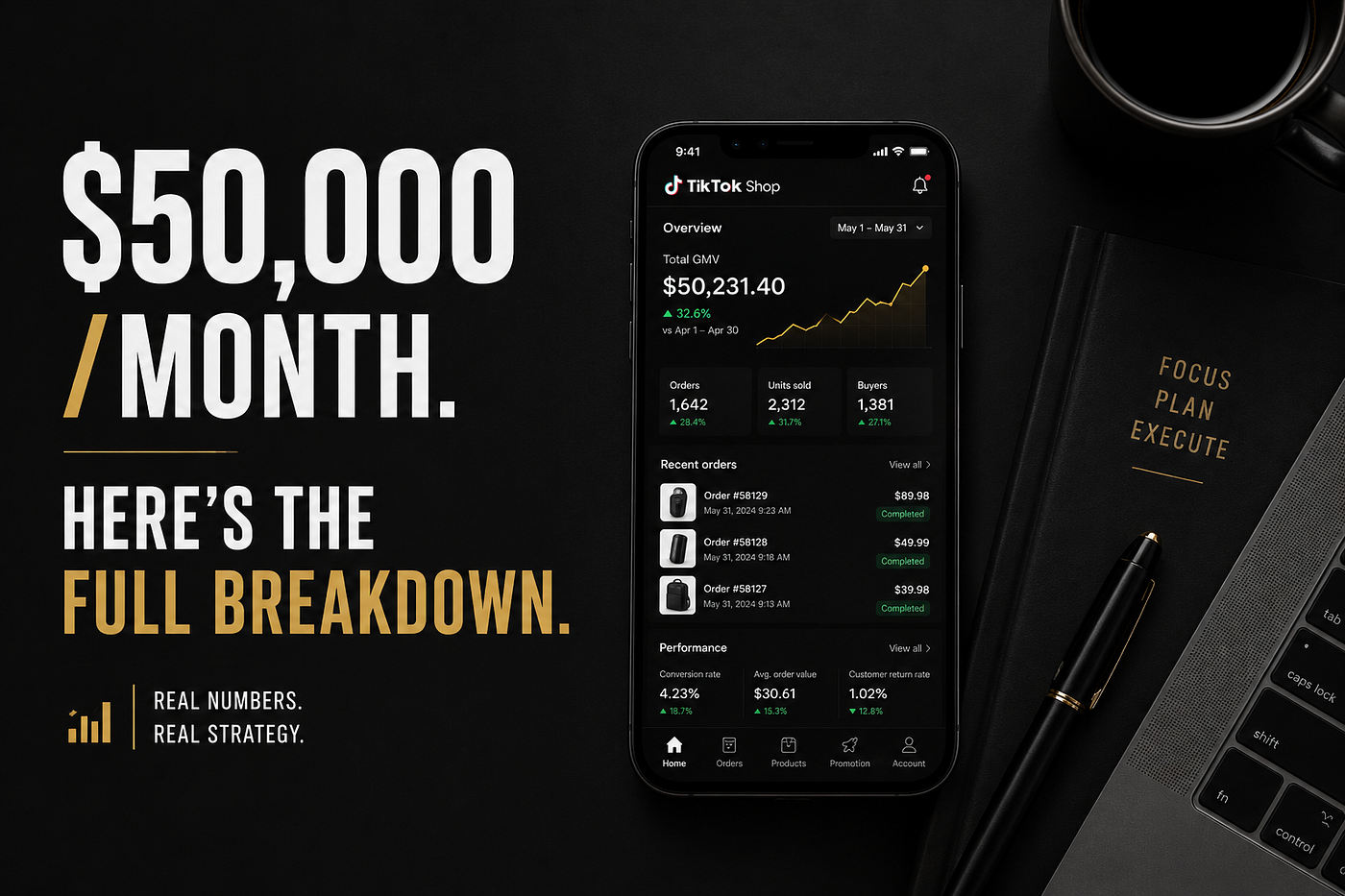
Objection 2: “It is too expensive.” This one requires me to ask a question back: expensive relative to what? If the comparison is to doing nothing, yes, hiring a specialist costs money. If the comparison is to the revenue a properly run TikTok Shop generates, the math usually looks very different. Let me give you a realistic number. A brand with a visually demonstrable product in a reasonable category — home goods, beauty, fitness, food — run by someone who knows what they are doing, can realistically reach $15,000 to $30,000 in monthly gross revenue within three months. Some brands go significantly higher. Some take longer. But that is a reasonable baseline expectation for a well-managed store in a category that suits the platform. If my fees for three months of active management represent less than one month of the revenue the channel generates, is that expensive? Or is that one of the better investments your marketing budget can make? The objection also sometimes reflects a bad prior experience. A brand paid someone cheaply, got poor results, and is now understandably reluctant to spend again. That is completely fair. If that is the situation, what I would say is: the problem was not the investment, it was who received it. A $200 gig that delivers nothing is more expensive than a properly priced engagement that delivers results, because at least the second one generates a return. Price and cost are not the same thing. Something cheap that does not work costs more than something fairly priced that does.
Objection 3: “We are not sure TikTok Shop fits our brand.” This is actually one of the more legitimate objections on this list — and the one I take most seriously. TikTok Shop does not fit every brand equally well. If your product is high-ticket, requires significant consideration before purchase, is highly technical, or appeals to a narrow professional audience, TikTok Shop may not be your highest-leverage channel right now. I will tell you that directly rather than take your money and deliver mediocre results. The categories where TikTok Shop consistently works: beauty and skincare, home goods and organisation, fashion and accessories, fitness and wellness, food and beverage, pet products, and anything that can be demonstrated visually in under 30 seconds. If your product fits any of those descriptions, the fit question is probably not the real obstacle. If you genuinely are not sure, here is the fastest way to find out: spend 30 minutes in the TikTok Shop affiliate marketplace and search for products adjacent to yours. Look at how many creators are making content in your category, what kind of engagement those videos are generating, and whether the product style resembles yours. If creators are already making content and generating sales in your space, your category has proven demand on the platform. If the category is genuinely thin, very few creators, very little content, very low sales velocity across all sellers, that is a real signal worth taking seriously. But most of the time when I dig into this objection, the real concern is not about fit. It is about visibility. The brand owner has watched TikTok content and does not see their product there yet, and they are reading absence as incompatibility. Absence just means nobody has built it yet. That is an opportunity, not a warning sign.
Objection 4: “We tried TikTok Shop before, and it did not work.” I hear this one regularly, and it almost always comes with the same backstory. The brand set up a store, uploaded products, maybe ran a few ads, waited a few weeks, saw low numbers, and concluded the platform did not work for them. In a small number of cases, that conclusion is accurate. In the majority of cases, what did not work was the execution, not the platform. The things that most commonly cause a first TikTok Shop attempt to fail: listings that are not optimised for the platform’s search algorithm, an affiliate programme that was activated but never actively managed, a product catalog that was too broad and unfocused, no systematic approach to generating early reviews, and an expectation of results within two to three weeks when the realistic compounding timeline is eight to twelve weeks. When I hear this objection, I ask one question: when you tried it before, did you have an active affiliate recruitment strategy — meaning someone reaching out to specific creators each week, sending samples, briefing content, and managing the relationships? In nearly every case where TikTok Shop “did not work,” the answer is no. The affiliate programme was set up but not run. This matters because organic affiliate content is the primary engine of TikTok Shop discovery for most brands. Without it, you are essentially running a store with no traffic source. Of course, the results were disappointing.
A previous failed attempt is not evidence that TikTok Shop does not work for your brand. It is usually evidence that a specific approach did not work. Those are very different conclusions.
Objection 5: “We will wait until the platform is more stable.” I understand where this one comes from. TikTok’s regulatory environment has been turbulent, particularly in the United States, and brand owners are understandably cautious about building on infrastructure that feels uncertain. Here is my honest take on this. The brands that wait for perfect platform stability before investing in a new channel are the brands that consistently arrive late. Every major e-commerce channel went through a period of uncertainty. Amazon’s seller policies have changed dramatically over the years. Meta’s ad platform has been through repeated regulatory challenges and algorithm upheavals. Shopify has had significant fee and policy changes that affected sellers who depended on it. None of that stopped brands from building real businesses on those platforms — because they were in early enough to have the advantage when things stabilised. TikTok Shop is not going away. The commerce infrastructure is too deeply embedded in too many markets, and the parent company has too much strategic investment in it, for it to simply disappear. What will change over time is the level of competition. Right now, in most categories, it is still genuinely possible to build a presence without massive ad spend because not every brand has arrived yet. Waiting for stability means waiting until the window of relatively easy entry has closed. By the time the platform feels fully safe and settled, the first movers will have established the review profiles, the affiliate networks, and the ranking history that make them extremely difficult to displace. The calculated risk is not in entering now. The calculated risk is in waiting.
The objection underneath all the objections Here is what I have noticed after having this conversation dozens of times. The real question is rarely about internal capability, cost, fit, experience, or platform stability. Those are the surfaces of it. The core question — the one that is rarely said out loud is: can I trust this person with my brand and my budget, and will I actually see a return? That is a completely reasonable thing to want to know before committing to anything. The honest answer is: I cannot guarantee a specific outcome for every brand, and anyone who tells you they can is not being straight with you. What I can tell you is what I have done for other brands, how I work, what the process looks like, and what realistic results in your category look like based on what I have seen. I keep my client load deliberately small so the quality of the work stays high. I do not take on projects I do not believe in. And if, after a proper conversation, I think TikTok Shop is not the right move for your brand right now, I will tell you that — because a client I send away honestly is worth more to me long term than a client I take money from and disappoint. If you have been sitting on the fence about TikTok Shop — whether to try the platform, whether to get help, whether the timing is right — the best thing I can suggest is a conversation. Not a sales call. A real conversation about your brand, your product, and what the realistic picture looks like for your specific situation. You can find me on Fiverr, or drop your question in the comments below. I read everything, and I will give you a straight answer.
If this helped you think through the decision more clearly, share it with another brand owner who is asking the same questions. The more honest information there is out there about this platform, the better.
메타데이터
- post_id
- ec780d66aeac
- slug
- the-biggest-objections-brands-have-before-hiring-a-tiktok-shop-expert-answered-honestly-ec780d66aeac
- url
- https://medium.com/@alsen3245/the-biggest-objections-brands-have-before-hiring-a-tiktok-shop-expert-answered-honestly-ec780d66aeac
- canonical_url
- https://medium.com/@alsen3245/the-biggest-objections-brands-have-before-hiring-a-tiktok-shop-expert-answered-honestly-ec780d66aeac
- author_url
- https://medium.com/@alsen3245
- status
- ok
- fetched_at
- 2026-07-17 14:10:40