Nish Hair Marketing Strategy: Turning ₹5,000 into a ₹50 Cr Brand
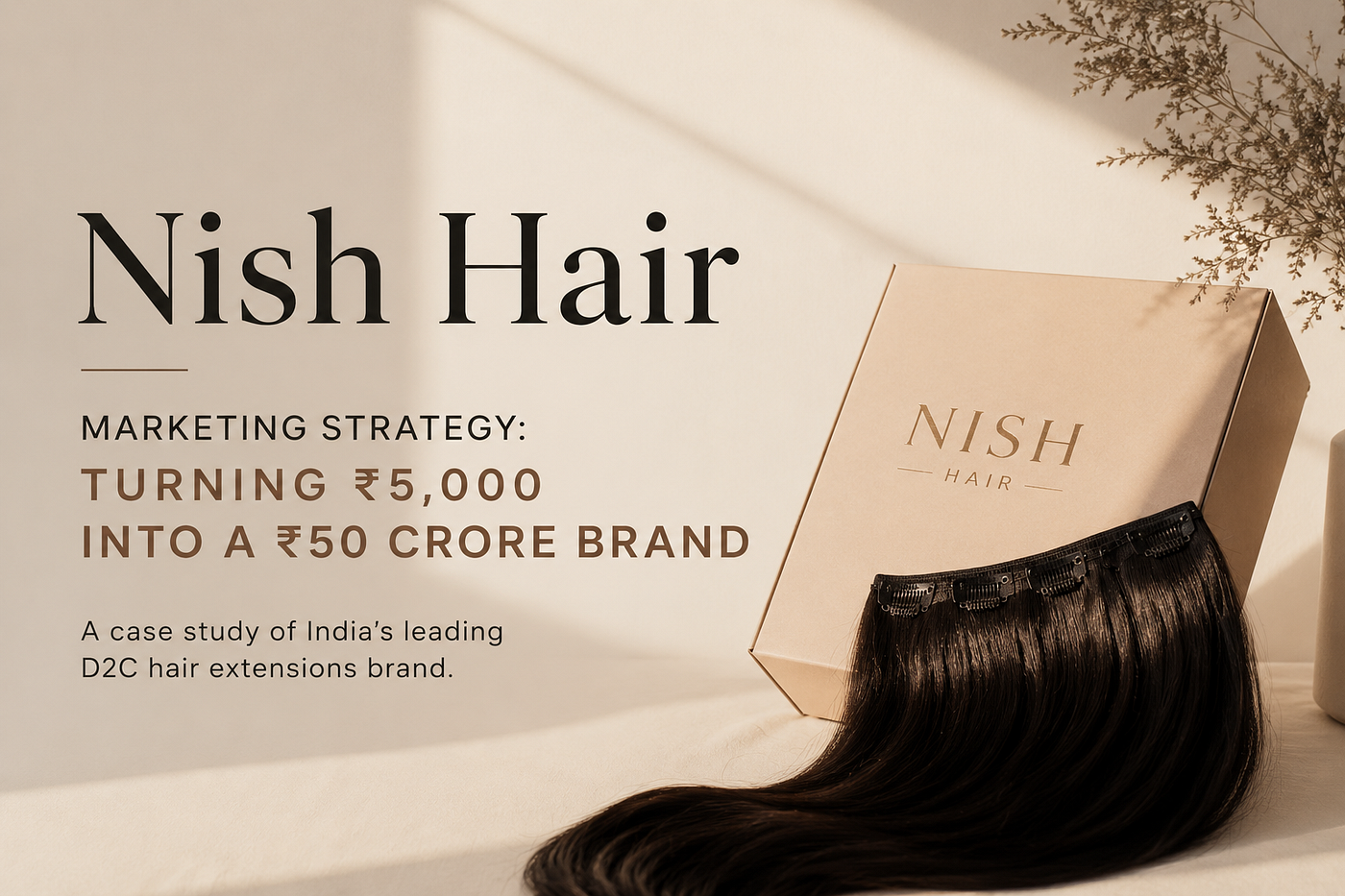
How Nish Hair used founder-led storytelling, organic content, and trust to grow from ₹5,000 into a ₹50 crore D2C brand.
Nish Hair Marketing Strategy: Turning ₹5,000 into a ₹50 Cr Brand
Introduction
Nish Hair is one of the most interesting D2C success stories in India.
Started in 2017 with **just ₹5,000, the brand has grown into a major player in the hair extension category with an estimated[ valuation of around ₹50 crore](https://indianexpress.com/article/entertainment/bollywood/kapil-sharma-co-star-parul-gulati-nish-hair-rs-50-crore-shark-tank-india-billion-dollars-10400388/)**. Today, Nish Hair is widely recognized for its premium hair extensions for women, especially clip in hair extensions, female hair extensions, and human hair extensions. Today, Nish Hair is known for its human hair extensions, toppers, wigs, bangs, and hair accessories.
What makes Nish Hair worth studying is not just the product category, but the way the company grew. For its first six and a half years, the brand reportedly spent almost nothing on performance marketing. Instead, it built awareness and sales through founder-led storytelling, organic social media, PR, and strong community trust.
This case study is especially useful for D2C founders, marketers, and brand strategists who want to understand how to build a niche brand without depending entirely on paid ads.
By the end of this blog, you will understand how Nish Hair built trust, acquired customers, and scaled revenue through founder-led marketing, and what other brands can learn from both its strengths and mistakes.
Brand Overview & Market Context
What is Nish Hair?
Nish Hair is an Indian D2C brand that sells premium human hair products such as hair extensions, toppers, clip-in bangs, wigs, scrunchies, invisible patches, and silk-base toppers. The company is especially known for Nish Hair extensions, which are designed to blend naturally with Indian hair textures and offer an easy at-home solution for women dealing with hair thinning or styling needs.
The company was founded by actress Parul Gulati after she experienced severe hair damage from frequent styling during shoots. At the time, the Indian market had very limited options. Most products were either expensive international imports or poor-quality synthetic alternatives.
Parul identified a clear gap in the market and decided to create premium but accessible hair solutions designed specifically for Indian consumers. The founder story and the meaning behind the **“Malkin” identity** became an important part of the brand’s positioning.
She started the business from her living room and initially stitched the clips herself with help from her mother.
Market Positioning
Nish Hair positions itself as a premium yet accessible hair brand. It is not a mass-market low-cost player, but it is also not priced as high as imported luxury brands.
The company appeals to consumers who want high-quality hair products that blend naturally with Indian hair textures and can be used at home without salon support. Its range of hair extensions for women includes clip in hair extensions, bangs, toppers, and human hair extensions that can be applied quickly without professional help.
Competitive Landscape
Nish Hair operates in a competitive market alongside **competitors like HairOriginals and 1 Hair Stop**, along with The Shell Hair and Diva Divine.
Its biggest differentiator is not just the product range but the founder-led identity that gives the brand a much stronger emotional connection with customers.
Revenue Stage
Nish Hair has reached an annual revenue run rate of around ₹34.7 crore and is estimated to have achieved a brand valuation of around ₹50 crore.
One of the biggest turning points came after Parul Gulati appeared on **Shark Tank India**.
Before the show, the company’s monthly revenue was around ₹66 lakh. After the appearance, monthly revenue reportedly jumped to ₹2.51 crore.
That kind of jump shows how powerful brand awareness and trust can be when combined with the right product-market fit.
Why Nish Hair’s Marketing Strategy Stands Out
Many D2C brands today rely heavily on Meta ads, Google ads, influencer collaborations, and discounting.
Nish Hair took a different route.
For its first six and a half years, the company reportedly spent nothing on performance marketing.
Instead, the brand grew through:
● Organic Instagram content
● Founder-led storytelling
● PR and media coverage
● Influencer seeding
● Educational content
● Strong word of mouth
● Omnichannel expansion
This made customer acquisition far more affordable and created a stronger emotional connection with buyers.
Target Audience & User Persona
Primary Persona: Women Looking for Hair Coverage and Confidence
This is Nish Hair’s core audience. These customers are usually women between 25 and 55 years old with middle to upper-middle income levels. Many of them deal with hair thinning, bald patches, PCOS-related hair loss, postpartum hair fall, alopecia, or age-related hair volume loss.
Their biggest pain point is not just appearance. It is the loss of confidence that comes with visible hair thinning. Their buying trigger is usually a specific moment, such as noticing scalp visibility in photos, struggling with hair styling, or preparing for an important event.
These consumers often discover products through Instagram reels, YouTube tutorials, Google searches, or recommendations from other women with similar issues. What builds trust for them is seeing real transformation videos, educational content, and relatable stories from women who have similar hair concerns.
Secondary Persona: Younger Consumers Looking to Experiment
The second audience is younger consumers between 18 and 30 years old. They are usually students or young working professionals with middle-income levels.
Unlike the primary audience, these buyers are not necessarily dealing with hair loss. They are more interested in changing their look without making permanent changes. Products like clip-in bangs, colorful strandouts, messy bun scrunchies, and female hair extensions appeal strongly to them.
Their buying trigger is usually an upcoming wedding, college event, party, vacation, or social media trend. They often discover brands through Instagram influencers, celebrity styling videos, Myntra, and Blinkit. For this audience, trust comes from trend-led content, influencer recommendations, and seeing celebrities use similar products.
Marketing Channels Overview
Nish Hair uses a mix of organic content, PR, influencer visibility, marketplaces, and offline experiences to drive growth.
SEO and Content
The brand creates blog content around topics such as hair care, hair extensions, human hair extensions, toppers, styling tips, hair maintenance, and product tutorials. This content helps attract search traffic from people already looking for solutions to hair thinning, bald patches, and styling concerns.
Organic Social Media
Instagram is the brand’s strongest marketing channel and acts as its primary acquisition engine. Much of the content focuses on showing how Nish Hair extensions solve real problems through quick transformations and before-and-after videos. Nish Hair uses the platform for transformation videos, tutorials, founder-led storytelling, customer testimonials, and product demonstrations.
Paid Ads
The company now appears to use paid advertising on Meta and Google. However, this came much later in its journey. For the first six and a half years, the brand reportedly relied almost entirely on organic growth.
Influencer Marketing
Nish Hair benefits from influencer marketing through celebrity usage, beauty creators, and lifestyle influencers. This gives the brand additional credibility and helps expand its reach beyond the founder’s audience.
PR and Media Coverage
PR has been one of the biggest growth drivers for Nish Hair. Shark Tank India, founder interviews, and **Cannes-related coverage** helped the brand move from being a niche Instagram business to a nationally recognized brand.
Marketplace Presence
The brand sells through platforms like Amazon, Myntra, and Blinkit. Its expansion into **physical studios and omnichannel expansion** helped improve trust and conversions. These channels make it easier for customers to discover products and add a layer of trust through reviews, ratings, and convenience.
Offline Presence
Nish Hair also operates physical studios where customers can see products in person, match hair shades, and get personalized consultations. These locations play an important role because hair products are often high-trust purchases.
Deep Dive Into Key Channels
1. Founder-Led Instagram Content
The biggest reason behind Nish Hair’s growth is its founder-led content strategy.
Parul Gulati is not just the founder. She is the face, voice, and personality behind the brand. She regularly appears in videos, talks about her own hair struggles, demonstrates products, and answers customer concerns. This approach works especially well because hair extensions are highly visual products. Customers need to see before-and-after transformations to believe the product actually works. Instead of polished advertisements with perfect-looking models, Nish Hair shows real problems and real solutions.
That makes the content feel more honest and relatable.
2. The ‘Malkin’ Brand Identity
One of the smartest branding moves by Parul Gulati was calling herself “Malkin” instead of using titles like founder or CEO.
The word carries deep cultural meaning.
Coming from a small town like Rohtak, Parul saw that the word “Malik” was often associated with wealthy, powerful men. By calling herself “Malkin,” she created a female version of that power. It represented a self-made woman who built something of her own. That identity helped Nish Hair stand out because it felt authentic, bold, and rooted in Indian culture. It also made Parul more relatable. She was not trying to sound like a corporate founder. She was speaking like someone who built a business from scratch and was proud of it.
That helped build a loyal community around both her and the brand.
3. Organic Content and Educational Videos
Nish Hair’s content strategy is simple but very effective.
Daily Content and Consistency
During the lockdown period, Parul Gulati posted videos every day. She showed new products, answered customer questions, explained use cases, and talked directly to her audience. This consistency helped the brand stay visible and build familiarity.
Transformation Videos
Hair products sell best when people can see the difference. Nish Hair built its content around before-and-after videos. Parul often showed her own hairline, thinning areas, or scalp visibility and demonstrated how extensions or toppers changed the look instantly. This made the product more believable.
Educational Content
The brand also invested in searchable content around hair care and hair extensions.
Topics included:
● How to apply hair extensions
● How to wash toppers
● **Real hair vs synthetic hair**
● **How to apply hair toppers**
● How to restore tangled extensions
● How to choose the right shade
This type of content helps attract search traffic and answers common customer concerns.
4. PR, Shark Tank India, and Cannes
Appearing on Shark Tank India gave Nish Hair a massive credibility boost.
It exposed the brand to a much larger audience and helped build trust instantly. For many consumers, seeing a brand on national television makes it feel more legitimate. The show also gave Parul Gulati an opportunity to tell her story in front of millions of people.
That emotional connection helped drive both awareness and sales.
Cannes Became a PR Masterclass
Nish Hair did not stop at traditional PR.
Parul Gulati created one of the most talked-about brand moments when she walked the red carpet at the Cannes Film Festival wearing a **dress made entirely out of Nish Hair extensions**.
It was dramatic, unexpected, and perfectly aligned with the brand.
The stunt generated media coverage, social shares, and conversations across the internet.
More importantly, it showed how a founder can use personal branding and creative storytelling to make a product memorable.
5. Omnichannel Expansion and Marketplaces
As the brand grew, Nish Hair started expanding into multiple channels.
Today, the company sells through:
● Its own website
● Physical experience studios
● Amazon
● Myntra
● Blinkit
The offline studios play an important role because many customers want to touch the hair, match shades, and get personalized recommendations before buying.
For high-ticket products, physical consultation helps increase trust and conversions.
The Blinkit partnership was also a smart move.
Instead of just announcing that the brand was available on the app, Parul created a relatable scenario around it.
She filmed a reel at a wedding where she pretended she had forgotten her extensions and urgently ordered them through Blinkit. This **Blinkit wedding reel** is a strong example of occasion-based marketing.
That made the campaign feel natural and showed exactly why fast delivery matters.
Business Impact Analysis
Nish Hair’s channels work together in a clear funnel.
Instagram and organic content drive awareness. PR moments like Shark Tank India and Cannes build authority. Educational content helps answer customer concerns and improve trust. Physical studios and marketplaces help convert hesitant buyers.
The strategy is far more brand-heavy than performance-heavy.
For most of its journey, Nish Hair focused on reducing customer acquisition costs through organic content instead of spending aggressively on ads.
The brand’s growth engine is built around community, trust, founder visibility, and storytelling.
Key Marketing Lessons
Nish Hair’s journey offers several useful lessons for D2C founders and marketers.
What This Brand Does Well
There are several powerful lessons from Nish Hair’s journey.
1. Founder-Led Content Can Reduce Ad Spend
People connect with people more than they connect with brands.
When founders show up consistently, share their story, and speak honestly, it builds trust much faster than traditional advertising.
2. Vulnerability Creates Stronger Trust
Parul Gulati openly talked about her own hair issues.
That vulnerability made people feel seen.
In sensitive categories like beauty, hair loss, skincare, or health, authenticity often works better than perfection.
3. Build a Brand Around Culture
The “Malkin” identity gave Nish Hair a unique voice.
It was not just another beauty brand trying to sell products.
It became a brand with personality and purpose.
4. Turn Everyday Moments Into Content
Nish Hair often creates content around weddings, parties, festivals, and daily struggles.
That makes the product easier to understand because customers can picture themselves using it.
5. Use PR to Build Authority
Big moments like Shark Tank India and Cannes helped the brand gain credibility and reach a wider audience.
Even smaller brands can learn from this by creating unique campaigns, local PR stories, or viral brand moments.
Strategic Gaps & Recommendations
The Biggest Risk in Nish Hair’s Strategy
Even though Nish Hair’s growth story is impressive, the brand also has some clear weaknesses.
The biggest issue is overdependence on the founder.
A large part of the brand’s identity is tied to Parul Gulati.
If she becomes less active or shifts focus, the brand may struggle to maintain the same level of engagement.
There have also been concerns around strict refund policies and customer complaints such as:
● Slow customer service
● Difficult refund policies
● Store-credit-only returns
● Inconsistent product quality
These issues are important because marketing can bring customers in, but bad customer experience can push them away.
What Nish Hair Should Do Next
For long-term growth, Nish Hair should focus on:
● Improving customer support
● Offering better refund policies
● Building a stronger post-purchase experience
● Creating content with more customers and ambassadors
● Reducing overdependence on the founder
The brand already has strong awareness.
Now it needs to strengthen retention and trust.
Final Thoughts
Nish Hair is one of the best examples of how a modern Indian D2C brand can scale through founder-led organic growth.
It proved that you do not always need massive ad budgets to build a successful business.
With the right mix of storytelling, consistency, vulnerability, and cultural relevance, even a niche product can become a large and trusted brand.
The company’s journey from a ₹5,000 investment to a ₹50 crore brand is proof that authentic content still works.
For founders and marketers, the biggest lesson is simple.
People do not just buy products.
They buy stories, trust, and the feeling that a brand understands them.
References
● Indian Express — Business Valuation & Growth
● Indian Express — Shark Tank India Investment Growth
● Outlook Business — Parul Gulati on D2C to Global Retail Expansion
● Karo Startup — How Parul Gulati Built Nish Hair with ₹5,000
● Deccan Chronicle — Cannes Hair Dress PR Coverage
● Tracxn — Nish Hair Company Profile
● Tracxn — Nish Hair Legal Entity and Financials
● LBB — Best Human Hair Extension Brands in India
● Nish Hair Blog — Real Hair vs Synthetic Hair
● Nish Hair Blog — Guide to Applying Hair Toppers
메타데이터
- post_id
- f4aaa655f2da
- slug
- nish-hair-marketing-strategy-turning-5-000-into-a-50-cr-brand-f4aaa655f2da
- url
- https://medium.com/@hemilmshah222/nish-hair-marketing-strategy-turning-5-000-into-a-50-cr-brand-f4aaa655f2da
- canonical_url
- https://medium.com/@hemilmshah222/nish-hair-marketing-strategy-turning-5-000-into-a-50-cr-brand-f4aaa655f2da
- author_url
- https://medium.com/@hemilmshah222
- status
- ok
- fetched_at
- 2026-07-28 05:30:14