Reflection summary — four sessions, one continuing question -
What have I learned? What is the question I continue living?
Reflection summary — four sessions, one continuing question -
What have I learned? What is the question I continue living?
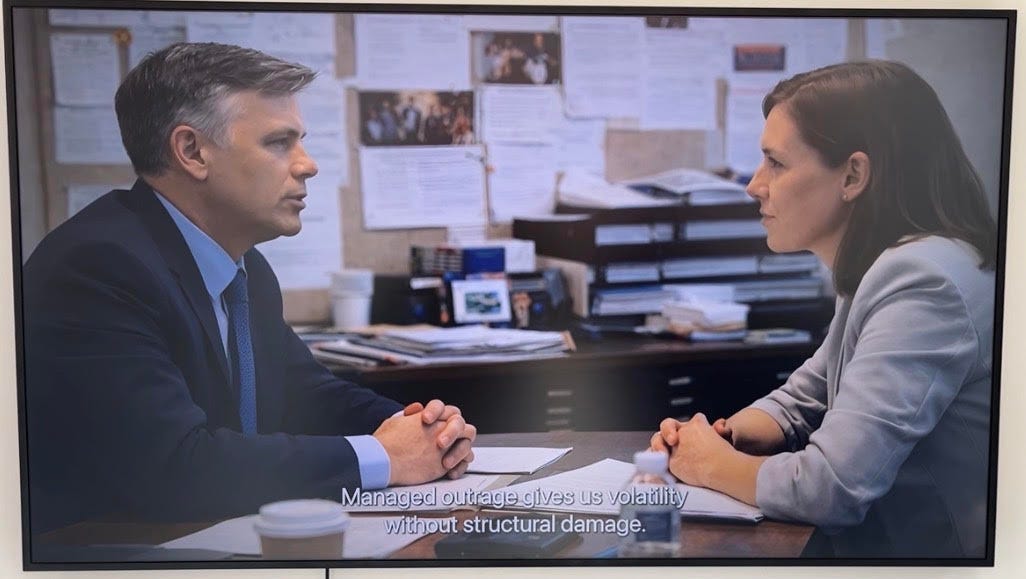
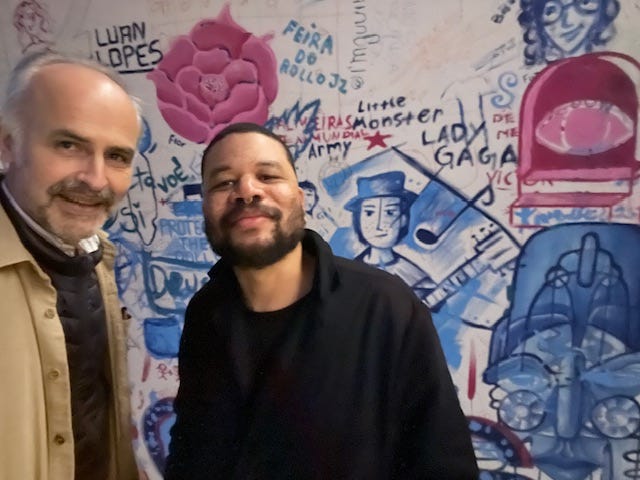
Image from a video by artist Jonas Lund, ©OfficeImpart
This is a reflection by Sebastian Wolf Siebzehnrübl as a participant of a webinar by Bob Dick in May aswell as the organiser of a webinar with Bob Dick in July 2026 — noted for transparency.
The series began with a feeling most experienced practitioners recognise but rarely name out loud: that the work keeps getting harder, despite — or perhaps because of — everything we have learned. That the rooms feel more pressured. That the interventions that used to create movement now sometimes create friction instead.
Four sessions later, I understand the mechanism more precisely. And understanding the mechanism, it turns out, does not make it disappear. It changes your relationship to it.
What Argyris mapped — and what Bob Dick has spent fifty years learning to work with without triggering the very defensiveness he is addressing — is a structural feature of being human in relationship. The gap between what we espouse and how we actually behave under pressure. The cycle of untested assumptions that drives relationships into downward spirals. The coverup of the coverup. The fact that well-intentioned intervention, under conditions of stress or ego-threat, activates exactly the defensive routines it was designed to dissolve.
This is not a counsel of despair. It is an invitation to a more precise quality of attention.
What I take from these four sessions is not a toolkit. It is closer to a shift in orientation — movements that feel increasingly inseparable.
The first is knowing when to intervene and when to let go. This sounds simple. It is among the hardest things in practice. The impulse to act, to fix, to move things forward is strong — especially in cultures where hierarchy rewards decisiveness and penalises uncertainty. But some of the most important work happens in the pause before the intervention. In the willingness to stay with what is unresolved long enough to understand what it is actually asking for.
The second is parting in grace. I did not expect this to be the phrase that stayed with me. But it names something the frameworks rarely address: that ending well — leaving a relationship, a process, a system with honesty and care rather than avoidance or abruptness — is as much a relational skill as entering it. Perhaps more. It requires the same quality of tentativeness, the same willingness to voice what is true without weaponising it.
The third is becoming vulnerable enough to become courageous. In cultures where hierarchy usually wins, where defensiveness is structurally rewarded and honesty structurally costly, the movement toward genuine openness requires something that cannot be installed by a framework. It requires the slow, repeated practice of making yourself available to correction — in the specific moments when every governing value you carry is telling you to protect yourself instead.
The question I continue living: how do we become more explicit with each other — with mutual attention and care — in conditions that are structurally designed to reward the opposite? How do we build organisations that are not just effective but genuinely co-reliable — interdependent, accountable not as a performance but as a natural expression of how we relate?
Bob Dick does not answer this question. He creates conditions in which it can be genuinely asked — in a small group, with a quality of calm and deliberateness that itself demonstrates what the question is pointing toward.
That, in the end, is what action science is. Not a body of knowledge to be acquired. A practice to be inhabited. Slowly. With patience. And with the willingness to keep asking, even when — especially when — the answer is not yet visible.
In gratitude to Bob as well as to my co-participants Jenny, Martin, Nick, Rosemary, Sara, and Sue — thank you for the learnings shared.
메타데이터
- post_id
- f7b446d2f2d7
- slug
- reflection-summary-four-sessions-one-continuing-question-f7b446d2f2d7
- url
- https://medium.com/@context_collective_berlin/reflection-summary-four-sessions-one-continuing-question-f7b446d2f2d7
- canonical_url
- https://medium.com/@context_collective_berlin/reflection-summary-four-sessions-one-continuing-question-f7b446d2f2d7
- author_url
- https://medium.com/@context_collective_berlin
- status
- ok
- fetched_at
- 2026-07-15 22:19:00