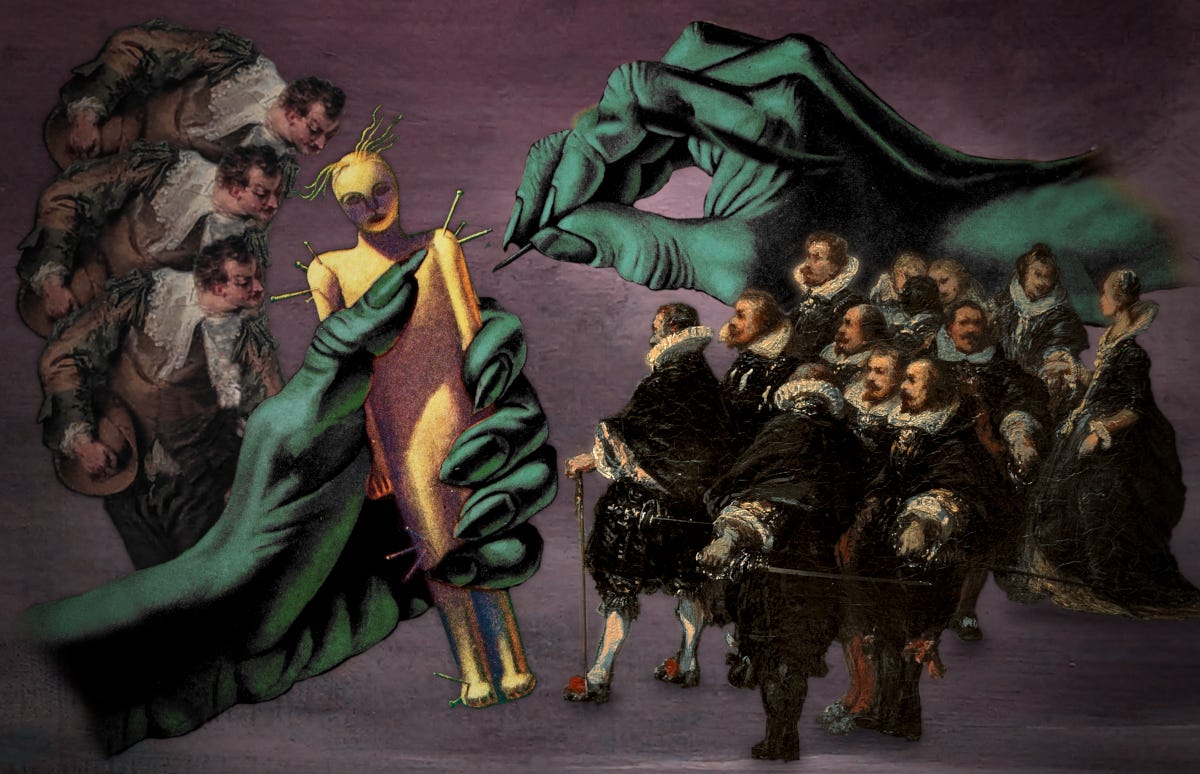
The Body Detective. Episode 3.
The Doctor Said I Was Faking. Two Days Later, I Was in the Hospital.
The Body Detective. Episode 3.
The Doctor Said I Was Faking. Two Days Later, I Was in the Hospital.

There is a specific kind of humiliation that comes from being told you don’t feel what you feel.
Not anger. Not quite.
Something quieter. More disorienting.
Maybe she’s right. Maybe I am making this up. Maybe I don’t know my own body as well as I think I do.
I was nineteen years old, standing outside a student clinic in Kiev, in the last days of August, with a diagnosis of “perfectly healthy” — and a feeling in my forehead that told me something else entirely.
This is that story.
The World Before
August in Kiev has a particular quality that’s difficult to name.
It isn’t summer anymore. It isn’t autumn yet. Something in between — expectant, slightly restless, the trees still green but tired of being green. Cool in the mornings. The kind of air that reminds you, quietly, that something is ending.
I was starting my second year.
That matters. Not a first-year student anymore — wide-eyed, disoriented, still figuring out which corridors led where. I knew the institute now. I knew my classmates. I had survived the chaos of the first year and come out the other side.
I was, in the specific way that nineteen-year-olds can be, experienced.
At the end of August, the announcement came: kolkhoz. The Soviet tradition of sending university students to help with the harvest. A few weeks somewhere outside the city, in the fields, living collectively.
I want to be very clear about something.
I was not looking for a way out.
My mind was not running the program of find an excuse, avoid the trip. I was genuinely planning to go. I imagined it might even be fun — the kind of story you tell later, the kind of experience that bonds a group of people who are still becoming friends.
I was going.
My body had other plans.
The First Signal
Two days before departure, I felt it.
Not pain. Not yet. Something before pain — a particular pressure, a specific quality of fullness in the space behind my forehead, around the bridge of my nose. I knew this feeling the way I knew my own name. I’d been feeling it since childhood, always before the same thing happened.
It was the feeling that comes before a sinus infection. Not during — before. Earlier than any visible symptom. A signal from somewhere deep inside, sent before the body had made its decision official.
I don’t know how to explain this ability more precisely. Some people feel rain coming hours before the first drop falls. The body reads pressure changes the conscious mind hasn’t registered yet. Mine had always done this — given me advance notice, in its own language, that something was on its way.
I took the metro to the student clinic on the polytechnic campus.
The Waiting Room, The Doctor, The Verdict
She was not a young woman.
I don’t remember her face clearly. I remember her voice — or more precisely, the quality in it. The particular flatness that comes when someone has already decided you’re not telling the truth before you’ve finished your sentence.
I explained carefully. The pressure here, behind the forehead. The sensation I recognized. The way I always knew when this was coming.
She examined me. Brief. Efficient.
“There’s nothing there,” she said. “No sinusitis. You’re completely healthy.”
I tried again. I described the feeling more precisely. I told her this wasn’t new, that I knew this feeling from before, that my body was telling me something.
She looked at me with that particular brand of patience that isn’t patience at all — the kind that means I have heard enough.
“You simply don’t want to go to the collective farm,” she said. “So you’re looking for a reason.”
And she sent me home.
I walked out into the August afternoon.
Sunlight. Trees. The campus going quietly about its business.
What did I feel?
Not rage. I want to be honest about this. More something like — vertigo. The particular disorientation that happens when an authority figure contradicts your direct experience. When someone with a degree and a white coat and decades of practice tells you that what you are feeling isn’t real.
Maybe I am making it up.
Maybe this is just anxiety about the trip.
Maybe I don’t actually know my own body.
I went home.
Two Days Later
The fever came fast.
Not gradually — like a switch being thrown. And the feeling I had described to her, the one she’d dismissed as imagination, became undeniable — physical, pressing, impossible to speak away.
Acute purulent sinusitis.
I was admitted to the hospital that same day.
Not possible sinusitis. Not mild sinusitis. Purulent — the kind that takes time to develop, the kind that was already well underway when I sat across from that doctor and tried to explain what my body was telling me.
She wasn’t seeing the present. She was evaluating symptoms that hadn’t surfaced yet. But the process was already running.
I spent nearly two weeks in the hospital.
I did not go to the collective farm.
What I Understood, Lying in That Hospital Bed
I had time to think.
Not about the doctor — I didn’t blame her then and I don’t blame her now. She was working with the tools she had. Medicine, at its most conventional, looks for what’s visible. No visible symptom, no diagnosis. That’s the logic. It’s not wrong, exactly. It’s just incomplete.
What I thought about was the year before.
The first kolkhoz trip. First year, first time, no idea what to expect.
One hundred students in a single gymnasium.
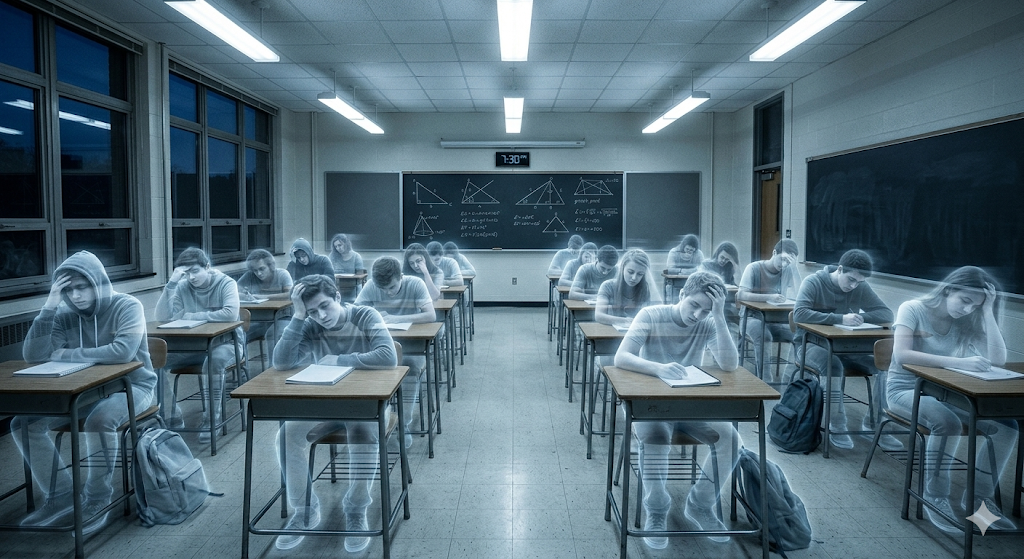
Picture it physically — not as an abstract number, but as a space. A hundred bodies, cots pressed close together, mattresses on the floor, someone’s alarm, someone’s cough at 2am, someone’s conversation when you desperately need silence, nowhere to be alone, no moment of quiet that belongs only to you.
The showers: a handful of stalls for a hundred people.
For some, this would be manageable. For me — and I say this without drama or apology — it was physically intolerable. Not because I dislike people. Because every body has a threshold for what it can process. And mine had found its edge.
That experience left a mark. Not a conscious one — not a decision I made, not a thought I filed away. A somatic one. Registered in the tissue, in the nervous system, in the part of the body that keeps records the mind never sees.
The Language of Sinusitis
Here is something I’ve learned in the years since, working as a psychologist and bioenergetics practitioner.
One of the most consistent psychosomatic interpretations of sinus infections — supported by decades of clinical observation — is what practitioners sometimes call unbearable closeness.
The situation: someone is near you who you cannot tolerate, and you cannot create distance. The conflict lives in the body as an inability to breathe freely in this proximity. The mucous membranes swell, reacting to an irritant that cannot be removed.
One hundred people. No personal space. No escape.
The body remembered.
And when the announcement came — kolkhoz again, same type of situation — the body responded before my conscious mind had processed anything. Before I’d had a single anxious thought. Before I’d even considered not going.
I was still planning the trip when the signal was already running.
This is the part that matters most: I was not faking. I was not looking for excuses. My conscious mind was genuinely oriented toward going.
The body simply had access to information my mind didn’t.
It remembered what my mind had moved past.
And it acted on that memory — quietly, efficiently, without asking permission.
The Proof That This Was True
The following years, I went to the collective farm.
Without incident. Without sinusitis. Without any of this.
Because the conditions had changed. Proper rooms. Reasonable facilities. Actual personal space. The body checked — and found no match for the old pattern. No alarm was triggered.
The system wasn’t against collective farms. It was against those specific conditions that had once been genuinely overwhelming. When those conditions changed, the response changed with them.
Physics has a term for this: state memory. A system that has experienced a particular kind of stress retains information about that stress. When it encounters a similar signal in the future, it responds preemptively — before the threat has fully materialized.
Your immune system does this. Your nervous system does this.
Your entire body does this.
It isn’t drama. It isn’t weakness. It’s precision engineering — a system that has learned from experience and acts on that learning faster than conscious thought can follow.
What I Want to Leave You With
Think about your own body for a moment.
Is there a symptom that returns in specific situations? Not randomly — but specifically? A throat that tightens before certain conversations. A back that seizes before certain events. A headache that arrives, reliably, under particular conditions?
Don’t rush to answer.
Just notice.
The body speaks in patterns. It doesn’t repeat itself because it’s broken. It repeats itself because it’s trying — with great consistency and considerable patience — to tell you something you haven’t quite heard yet.
That doctor couldn’t hear it.
For a moment, standing in the August sunlight outside her clinic, I almost couldn’t hear it either.
But it was right.
It was always right.
It simply knew something I didn’t — yet.
Next episode: a staircase in a subway station. An engineer. May. A pond everyone called a lake. And the first time I understood that the body doesn’t stop us to punish us — it stops us to give us something we wouldn’t give ourselves.
Mila Asher — Master of Psychology, bioenergetics practitioner, engineer. Creator of the ORQE method and author of The Operator of Reality: Quantum Engineering.
메타데이터
- post_id
- f823ccd92f2c
- slug
- the-body-detective-episode-3-f823ccd92f2c
- url
- https://medium.com/@MilaAsher/the-body-detective-episode-3-f823ccd92f2c
- canonical_url
- https://medium.com/@MilaAsher/the-body-detective-episode-3-f823ccd92f2c
- author_url
- https://medium.com/@MilaAsher
- status
- ok
- fetched_at
- 2026-07-13 06:23:13