How Coca-Cola Became Part of the Culture (Without Just Selling Cola)
Last October, I came across something that made me stop scrolling. Coca-Cola had made sarees. Not branded sarees with their logo slapped…
How Coca-Cola Became Part of the Culture (Without Just Selling Cola)
©Coco Cola
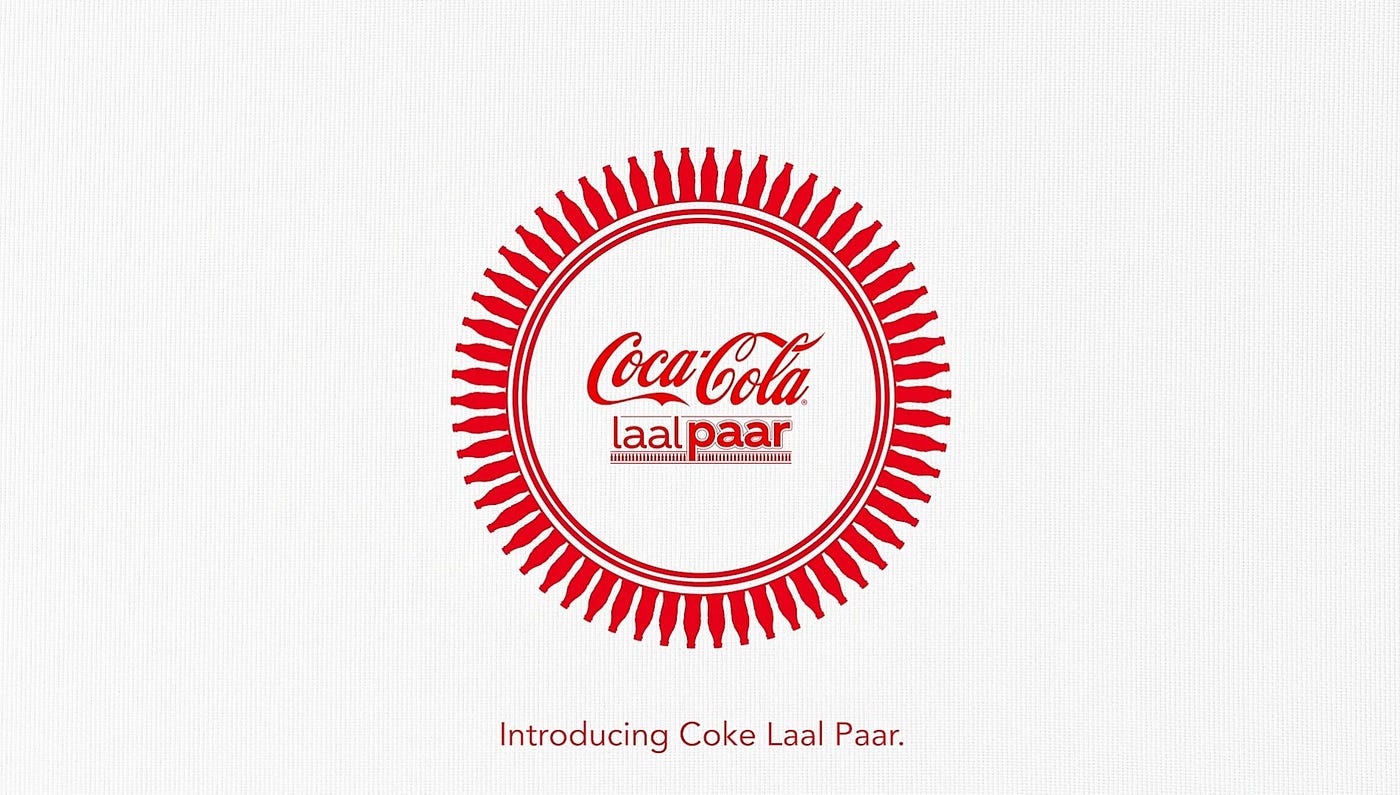
Last October, I came across something that made me stop scrolling. Coca-Cola had made sarees. Not branded sarees with their logo slapped on. Actual hand-woven sarees made with Bengal weavers, using recycled PET bottles.
The Laal Paar sarees white cotton with red borders that Bengali women traditionally wear during Durga Puja. Hand-block printed with Shiuli flowers and fish motifs, symbols deeply rooted in Bengali culture. They weren’t for sale. They were supporting artisan livelihoods beyond the festival season.
This got me thinking about something most brands completely miss. Coca-Cola doesn’t just advertise on culture. They’ve figured out how to actually become part of it.
The Brand That Tried to Kill Its Own Success
Let me take you back to 1993. Coca-Cola re-entered India after a 16-year absence. The market had moved on. Thums Up owned 85% of the cola market.
Thums Up wasn’t just another cola. It was fizzier, spicier made with cinnamon, cardamom, and nutmeg. Street vendors loved it because it stayed fizzy even when warm in Indian summers. The tagline “Taste the Thunder” wasn’t marketing fluff. The drink actually had more bite.
Coke bought Thums Up for $60 million. And then did what most global brands do when they acquire a local competitor — they tried to kill it.
They stopped advertising. Cut production. Figured people would just switch to Coke.
They didn’t.
They switched to Pepsi instead.
So Coke did something unusual for a global brand. They brought Thums Up back. Kept the spicy formula. Kept “Taste the Thunder.” Kept the aggressive ads. Kept everything that made it Indian.
Today, Thums Up has 42% of India’s cola market. Coke’s own flagship brand? It comes fourth.
A billion-dollar brand that Coke almost killed because they couldn’t imagine a world where their own product wasn’t the hero.
The Lesson: Don’t Make Culture Fit Your Brand
This is where most global brands fail. They try to make the culture fit their brand. Coke figured out the opposite make your brand fit the culture.
Look at Peru. Inca Kola is bright yellow, bubblegum-flavored, and deeply Peruvian. When Coke entered the market, they didn’t try to replace it. They bought a stake and kept the brand exactly as it was.
Japan takes this even further. Coke is the #1 beverage company there, but it’s not because of Coke.
Walk up to one of Coca-Cola’s nearly 1 million vending machines in Japan (they account for about half of all vending machines in the country), and you’ll find something surprising. Most of the drinks have nothing to do with cola.
Georgia Coffee. Ayataka green tea. Aquarius sports drinks. Peach-flavored Coke. Sakura Coke during cherry blossom season. Matcha-flavored Coke in Kyoto specifically.
Japan is Coke’s second-biggest market after the US, pulling in over $10 billion annually. But carbonated sodas like Coke and Fanta? They make up only about 20% of sales. Coffee and tea account for 40%.
Georgia Coffee launched in 1975 and became the “10 a.m. drink” the beverage blue-collar workers grabbed from vending machines on their commute. The can stays hot for hours. It’s not just a drink; it became part of the workday rhythm.
Coke releases about 100 new products in Japan every year. Some are hits. Most fail. But the strategy works because they’re not trying to force Coke down everyone’s throat. They’re giving people what they actually want.
From “Thanda” to a National Identity
Back to India. 2002. Coke had been targeting youth ages 10–25. They wanted to expand to rural areas and make Coke a drink for everyone, not just kids.
They launched “Thanda Matlab Coca Cola.”
If you’re not Indian, this needs context. “Thanda” in Hindi just means “cold” or “cold drink.” It’s ingrained in the culture. When guests come to your house, you ask: “Kuch thanda lenge ya garam?” (Will you have something cold or hot?)
Street vendors selling drinks yell “thanda thanda” to attract customers.
Prasoon Joshi, one of India’s most respected ad makers, took that colloquial word and made it synonymous with Coke. Not “refreshing” or “happiness” or any of that corporate speak. Just cold drink means Coca-Cola.
The campaign featured Aamir Khan playing different characters. A Punjabi farmer, A Hyderabadi hawker, A Nepali guide, A Bengali babu. Each ad showed a confident small-town person who wasn’t intimidated by city people.
Director Ashutosh Gowariker, who would later direct the Oscar-nominated film Lagaan, helmed the commercials.
The idea? Show that Coke wasn’t just for urban youth. It was for everyone. The tapori asking for thanda at a local eatery. The farmer taking a break. The hawker on a hot day.
Joshi came up with the phrase while waiting at Hapur railway station. The heat, the thirst, the vendors yelling “thanda thanda” it all clicked.
The campaign won Campaign of the Year in 2003. More importantly, it made “thanda” synonymous with Coca-Cola in India’s semi-urban and rural markets.
Coke Studio: When the Brand Becomes the Infrastructure
Here’s where it gets interesting.
Most brands would stop there. They’ve localized. They’ve adapted. Mission accomplished.
Coke went further. They started building cultural infrastructure.
Coke Studio launched in different markets each one adapting to local music traditions.
Pakistan started it in 2008. At a time when bomb blasts made live events impossible and India stopped airing Pakistani music on TV and radio, the entire music industry was collapsing.
Faisal Kapadia from the band Strings said it straight: “If Coke Studio wasn’t there, Pakistani pop music would have probably just died.”
The format was simple but powerful. Sufi qawwalis mixed with hip-hop. 19th-century folk singers collaborating with rock bands. All recorded live with a house band.
Atif Aslam’s “Tajdar-e-Haram” became the first Pakistani video to cross 100 million views on YouTube, watched in 186 countries. Ali Sethi and Shae Gill’s “Pasoori” has more streams in India than its Bollywood remake.
Bangladesh launched Coke Studio Bangla in 2022 during International Mother Language Day. First song? “Nasek Nasek” in Hajong a language spoken by only 80,000 people. Performed by Animes Roy, who’s actually from the Hajong community.
The song became the only Bangladeshi track played at an ICC World Cup match in Australia. Thousands singing along to a language most had never heard before.
Season 2’s opener “Murir Tin” mixed three regional dialects Sylheti, Khulna, Chatgaiya. Now people across Bangladesh sing in dialects they didn’t grow up with.
India relaunched Coke Studio Bharat in 2023 after an eight-year gap. Over 50 artists from smaller towns across India. Regional instruments Algozha, Chimta, Duff, Sarod, Sarangi, Tumbi, Rabaab.
Aditya Gadhvi’s “Khalasi” in Gujarati was released in July 2023 and went viral during Navratri 2023. 4.5 billion views across all platforms YouTube, Instagram reels, shorts, everything. The song became the biggest Instagram trend of the season.
Here’s what’s fascinating. The Coke logo barely shows up in these tracks. Artists get distribution on YouTube and Spotify before any Coke ad runs.
Animes Roy went from singing at local gatherings to national recognition. Kids from the Bangladeshi diaspora in the US are learning Bangla to understand Coke Studio lyrics. Languages that were disappearing now have millions of streams.
The Real Strategy: Become the Platform, Not Just the Product
Let me break down what Coke actually figured out.
When you’re a beverage company, you have two choices:
-
Advertise on culture — sponsor festivals, put your logo on events, pay celebrities to hold your product.
-
Become infrastructure for culture — fund platforms that keep traditions alive, support artisans, document dying languages, give artists distribution.
Most brands choose option one because it’s easier to measure ROI. You spend X on an ad, you get Y in sales.
Option two is harder. How do you measure the value of preserving a language spoken by 80,000 people? How do you quantify supporting weavers beyond festival season?
But here’s what happens when you choose option two:
Thums Up — kept alive a spicier Indian cola instead of forcing Coke on everyone. Result? A billion-dollar brand with 42% market share.
Georgia Coffee — became the 10 a.m. drink for blue-collar workers in Japan. Part of the daily rhythm. Coffee and tea now account for 40% of Coke’s Japan sales.
Coke Studio — credited with saving an entire music industry. Artists go from local gatherings to national recognition. Kids learn dying languages to understand lyrics.
Laal Paar sarees — supporting Bengal weavers with recycled materials, preserving traditional crafts beyond festival season.
You’re not just selling a product anymore. You’re part of the culture.
What This Actually Means for Positioning
Traditional brand positioning says: find your unique selling proposition, differentiate from competitors, own a word in the consumer’s mind.
Coke threw that playbook out.
They didn’t try to own “refreshment” or “happiness” or “taste.” They became:
- The infrastructure that saved Pakistani music
- The platform that documents dying Indian languages
- The company that keeps a spicier Indian cola alive
- The brand that supports Bengali weavers
- The vending machine network that serves hot coffee to Japanese workers at 10 a.m.
When a brand is credited with “saving an industry” rather than “great campaign,” that’s not marketing. That’s positioning.
The Uncomfortable Truth
Here’s what most brands won’t admit: people don’t care about your product.
They care about their culture. Their traditions. Their music. Their language. Their daily rhythms.
Coke figured out that if you genuinely support those things — not through tokenistic sponsorships but by building actual infrastructure — you become inseparable from the culture itself.
The Coke logo barely appears in Coke Studio tracks. The sarees aren’t for sale. Georgia Coffee cans don’t scream “Coca-Cola.” Thums Up ads don’t mention Coke.
But everyone knows who’s behind it.
That’s the genius. When you stop trying to be the hero of the story and start being the infrastructure that makes the story possible, you win.
The Pattern Across Markets
Look at what they do everywhere:
India — kept Thums Up alive (spicier, more Indian), launched “Thanda Matlab Coca Cola” (made cold drink synonymous with Coke), relaunched Coke Studio Bharat (regional music from smaller towns), created Laal Paar sarees (supporting Bengal weavers).
Japan — launched Georgia Coffee (became part of work culture), introduced 100+ new products yearly (green tea, peach Coke, sakura flavors), built 1 million vending machines (hot drinks in winter, regional flavors).
Peru — acquired Inca Kola (bright yellow, bubblegum-flavored), kept it exactly as it was (deeply Peruvian identity).
Bangladesh — launched Coke Studio Bangla (documenting dying languages), featured Hajong language (only 80,000 speakers), mixed regional dialects (Sylheti, Khulna, Chatgaiya).
The pattern? They don’t just localize messaging. They preserve what makes each culture unique.
Why This Works (And Why Others Can’t Copy It)
You can’t fake this.
You can’t decide next quarter to “become infrastructure for culture” and expect it to work.
Coke spent decades building this positioning:
- 1993: bought Thums Up, tried to kill it, failed, brought it back
- 2002: launched “Thanda Matlab Coca Cola,” ran it for years
- 1975: launched Georgia Coffee in Japan, built it into daily work culture
- 2008: started Coke Studio Pakistan, kept it running through bomb blasts and industry collapse
- 2022: launched Coke Studio Bangla during Mother Language Day
- 2023: relaunched Coke Studio India after 8-year gap
- 2025: created Laal Paar sarees with Bengal weavers
This isn’t a campaign. It’s a company philosophy that plays out differently in each market.
And here’s the uncomfortable truth: it requires giving up control.
Letting Thums Up be bigger than Coke in India. Letting Georgia Coffee dominate Japan sales. Letting Coke Studio artists get famous without the Coke logo front and center. Supporting weavers who’ll make sarees that aren’t for sale.
Most brands can’t do this because their KPIs are tied to product sales, not cultural impact.
The Bigger Shift
We’re watching a fundamental shift in how brands position themselves:
Old way: Localize your messaging. Run ads with local celebrities. Translate your tagline. Sponsor local festivals.
New way: Become infrastructure for the culture. Fund platforms that preserve traditions. Support artisans. Document dying languages. Give people what they actually want, even if it’s not your flagship product.
The old way is advertising ON culture.
The new way is becoming PART of culture.
Coca-Cola figured this out not through brilliant strategy decks but through trial and error. They tried to kill Thums Up and failed. They watched Georgia Coffee become bigger than Coke in Japan. They saw Coke Studio get credited with saving an industry.
And at some point, they realized: maybe this is better than trying to make everyone drink Coke.
What You Can Learn From This
You don’t need Coca-Cola’s budget to apply this thinking.
Ask yourself:
What culture are you trying to reach? Not demographic. Culture. What do they care about? What traditions are dying? What infrastructure is missing?
What would it look like to support that culture rather than advertise on it? Could you fund a platform? Support artisans? Document something before it disappears?
Are you willing to let the culture be the hero? Can your logo fade into the background? Can you let someone else get famous through what you build?
Can you commit for decades, not quarters? This isn’t a campaign. It’s a philosophy. Are you in it for the long haul?
Most brands will read this and think: “That’s nice, but we need sales this quarter.”
The brands that win will think: “How do we become the infrastructure that makes our customer’s culture possible?”
That’s the difference between advertising on culture and becoming part of it.
The Test
Here’s how you know if you’re doing it right:
When people credit you with “keeping something alive” rather than “great marketing,” you’ve nailed it.
When your product sells but your logo doesn’t dominate, you’ve nailed it.
When people from that culture defend your brand because you genuinely supported them, you’ve nailed it.
When a kid learns a dying language because of something you funded, you’ve nailed it.
Coca-Cola has spent decades building this positioning. They’ve stumbled, course-corrected, and figured it out market by market.
The sarees in Bengal. The coffee in Japan. The spicy cola in India. The music across South Asia.
None of it is about selling more Coke.
All of it is about becoming inseparable from the culture.
And that’s a positioning most brands will never achieve — because they’re too busy trying to be the hero of the story instead of the infrastructure that makes the story possible.
When you realize Coke Studio tracks hit Spotify before any Coke ad runs, or that Thums Up outsells Coke in India, or that Georgia Coffee defines Japanese work culture that’s when you see the strategy clearly.
They’re not selling cola anymore. They’re part of the culture.
And you can’t beat that kind of positioning.
메타데이터
- post_id
- fdc8889a60be
- slug
- how-coca-cola-became-part-of-the-culture-without-just-selling-cola-fdc8889a60be
- url
- https://medium.com/@aadilsyed/how-coca-cola-became-part-of-the-culture-without-just-selling-cola-fdc8889a60be
- canonical_url
- https://medium.com/@aadilsyed/how-coca-cola-became-part-of-the-culture-without-just-selling-cola-fdc8889a60be
- author_url
- https://medium.com/@aadilsyed
- status
- ok
- fetched_at
- 2026-06-09 15:37:30